

Over the last century, technology advanced faster than almost anything else in human history. People now walk around with tiny but powerful computers in their pockets, streaming video, communicating across continents, and even managing bank accounts. Meanwhile, everything from gaming consoles to kitchen appliances has become 'smart.' Getting to this point took decades of invention and innovation. Some of the earliest devices may look obsolete today, but they were groundbreaking in their era and paved the way for the modern world. Because of their importance and rarity, many historic pieces of technology have become valuable collector's items — and a few have sold for astonishing sums.
Kenbak-1
The Kenbak-1 is widely recognized as the world's first personal computer. Designed in 1970 and offered for sale at $750, it was aimed at individual users at a time when most computers were huge, expensive mainframes operated by trained specialists. With no microprocessor yet invented, the Kenbak-1 used small-scale integration TTL chips and a unique layout. Only around 50 units were ever produced, and just 14 are thought to remain today. The company could not make the product commercially successful, but history remembers its significance. Most existing Kenbak-1 units are displayed in museums, and one working example was bought by a European museum at a German auction in 2015 for $45,000.
Nintendo World Championship Cartridge
Nintendo has been a central force in the video game industry for decades. The company introduced beloved franchises and consoles that shaped gaming across generations. In 1990, Nintendo held the first Nintendo World Championship, a competitive event in the U.S. where players competed on custom NES consoles. The specially made cartridges contained modified versions of 'Super Mario Bros.,' 'Rad Racer,' and 'Tetris' and were never intended for public sale. Most were kept by Nintendo and later recycled, which makes surviving copies exceptionally rare. About 100 cartridges are believed to exist, and only a handful have been publicly sold. The highest verified price reached $100,000, though several other copies have sold for comparable amounts.
Apple I
In 1976, Steve Wozniak designed the Apple I, a computer that could be connected to a television and keyboard. It allowed users to play games, access early networks, and write programs in BASIC. More importantly, it showed that personal computing was commercially viable. Apple produced about 200 units and sold them at a time when computers were normally anything but personal. The following year, Apple introduced a successor and heavily discounted trade-ins for older models, which reduced the number of Apple I computers still in circulation. Because the Apple I is both historically important and scarce, it regularly commands huge prices. A working model sold for a record $905,000 in 2014, and another fetched $400,000 at a 2021 auction.
Leica 0-Series
Long before digital cameras and smartphones, photography was limited to bulky, expensive equipment. In 1923, Oskar Barnack built a prototype for a compact camera that used standard 35mm film. That prototype became known as the Leica 0-series and proved that a small, portable camera was practical. Just two years later, Leica introduced its first official camera, sparking a new era in photography. Only 20 to 25 Leica 0-series prototypes were made, and fewer than a dozen have survived. In 2022, one of these rare cameras set a world record when it sold for $15 million, making it the most expensive camera ever sold. Other examples have brought between $1 million and $2 million at auction.
iPod Classic
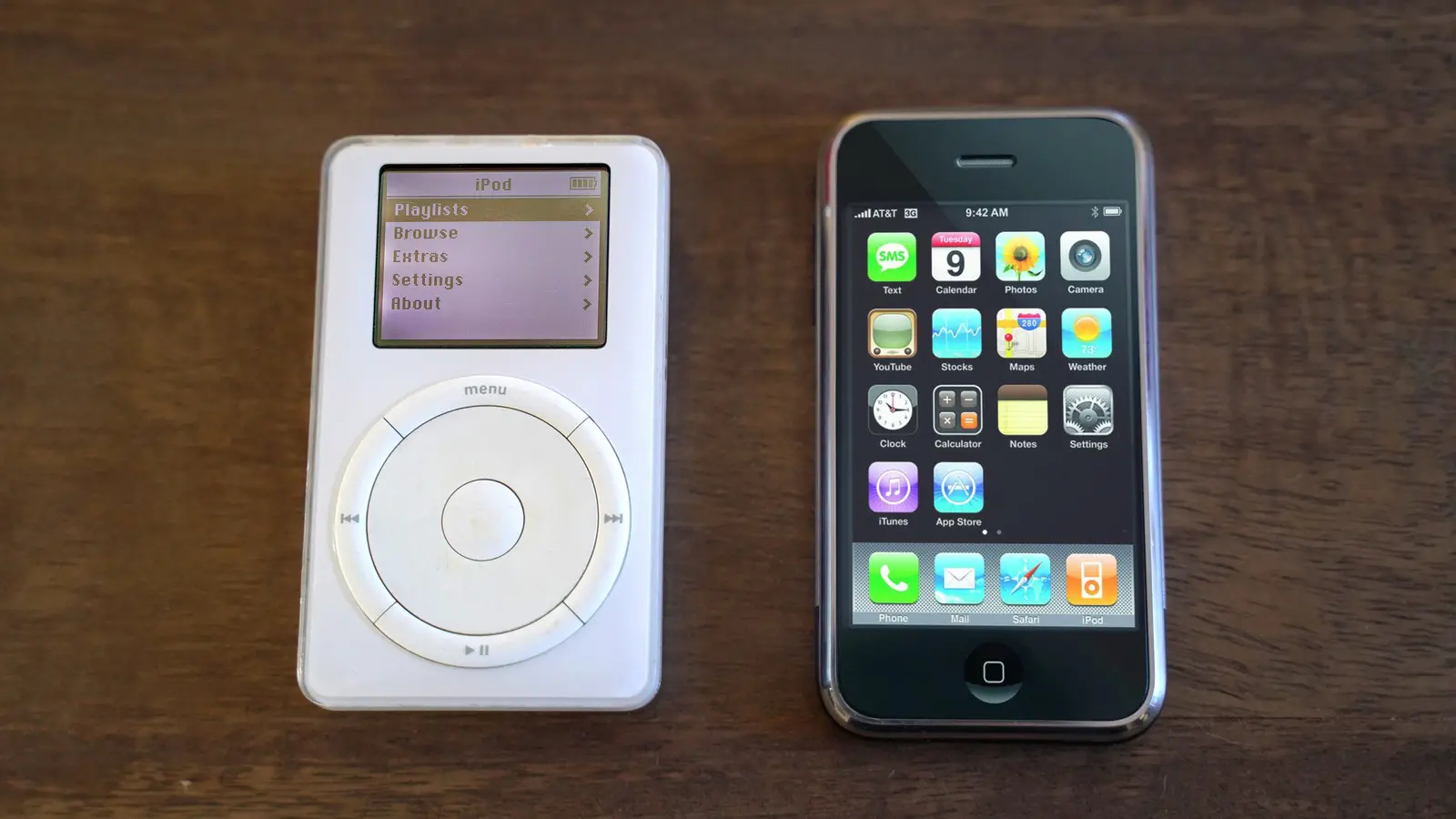
When Apple launched the iPod Classic in 2001, it transformed how people listened to music. The device allowed users to carry their entire library in a slim pocket-sized player with a simple click wheel. Although it was not the first MP3 player, it quickly became a cultural icon and helped revitalize Apple. Over the years, Apple sold hundreds of millions of iPods, with the Classic becoming the definitive model. Even after the product line was discontinued, the original iPod remained popular with collectors. Sealed and fully functional first-generation models have fetched as much as $90,000 at auction. Even non-mint versions can sell for tens of thousands of dollars.
Patek Philippe Henry Graves Supercomplication
The Patek Philippe Henry Graves Supercomplication is one of the most remarkable timepieces ever built. Commissioned by Henry Graves Jr., it was created to compete with fellow collector James Ward Packard in the 1920s and early 1930s. Swiss manufacturer Patek Philippe spent eight years designing and handcrafting this gold pocket watch, which featured 24 complications, including a perpetual calendar, celestial chart, and sunrise/sunset times. The watch remained with the Graves family for decades before being sold at auction in 1969. In 1999, it broke records when it sold for $11 million. In 2014, it sold again for $24 million, setting another benchmark as the most expensive timepiece ever sold at the time.
Xerox Alto
The Xerox Alto was a trailblazing computer that introduced the graphical user interface (GUI). Developed in 1973 at Xerox's Palo Alto Research Center, it allowed users to interact with screens using windows, icons, and a mouse instead of text commands. The machine cost around $12,000 to build and was mainly used within Xerox laboratories and universities. Several thousand units were produced, but the Alto was never sold commercially at a wide scale. Its GUI concept inspired Apple's Lisa and early Macintosh computers, leaving a lasting imprint on personal computing. Interestingly, despite its historical significance, the Xerox Alto's value hasn't always matched its importance. One unit sold for just over $30,000 on eBay in 2010.
Nintendo PlayStation Console
Sony and Nintendo almost partnered to create a hybrid console in the early 1990s. Sony planned to release a CD-ROM drive for the Super Nintendo, and later a system with a built-in CD player. Nintendo unexpectedly backed out, choosing to work with Philips instead. That decision led Sony to develop the original PlayStation, which became one of the most successful gaming brands in history. A few prototypes of the joint Nintendo/Sony console survived, and one working unit surfaced in 2015. The rarity of this never-released console made it an instant collector's item. In 2020, it sold at auction for $360,000 after a bidding war between Oculus founder Palmer Luckey and Pets.com founder Greg McLemore.
iPhone (1st Generation)
The original iPhone, released in 2007, changed the smartphone industry by popularizing large touchscreens and app-based functionality. It was not the first smartphone, but it radically simplified the user experience and combined a phone, music player, camera, and internet communicator in one device. Apple has since sold billions of iPhones, and the company has become one of the most valuable in the world. Older iPhone models, especially first-generation units still sealed in their packaging, have become collector's items. Sealed 4GB and 8GB original iPhones can sell for $15,000 or more, with later vintage models also commanding several thousand dollars at auction.
Source: SlashGear News