

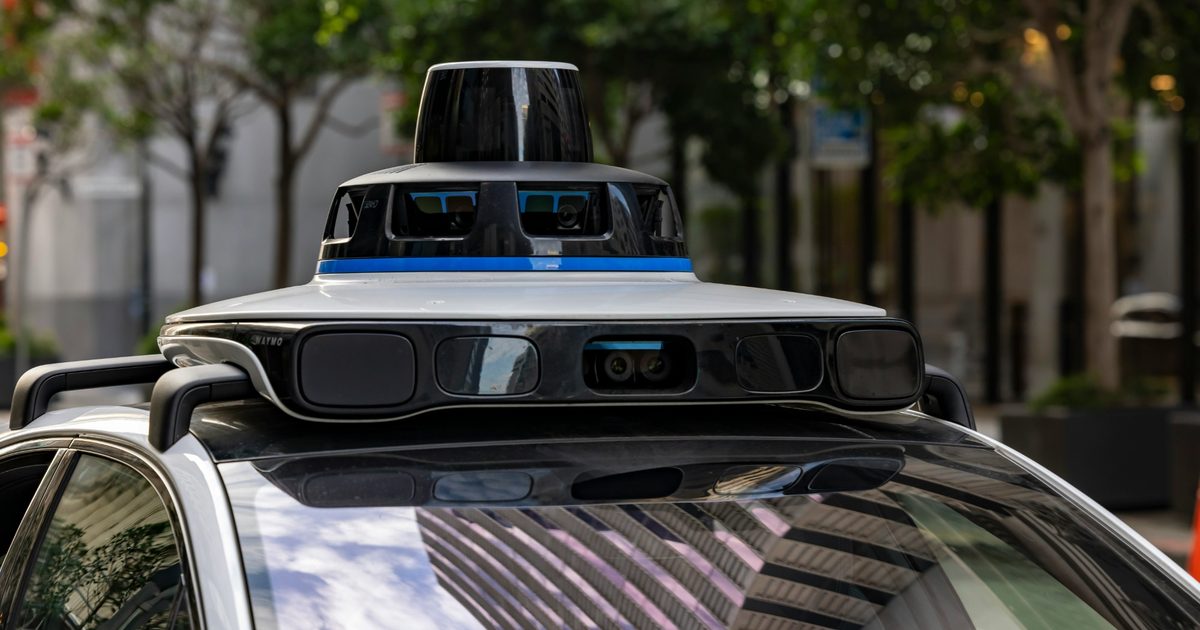
Self-driving cars have made remarkable progress in navigating roads, handling regular traffic, and responding to everyday driving cues. Yet, when faced with an unpredictable emergency—a pedestrian stepping out from behind a truck, a vehicle swerving erratically, or a first responder vehicle approaching from an unexpected direction—these systems often falter. The consequence can be hesitation, erratic behavior, or even catastrophic failure. A team at Seoul National University, led by Professor Jun Won Choi from the Department of Electrical and Computer Engineering, believes they have developed a critical piece of the safety puzzle: an AI model called SafeDrive that forces autonomous vehicles to think before they act.
The fundamental challenge of autonomous emergency response
Most autonomous driving systems today rely on end-to-end deep learning models. These models are trained on massive datasets of human driving behavior, learning to map sensor inputs directly to steering angles, acceleration, and braking. The approach works impressively well for routine scenarios: lane keeping, adaptive cruise control, even highway merges. However, the black-box nature of these models creates two major problems. First, they lack explicit reasoning about safety—they mimic what a human might do without understanding why that action is safe. Second, they offer little to no explanation for their decisions, making it difficult for engineers to debug failures or for regulators to certify safety.
Emergency situations compound these weaknesses. The training data for rare but critical events is sparse, so the model may have seen few examples of how to handle a sudden obstacle. Even if it chooses a path, the model cannot justify why it swerved left instead of right, or why it chose to brake rather than accelerate. This lack of transparency is a major hurdle for public acceptance and regulatory approval of fully autonomous vehicles.
Introducing SafeDrive: Fine-grained Safety Reasoning
The SafeDrive model tackles these weaknesses head-on by replacing the single-path mapping with a multi-path evaluation pipeline. Instead of predicting one future trajectory, SafeDrive generates a set of several plausible trajectories. Each trajectory is then combined with the real-time sensor data from the vehicle’s cameras, LiDAR, radar, and other perception systems. For each candidate path, the model performs a fine-grained safety assessment, scoring factors such as proximity to obstacles, likelihood of collision, smoothness of motion, and adherence to traffic rules. The path with the highest safety score is selected for execution.
This approach introduces explicit reasoning into the decision-making process. The model not only chooses a safe path but can also articulate why it considered one path safer than another—for example, because it maintains a larger distance from a pedestrian on the sidewalk. Such explainability is a game-changer for autonomous driving safety engineers, who can now trace failures back to specific scoring components rather than guessing at neural network behavior.
Professor Choi’s team presented their research at CVPR 2026, where it was selected as a highlight paper—a distinction awarded to only about three percent of all submissions. CVPR (Conference on Computer Vision and Pattern Recognition) is one of the most prestigious venues for AI and computer vision research globally. Acceptance as a highlight paper indicates that the work is considered exceptionally significant by the program committee.
Why this matters for Korea’s autonomous driving ambitions
This achievement is more than a technical milestone. According to TechXplore, SafeDrive is the first end-to-end autonomous driving paper from Korea to earn a highlight spot at CVPR. Historically, the autonomous driving research landscape has been dominated by institutions in the United States and China. US companies like Waymo and Cruise, and Chinese firms like Baidu and BYD, have commanded global attention for their self-driving initiatives. South Korea, despite its strengths in semiconductor manufacturing and display technology, has often been seen as a follower in AI-driven mobility.
The CVPR highlight paper signals that Korean researchers are now competing at the highest level. It also aligns with strategic national interests. The South Korean government has been investing heavily in future mobility technologies through initiatives like the Ministry of Trade, Industry and Energy’s R&D programs. SafeDrive has already been integrated into a reference model called EAD (presumably an acronym for a Korean autonomous driving framework), and the team is collaborating with local autonomous driving companies to test the system in real vehicles.
Commercialization is the next goal. Professor Choi has stated that the team plans to improve the model using larger, more diverse datasets—including data collected from their own test fleets—and eventually push SafeDrive into production vehicles. If successful, this could give Korean automakers and mobility startups a competitive edge, especially in areas where safety and explainability are paramount, such as robotaxis, delivery vehicles, and autonomous shuttles.
Comparing SafeDrive with other approaches
The concept of generating multiple trajectories is not entirely new in autonomous driving. Some traditional modular systems, which separate perception, prediction, and planning into distinct components, have long used trajectory optimization techniques. However, those systems often rely on hand-crafted rules and heuristics that are brittle in novel situations. End-to-end deep learning offers flexibility but lacks safety guarantees. SafeDrive attempts to bridge the gap by combining the best of both worlds: the flexibility of learning from data with the safety reasoning of explicit trajectory scoring.
Other research groups have explored similar ideas. For instance, some works use “cost functions” to evaluate predicted paths, but they typically define these functions manually, which does not scale well to the complexity of real-world driving. SafeDrive’s fine-grained safety reasoning learns to assign scores automatically from data, potentially capturing nuanced safety margins that humans might miss. Furthermore, because the scoring mechanism is interpretable, engineers can inspect and tune it without retraining the entire model.
Broader implications for autonomous vehicle safety
The introduction of explainable safety reasoning comes at a critical time. Public trust in self-driving technology has fluctuated following high-profile accidents involving autonomous vehicles from Uber, Tesla, and others. In many cases, investigations revealed that the AI had not recognized the danger until it was too late, or had made an inexplicable decision that led to a crash. Regulators have demanded clearer evidence that autonomous systems can handle edge cases safely.
SafeDrive does not claim to solve all of these problems, but it provides a framework that could become a standard component in future autonomous driving stacks. By making safety scoring transparent, it offers a path toward certification and liability allocation. If an autonomous vehicle is involved in an accident, the scoring system can show that it considered multiple alternatives and chose the one that minimized risk according to the learned safety criteria. This audit trail could be invaluable for legal and regulatory proceedings.
Moreover, the approach is not limited to cars. The same principles could apply to autonomous drones, delivery robots, or even warehouse automation systems where safety and explainability are essential. The Seoul National University team’s recognition at CVPR may inspire other researchers to adopt similar reasoning architectures.
What lies ahead for SafeDrive
For now, SafeDrive is moving from the lab to the road. The team is working with domestic autonomous driving companies to integrate the model into test vehicles. Real-world testing will provide new challenges: computational constraints, sensor noise, unpredictable weather, and interaction with human drivers who may not behave rationally. The model’s ability to generate and evaluate multiple trajectories in real time requires efficient hardware optimization, likely leveraging GPUs or specialized AI accelerators.
Professor Choi has indicated that further data collection is crucial. The current model was trained on existing open datasets like nuScenes and Waymo Open Dataset, but the team is now gathering their own driving data from Korean roads, which feature unique traffic patterns, narrow streets, and aggressive driving styles that differ from the US or China. Fine-tuning on local data will improve performance for Korean deployment and potentially for Southeast Asian markets with similar conditions.
The ultimate goal is commercialization. By integrating SafeDrive into the EAD reference model and collaborating with industry partners, the technology could appear in production vehicles within a few years. If successful, it could mark a turning point for Korea’s autonomous driving industry, shifting it from a technology importer to an innovator.
In a field where every millisecond and every meter counts, SafeDrive offers a simple yet powerful idea: let the car think through its options before it swerves. That extra moment of consideration could make all the difference between a safe maneuver and a tragic mistake.
Source: Digital Trends News