

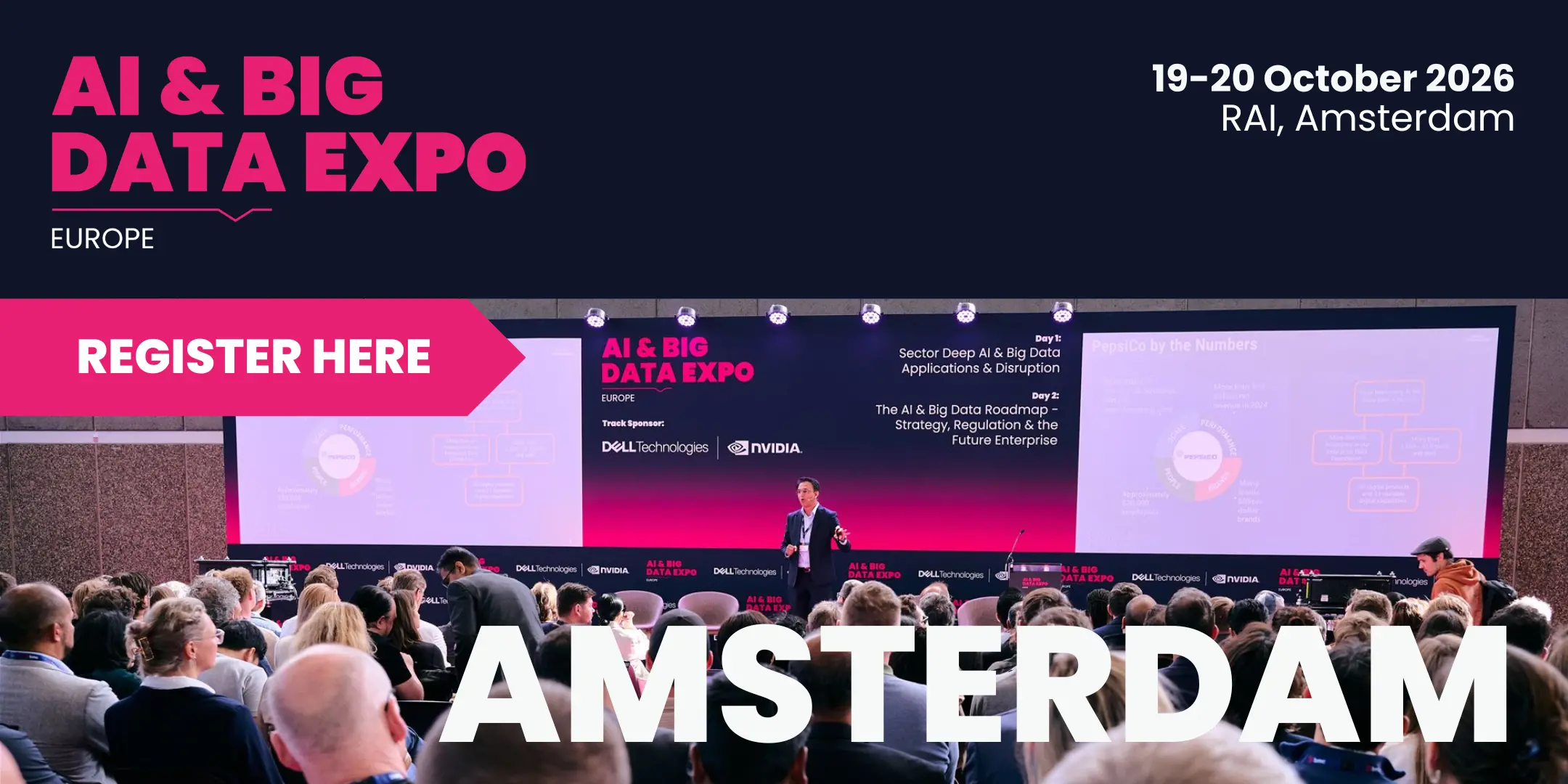
Overview of the Exhibition
The AI & Big Data Expo Europe 2026, held from April 15 to 17 at the RAI Amsterdam Convention Centre, marked another milestone in the convergence of artificial intelligence and big data technologies. The three-day event drew over 5,000 attendees from more than 60 countries, including CTOs, data scientists, AI researchers, and business leaders. With 250 exhibitors and more than 200 expert speakers, the expo provided a comprehensive platform for learning, networking, and discovering the latest innovations that are reshaping industries worldwide.
The expo has grown steadily since its first edition in 2017, reflecting the exponential increase in data generation and the accelerated adoption of AI across sectors. This year’s theme, “Data-Driven Intelligence for a Connected Future,” underscored the symbiotic relationship between high-quality data and intelligent algorithms. The event covered a wide range of topics, including machine learning, natural language processing, computer vision, data governance, and AI ethics. Special tracks were dedicated to the impact of AI in healthcare, finance, retail, manufacturing, and public sector.
Keynote Sessions and Featured Speakers
The opening keynote was delivered by Dr. Elena Vasquez, Chief AI Officer at a global tech conglomerate, who spoke about the challenges of scaling AI from prototype to production. She emphasised the need for robust data pipelines, transparent model validation, and continuous monitoring to ensure fairness and reliability. Another highly anticipated session featured Professor Marco Benetti, a leading researcher in deep learning, who presented breakthroughs in unsupervised learning that reduce the dependency on labelled datasets. His work has significant implications for industries where annotated data is scarce or expensive to obtain.
A panel discussion titled “The Human Side of AI” brought together ethicists, policymakers, and industry leaders to debate the societal implications of automation. Key points included the necessity of upskilling the workforce, establishing regulatory frameworks, and ensuring that AI systems augment human capabilities rather than replace them. The moderator, a former EU commissioner for digital affairs, stressed that Europe has a unique opportunity to set global standards for trustworthy AI. Attendees also heard from startup founders who demonstrated how small teams are leveraging open-source AI tools to compete with established players.
Emerging Technological Trends
One of the strongest themes at the expo was the rise of edge AI, where algorithms run directly on devices rather than relying solely on cloud infrastructure. Exhibitors showcased chips and software optimised for real-time inference on smartphones, drones, and IoT sensors. Applications ranged from autonomous navigation in logistics to predictive maintenance in industrial equipment. The push toward edge computing is driven by the need for low latency, data privacy, and bandwidth efficiency, especially as 5G networks become more widespread.
Another trend gaining momentum is the integration of large language models (LLMs) into enterprise workflows. Several companies demonstrated customised versions of ChatGPT and open-source alternatives fine-tuned for specific sectors, such as legal document review, medical diagnosis, and customer service automation. The key challenge discussed was hallucination mitigation—ensuring that generated outputs are factually accurate and aligned with organisational guidelines. Workshops provided hands-on training on retrieval-augmented generation (RAG) pipelines, which combine LLMs with vector databases to ground responses in verified data.
Data mesh and data fabric architectures were also hot topics. Traditional centralised data warehouses are giving way to distributed, domain-oriented designs that enable business units to own and manage their data while still allowing for governance and interoperability. Speakers from major cloud providers explained how data mesh principles can be implemented using modern data platforms and APIs. The emphasis on data democratisation is empowering non-technical teams to derive insights without heavy reliance on IT departments.
Workshops and Practical Demonstrations
Hands-on workshops formed a core part of the expo’s value proposition. Attendees could participate in sessions covering tools such as TensorFlow, PyTorch, Apache Spark, and Databricks. A full-day workshop on MLOps taught best practices for deploying, monitoring, and retraining models in production. Participants learned about containerisation with Docker and Kubernetes, experiment tracking with MLflow, and automated pipeline orchestration using Airflow. Another popular workshop focused on federated learning, where multiple parties collaborate on model training without sharing raw data—a critical capability for healthcare and financial institutions bound by privacy regulations.
In the exhibition hall, companies demonstrated real-world solutions. A German robotics firm displayed collaborative robots that use computer vision to adapt to dynamic environments, improving assembly line flexibility. A Dutch startup showcased a real-time anomaly detection system for water quality monitoring, which uses sensor data and machine learning to predict contamination events. Another notable demo came from a French AI company that helps retailers optimise pricing and inventory through reinforcement learning, resulting in measurable reductions in waste and increased profitability.
Networking and Collaboration Opportunities
Beyond the formal sessions, the expo facilitated extensive networking. Dedicated matchmaking sessions paired startups with venture capitalists and corporate innovation teams. The “AI for Good” lounge allowed nonprofits and social enterprises to present projects leveraging AI for environmental conservation, disaster response, and public health. Several partnerships were announced during the event, including a collaboration between a major telecom operator and a university research lab to develop privacy-preserving analytics for smart cities.
The expo also featured a job fair with over 40 companies actively recruiting data scientists, AI engineers, and product managers. With the global shortage of AI talent, many employers offered competitive packages and ongoing training programs. For students and early-career professionals, career advice sessions covered portfolio building, interview preparation, and the importance of continuous learning in a rapidly evolving field.
Industry-Specific Insights
In the healthcare track, experts discussed how AI is transforming medical imaging, drug discovery, and patient monitoring. Case studies showed that deep learning models can detect diabetic retinopathy and certain cancers with accuracy comparable to specialists, though challenges remain in clinical validation and integration into existing workflows. The finance track covered algorithmic trading, fraud detection, and credit scoring, with a strong emphasis on explainability and compliance with regulations such as GDPR and the EU AI Act. Retail sessions highlighted personalisation engines that analyse customer behaviour to recommend products in real time, as well as supply chain optimisation using predictive analytics.
Manufacturing and Industry 4.0 were also well represented. Sensors, digital twins, and predictive maintenance solutions are helping factories reduce downtime and improve quality. One presentation demonstrated a digital twin of a wind farm that uses AI to optimize energy output based on weather forecasts and turbine conditions. In the public sector, discussions touched on how cities are using data from traffic cameras, waste bins, and utility meters to become more efficient and sustainable, while addressing concerns about surveillance and citizen privacy.
Looking Ahead
As the AI & Big Data Expo Europe 2026 concluded, attendees left with a clear sense of the direction the industry is heading. The convergence of AI, big data, and edge computing is creating new possibilities, but it also requires careful consideration of ethical, legal, and societal implications. Responsible AI frameworks, such as those proposed by the European Commission, are becoming essential for building trust and ensuring that innovation benefits everyone. The expo’s organisers have already announced the 2027 edition, which will expand to include a dedicated track on synthetic data generation and a hackathon focused on climate change solutions.
The conversations and connections made at the event are expected to spark collaborations that will accelerate the adoption of AI and big data across Europe. Companies are investing heavily in data literacy programs and internal AI academies to bridge the skills gap. For professionals, the message was clear: staying current with tools and techniques is no longer optional—it is a necessity in an era where data is the new currency and intelligence is the engine of progress.
Source: AI News News