
Android Auto Sets Sail: MasterCraft Boats Embrace On-Water Navigation
For years, Android Auto has been a trusted companion for drivers, delivering turn-by-turn directions, music, messaging, and a host of useful apps directly to vehicle displays. It has transformed the way we navigate roads, reducing distractions and making travel more intuitive. Until now, however, this technology has remained firmly tethered to the asphalt. That's all changing, as MasterCraft Boat Holdings has officially announced it is bringing Android Auto support to its upcoming Crest and Balise pontoon boats. This move signals a new era for marine navigation, where smartphone connectivity and advanced routing algorithms meet the open water.
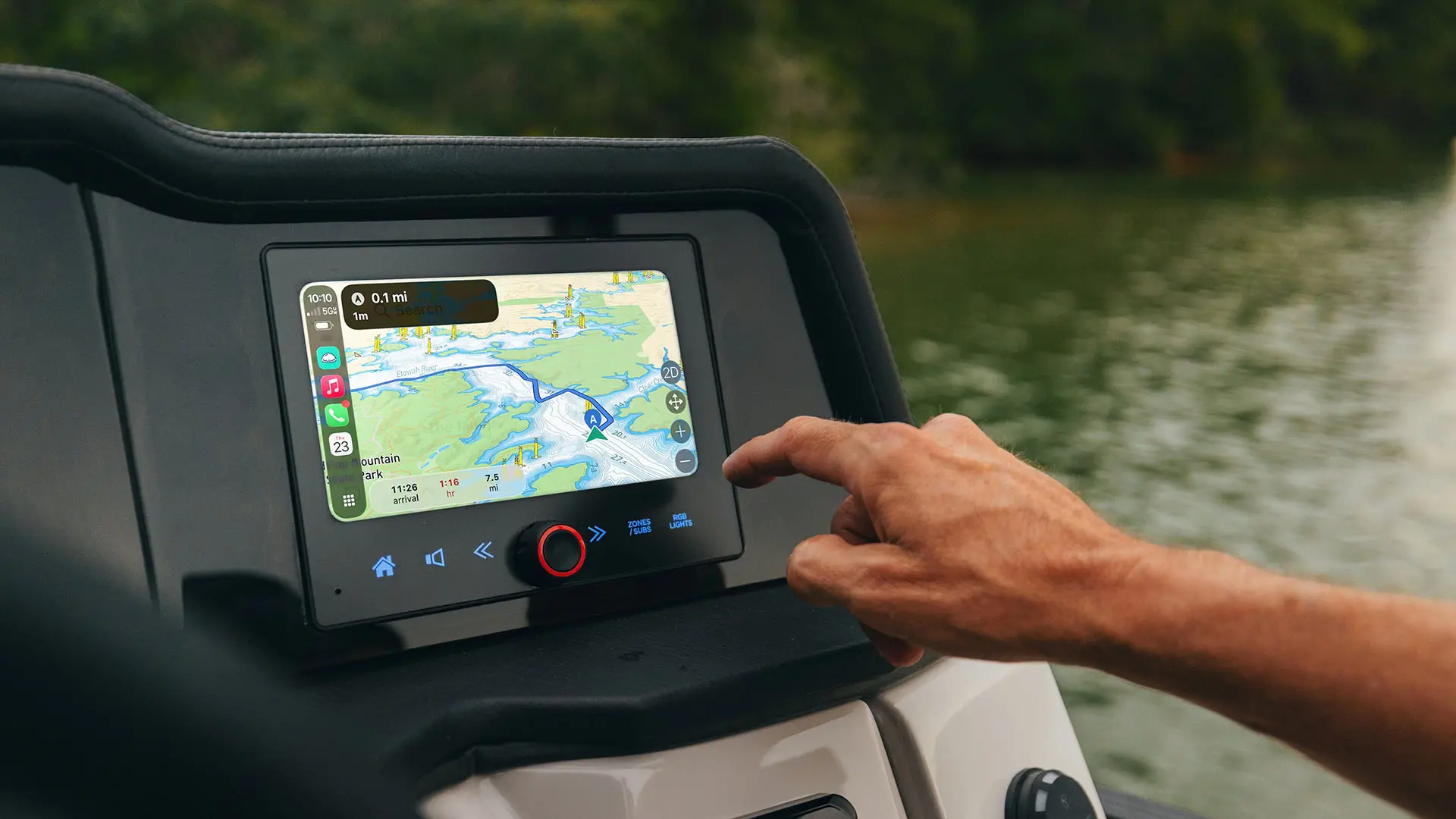
The integration comes through a strategic partnership with Savvy Navvy, a specialized navigation app designed exclusively for boaters. Savvy Navvy offers a comprehensive suite of tools, including detailed nautical charts, smart routing, real-time boat traffic information, and GPS navigation. By embedding this app into Android Auto, MasterCraft is aiming to replicate the familiar dashboard experience of a car on the water, complete with a large display, voice controls, and seamless smartphone integration.
Key Facts at a Glance
- Boats from the Crest and Balise brands will now come with Android Auto built in.
- The brands have partnered with Savvy Navvy for navigation on lakes, inland waters, and oceans.
- Customers who purchase a 2027 Crest or Balise "Conquest" or "Caribbean" model will get Android Auto-compatible displays and Savvy Navvy support.
- MasterCraft claims these are the first boats to offer factory-installed CarPlay and Android Auto with on-water navigation.
- The Savvy Navvy app is available on Android Auto and CarPlay worldwide and works with any compatible display, including aftermarket units on older boats.
A New Frontier for Android Auto
Android Auto has traditionally been limited to cars, motorcycles, and certain aftermarket head units. Its expansion into the marine sector was only a matter of time, given the growing demand for connected experiences across all modes of transportation. Boaters often face challenges similar to drivers: unfamiliar waterways, changing weather conditions, and the need for reliable navigation. By bringing Android Auto to boats, MasterCraft is addressing these pain points with a familiar and user-friendly interface.
On the water, the Android Auto interface will display real-time navigation data just like it does on a car's dashboard. Boaters will see their current speed, remaining distance to destination, estimated time of arrival, and visual turn-by-turn directions, all optimized for the marine environment. The integration is designed to be hands-free, allowing boaters to keep their eyes on the water while following routes.
Savvy Navvy: The Marine Navigation Powerhouse
Savvy Navvy is not just a simple map app; it's a comprehensive boating companion that has gained traction among maritime enthusiasts. The app provides access to high-resolution nautical charts from trusted sources, covering coastlines, shallow waters, buoys, and hazards. It also offers smart routing, which calculates the safest and most efficient path based on the boat's draft, speed, and current water conditions. Additionally, Savvy Navvy includes a feature called "Nearby Boat Traffic," which overlay real-time AIS (Automatic Identification System) data on the map. This helps boaters stay aware of other vessels in their vicinity, reducing the risk of collisions in busy harbors or crowded waterways.
One of the standout features of Savvy Navvy is the ability to plan trips at home. Users can plot a course from their desktop or smartphone, save it, and then sync it to the boat's Android Auto display via their Google account. When they step aboard, the route and all related details are ready to go. This eliminates the need to fiddle with a small phone screen or paper charts in the cockpit, allowing for a more relaxed and prepared departure.
Boaters can also switch between day, night, and satellite map views. The day view uses bright, high-contrast colors for easy visibility under sunlight, while the night view uses dimmed tones to preserve night vision. Satellite view offers a photorealistic representation of the surroundings, which can be particularly helpful when navigating unfamiliar marinas or anchoring spots.
MasterCraft's Strategic Move
MasterCraft Boat Holdings is a well-known name in the marine industry, primarily recognized for its high-performance wakeboard and waterski boats. However, in recent years, the company has expanded its portfolio through the acquisition of Crest and Balise, two brands that specialize in pontoon boats. Pontoon boats are popular for recreational cruising, fishing, and social gatherings on lakes and rivers. They are often used by families and casual boaters who value comfort and convenience over speed and agility.
By equipping Crest and Balise boats with Android Auto, MasterCraft is positioning itself as a leader in marine technology integration. The company claims that these boats are the first to offer factory-installed CarPlay and Android Auto with dedicated on-water navigation. This is a significant milestone, as previous marine infotainment systems were either third-party aftermarket add-ons or lacked the deep navigation features that Savvy Navvy provides.
The 2027 model year will mark the debut of this technology in the "Conquest" and "Caribbean" series. These models will come with advanced display units that are fully compatible with Android Auto and CarPlay, ensuring that both Android and iOS users can take advantage of the system. The displays are designed to be glare-resistant and weatherproof, capable of withstanding the harsh marine environment, including sunlight, spray, and temperature fluctuations.
Factory-Installed vs. Aftermarket: A Game Changer
The decision to offer factory-installed Android Auto is a major differentiator. Traditionally, boaters who wanted smartphone integration had to purchase aftermarket head units or install specialized MFDs (Multi-Function Displays) that support CarPlay or Android Auto. These aftermarket solutions can be expensive, complex to install, and often require custom mounting for the boat's dashboard. With factory installation, companies like Crest and Balise are streamlining the experience, integrating the display seamlessly into the console from the moment the boat leaves the production line.
Furthermore, factory installation ensures that the system is fully tested and optimized for the specific electrical and structural characteristics of the boat. This reduces the risk of compatibility issues, power draw problems, or poor antenna placement, which are common headaches when retrofitting aftermarket equipment.
But what about boaters who already own a boat and don't want to upgrade to a new 2027 Crest or Balise model? The company has addressed this as well. The Savvy Navvy app is available on Android Auto and CarPlay worldwide and works with any compatible display, including aftermarket displays on older boats. This means that even if you own a different brand or an older model, you can still download the app and use it with your existing head unit, as long as it supports Android Auto or CarPlay. This open approach widens the app's reach and ensures that the convenience of on-water navigation is accessible to a broader audience.
The Growing Trend of Smart Marine Technology
The integration of Android Auto into boats is part of a larger trend toward "smart" marine technology. Modern boats are increasingly equipped with sophisticated electronics, from GPS and sonar to autopilot and remote monitoring systems. Consumers expect the same level of connectivity in their boats that they have in their cars and homes. As a result, marine manufacturers are investing heavily in user experience and software integration.
Digital navigation has already revolutionized the boating world. Paper charts are being replaced by electronic chartplotters, and AIS has become a standard safety tool on many vessels. The addition of Android Auto takes this a step further by bringing the entire ecosystem of Android apps into the marine environment. While navigation is the primary use case, boaters can also access weather apps, music controls, and even messaging apps (hands-free) through the same interface.
One potential concern is safety. Smartscreen interfaces can be a distraction, especially in a moving boat where the driver must also account for waves, currents, and other vessels. However, Android Auto is designed to minimize distraction by offering voice commands and simplified interfaces. Drivers can use Google Assistant to set destinations, ask about weather conditions, or play music without touching the screen. This hands-free approach aligns with the core principles of safe navigation.
What This Means for Boaters
For both seasoned captains and weekend recreational boaters, the arrival of Android Auto on boats promises greater peace of mind and convenience. Planning a fishing trip to a remote lake becomes as simple as entering coordinates on a map. Navigating through a busy channel with ferry traffic becomes less stressful with real-time AIS overlays. And when you are out on the water, you no longer need to squint at a small phone screen or rely on a passenger to read a paper map.
The collaboration with Savvy Navvy also adds credibility, as the app is already respected in the boating community for its accuracy and reliability. Savvy Navvy's data is sourced from reputable hydrographic offices and is regularly updated to reflect changes in water depth, buoys, and hazards. This is critical for safe navigation, as marine conditions can change significantly over time.
Moreover, the inclusion of Savvy Navvy Premium for customers who purchase a 2027 Crest or Balise "Conquest" or "Caribbean" model is a substantial value add. Premium subscriptions typically include advanced features such as offline maps, weather overlays, and routing optimizations. By bundling this subscription, MasterCraft is ensuring that customers get the full functionality of the app without any additional recurring cost for the first few years.
Future Implications for the Marine Industry
The move by MasterCraft could set a precedent for other boat manufacturers. As more brands realize the value of integrated smartphone connectivity, we can expect to see a wider adoption of Android Auto and CarPlay across different types of boats, from small skiffs to large yachts. In the long run, this could lead to standardized marine infotainment interfaces, much like the standardizations we've seen in the automotive industry.
We may also see new features tailored specifically to boating, such as weather radar integration, real-time tide and current predictions, and route sharing among boating communities. App developers will likely take notice of the growing market, leading to a wave of marine-focused applications that are compatible with Android Auto.
The partnership between MasterCraft and Savvy Navvy is a clear signal that technology is now deeply embedded in the recreational boating experience. While the water remains a place to disconnect and enjoy nature, smart navigation tools empower boaters to do so with greater confidence and awareness. As this technology becomes more widespread, the line between land and sea innovation will continue to blur, making boating more accessible and enjoyable for everyone.
With the 2027 model year still on the horizon, interested boaters can expect more details about the available display sizes, screen resolution, and additional preloaded apps as the launch approaches. For now, the news represents a promising step forward in the ongoing convergence of automotive-grade connectivity and marine craftsmanship.
Source: Android Authority News