

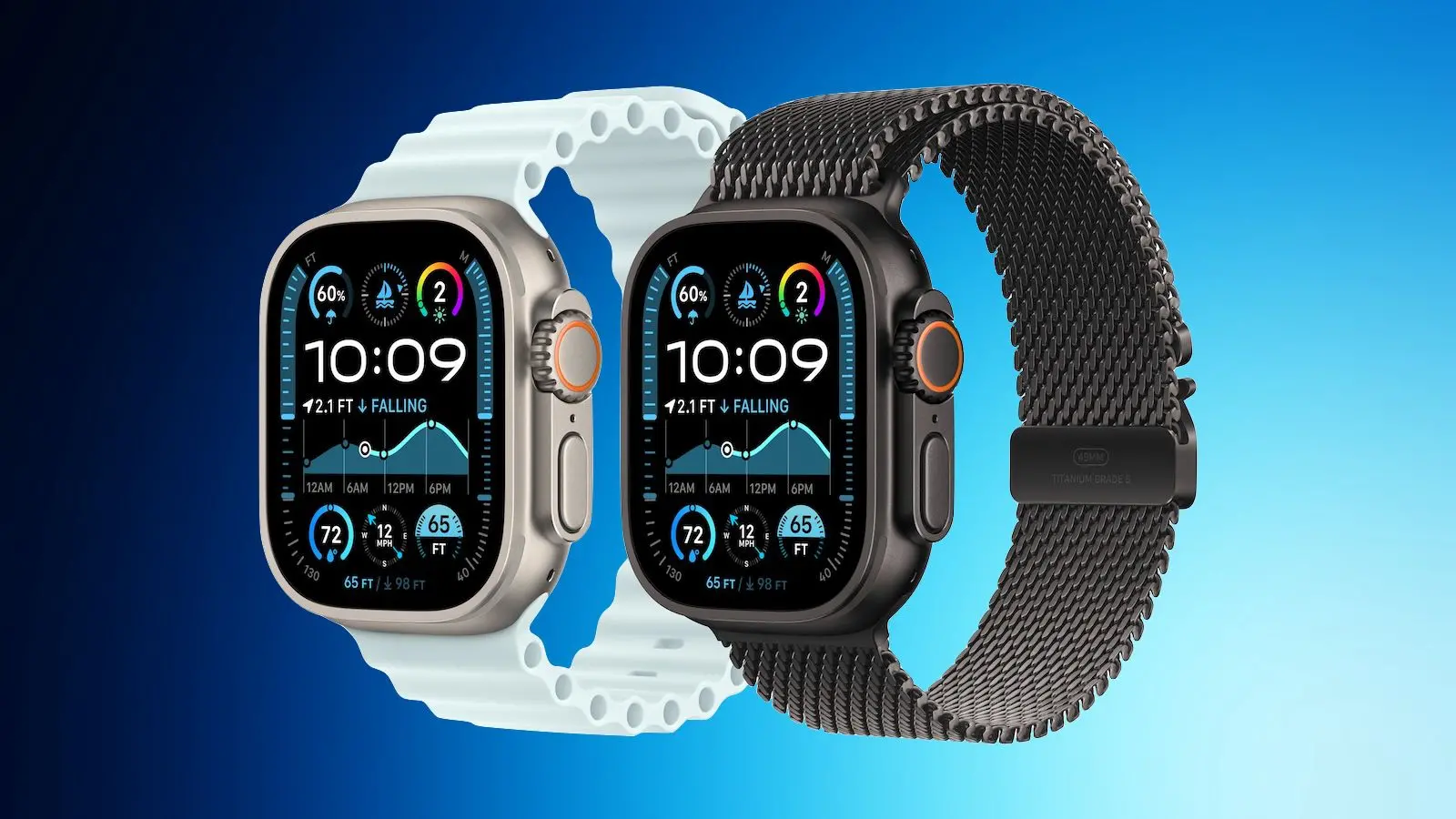
Key Facts at a Glance
- Apple Watch Ultra 4 was refreshed in September 2026 and starts at $799.
- It is the fourth-generation Ultra, following the Apple Watch Ultra 3 from September 2025.
- The new S11 chip has a 64-bit dual-core processor, a 4-core Neural Engine, and 64GB of storage.
- Battery life reaches up to 50 hours normally and up to 84 hours in Low Power Mode.
- The watch keeps the 49mm aerospace-grade titanium case and adds Natural Titanium and Black Titanium finishes.
- Health upgrades include a Health Sensing System, a readiness score, hypertension alerts, sleep apnea detection, ECG, blood oxygen monitoring, and temperature sensing.
- Connectivity includes 5G, satellite communications, dual-frequency GPS, Ultra Wideband, and an 86-decibel siren.
- Outdoor features include the Depth app, Tides app, Compass, Waypoints, Backtrack, and exclusive Wayfinder and Modular Ultra watch faces.
Should You Buy the Apple Watch Ultra 4?
The Apple Watch Ultra 4 is Apple's most expensive smartwatch, with pricing that starts at $799. It is built for outdoor enthusiasts, athletes, divers, and adventurers who need more durability, longer battery life, and a wider feature set than the standard Apple Watch. Because Apple refreshed the Ultra line in September 2026, the Ultra 4 is at the beginning of its product cycle. That makes now the best time to buy. No new Ultra model is expected until 2027 at the earliest.
Compared with the third-generation Apple Watch Ultra, the Ultra 4 brings a faster S11 chip, more RAM, improved heart rate tracking, and longer battery life. The upgrades are meaningful for people who rely on the watch for training, recovery, and off-grid communication. The 49mm case remains Apple's largest Apple Watch size, so it may not fit people with smaller wrists. Anyone who does not need the Ultra feature set or who prefers a smaller watch should consider the Apple Watch Series 12 instead.
What Is the Apple Watch Ultra 4?
The fourth-generation Apple Watch Ultra follows the Apple Watch Ultra 3 that launched in September 2025. It is designed to compete with premium fitness-focused smartwatches from brands such as Garmin. Apple positions the Ultra as a device built for endurance, exploration, and adventure. It continues to be the largest Apple Watch to date at 49mm.
At the center of the Ultra 4 is the S11 chip. Apple calls it its most powerful wearable chip. It has a 64-bit dual-core processor, 64GB of storage, and a 4-core Neural Engine. The S11 supports Audio Intelligence features, including Live Rewind, Siri Recap, Shazam, and Sound Recognition. Live Rewind can listen to what is happening and provide a transcript if the wearer misses something that was said. Siri Recap uses similar listening capabilities to generate a high-level overview of conversations throughout the day.
The Ultra 4 also has updated optical and electrical heart sensors. Larger, power-efficient green LEDs power a new Health Sensing System. Apple says the Ultra 4 and the Series 12 offer the most accurate heart rate sensing in a wearable device. The watch measures heart rate and heart rate variability more frequently to support new health and fitness features, including a real-time heart rate watch face complication and a readiness score.
Each morning, the readiness feature analyzes recent activity, training load, vitals, and sleep score. It then gives a 0 to 10 score ranking the wearer's capacity for the day ahead. Apple redesigned the pedometer model with new machine learning algorithms. The company says the Ultra 4 provides more accurate distance measurements for indoor walk or run workouts, and the S11 chip also offers more accurate step counts.
Design and Materials
The Apple Watch Ultra 4 has the same design as the Ultra 3. It keeps the rounded rectangular shape of the standard Apple Watch but adds a more rugged build. It has slim bezels and a larger viewable display area than regular Apple Watch models. The case edges extend to the flat front crystal display, and the Digital Crown and side button sit in a raised, pill-shaped area on the side.
Compared with the Series 12, the Ultra Digital Crown has larger and coarser grooves for easier use with gloves. The side button is also designed to work with gloves. The watch measures 49mm by 44mm by 12mm and weighs 63 grams, making it heavier than the 46mm ceramic Apple Watch Series 12.
The Ultra 4 includes an Action button on the left side. It is bright international orange so it is easy to see in the dark and underwater. The button is customizable and can launch Workouts, mark segments, set Compass Waypoints, and more. The case is made from aerospace-grade titanium, a lightweight and durable material with corrosion resistance. The Ultra 4 is available in Natural Titanium or Black Titanium, both with a satin finish. The black finish uses a custom blasting process with a diamond-like carbon coating to improve scratch resistance. Apple also uses 3D printing with aerospace-grade titanium powder to create the case layer by layer, using less material than traditional forging.
Display and Watch Faces
The Apple Watch Ultra 4 has a viewable display size of 1,245 square millimeters. It uses LTPO3 display technology with up to 3,000 nits of brightness. It can also dim to 1 nit for dark rooms such as movie theaters. The low brightness allows for an always-on second hand. The resolution is 422 by 512 pixels. This is the largest display area of any Apple Watch, beating the 46mm Series 12 and its 1,220 square millimeter display.
Apple designed the Wayfinder watch face for the Ultra. It includes a built-in compass and room for up to eight complications. The face can be customized for mountain, ocean, or trail use. It turns red automatically at night for better visibility. The Ultra is also the only Apple Watch that can use the Modular Ultra face. Modular Ultra uses the outermost edge of the display for real-time data such as seconds, altitude, or depth. It offers the most complications of any Apple Watch digital face.
Durability, Water Resistance, and Outdoor Features
The Ultra 4 can withstand a wider temperature range than standard Apple Watch models. It works in conditions as cold as minus 4 degrees Fahrenheit, or minus 20 degrees Celsius, and as hot as 131 degrees Fahrenheit, or 55 degrees Celsius. It is certified to MIL-STD-810H, a standard used for military equipment and rugged gear. Testing includes low pressure, high temperature, low temperature, temperature shock, contamination by fluids, rain, humidity, immersion, sand and dust, freeze and thaw, ice and freezing rain, shock, vibration, and more.
The display is protected by a flat sapphire front crystal. Apple says this is more durable than the Ion-X front glass used on the Apple Watch SE and the Ceramic Shield 2 used on aluminum Apple Watch Series 12 models. The flat design and raised case edges are meant to protect the display from edge impacts.
For water sports, the Ultra 4 can handle kitesurfing, wakeboarding, and recreational scuba diving to 40 meters. It is water resistant to 100 meters and certified to WR100 and EN 13319, an international standard for diving accessories. The Depth app displays current depth, water temperature, duration underwater, and maximum depth. Apple has partnered with Huish Outdoors for the Oceanic+ app, which turns the Ultra into a dive computer with dive planning, dive metrics, visual and haptic alerts, no-decompression limits, ascent rate, and safety stop guidance. It uses the Bühlmann decompression algorithm.
There is also a Tides app with high and low tide information, rising and falling tides, tide height and direction, and sunrise and sunset. The Compass app features an analog compass and a digital view of bearing and direction. A turn of the Digital Crown shows bearing, elevation, incline, latitude, and longitude. Users can drop Compass Waypoints with the Action button or the Compass Waypoint option. Waypoints update in real time and show direction and distance. The Backtrack feature uses GPS to record a path so users can retrace their steps if they get lost.
Health and Fitness Features
The Health Sensing System includes a second-generation electrical heart sensor, an always-on optical heart sensor with larger green LEDs, a blood oxygen sensor, and a temperature sensor. The optical heart rate sensor calculates calorie burn, resting heart rate, heart rate variability, and heart rate irregularities. It takes readings more frequently than the sensor in the Ultra 3, measuring heart rate every five seconds all day long. Apple says this improves fitness insight and makes Exercise and Move Activity rings more accurate. Heart rate variability is measured up to 24 times more often. The heart rate app shows continuous heart rate and HRV data, including a recovery HRV metric and overall HRV.
The electrical heart sensor supports electrocardiograms. LEDs and infrared light enable blood oxygen monitoring. An accelerometer and gyroscope enable fall detection. The watch can detect low heart rate, high heart rate, and abnormal heart rate, monitoring for conditions such as atrial fibrillation. Hypertension alerts are also supported. The Apple Watch cannot measure specific systolic and diastolic pressures, but it looks for signs of hypertension in heart rate data. After collecting 30 days of heart rate information, it can determine whether patterns related to possible hypertension have been detected. Data refreshes every 30 days, and users who receive an alert can provide seven days of blood pressure testing with a cuff before contacting a doctor.
For ECGs, electrodes in the back of the watch and the Digital Crown work together to take a single-lead electrocardiogram. Users hold a finger on the Digital Crown for about 30 seconds. The ECG can detect sinus rhythm, abnormal results, or inconclusive results that should be shared with a doctor. It can detect atrial fibrillation at heart rates between 50 and either 120 or 150 beats per minute, depending on country or region.
Sleep tracking monitors when the wearer is awake and asleep. It shows time spent in REM, Core, and Deep sleep stages. It also records how often the wearer wakes up and for how long. A Sleep Score gives a numerical value for sleep quality based on duration, bedtime consistency, waking frequency, and time spent in each sleep stage. Sleep apnea detection uses the accelerometer to sense small wrist movements associated with interruptions in normal breathing patterns. The Ultra 4 can analyze 30 days of sleep and show signs of sleep apnea in the Health app on iPhone.
Source: MacRumors News