

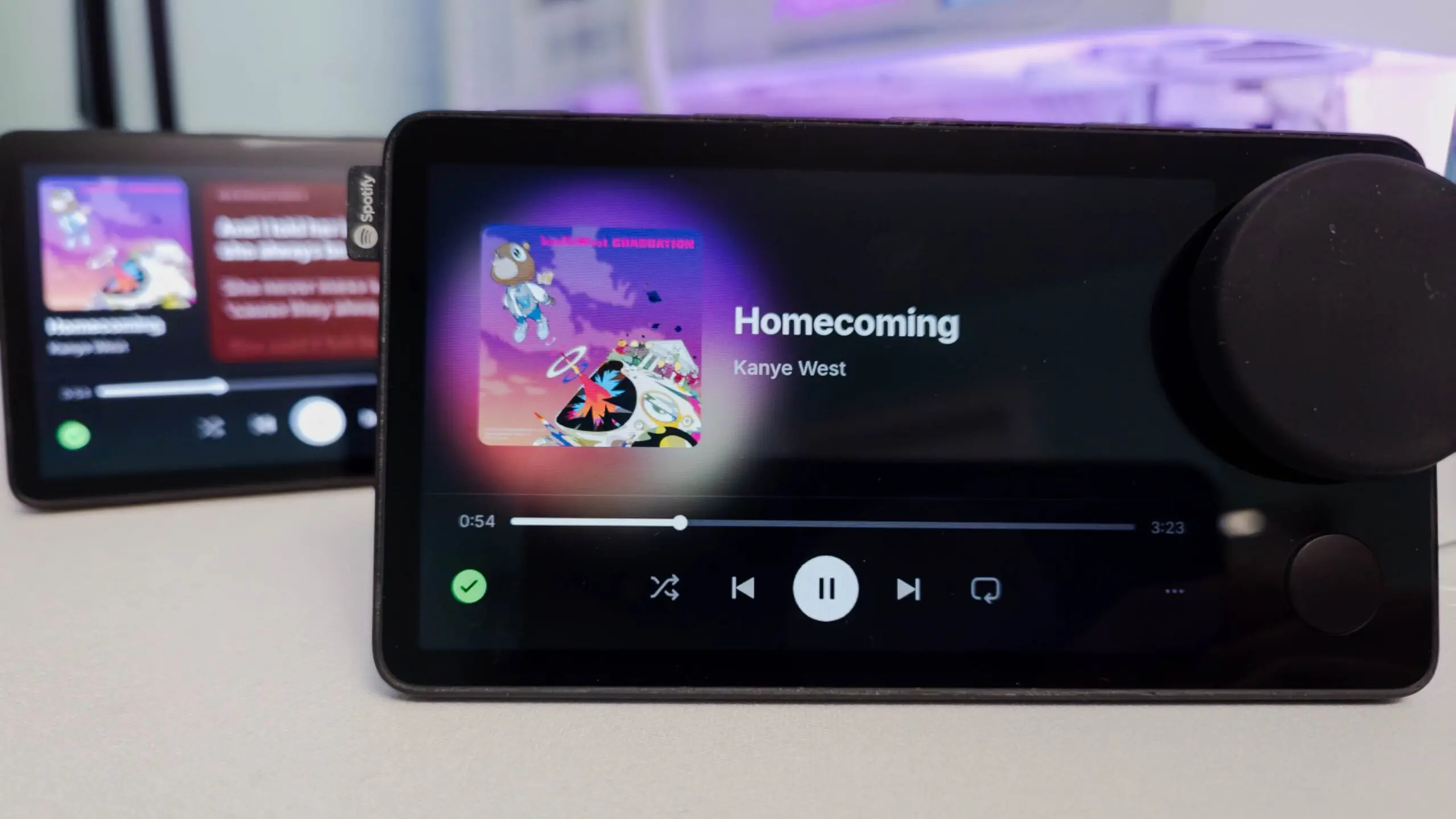
The Spotify Car Thing was once a bold experiment in dedicated music hardware. Launching in 2021, it aimed to offer drivers a simple, attractive way to control Spotify without needing a smartphone dashboard mounted to the windshield. For many people with older vehicles lacking Android Auto or Apple CarPlay, the device was a cheap and convenient solution. But Spotify eventually pulled the plug, shutting down the servers in late 2024 and turning thousands of perfectly functional devices into digital paperweights. Now, a new open source project called Mira is working to bring the Car Thing back to life.
What Was the Spotify Car Thing?
The Car Thing was Spotify's first and only piece of hardware. It featured a small touchscreen, a large physical dial, and four preset buttons, all designed to let drivers quickly browse playlists, skip tracks, and select albums while keeping their eyes mostly on the road. The device was not a standalone media player; it required a connected phone with an active Spotify Premium subscription to stream music. Instead, the Car Thing acted as a remote control of sorts, coordinating playback through the phone and sending commands to whatever speakers were connected via Bluetooth or auxiliary cable.
Spotify initially tested the device with a limited invite-only rollout, and later made it available to all United States residents for a short time. At one point, the price was reduced to just $29.99, and some users even received the device for free as part of promotional campaigns. Despite this aggressive push, the Car Thing never achieved mass adoption. Many reviewers complained about the redundant nature of the hardware, particularly because smartphones could already do everything the Car Thing could do. By July 2022, Spotify quietly announced it was discontinuing the product, less than a year after its full launch.
The Sudden Shutdown
While the discontinuation was not completely surprising, Spotify gave users little reason to expect a total bricking. The company initially said it would continue to support existing devices. But in late 2024, Spotify turned off the proprietary servers that the Car Thing relied on for authentication, discovery, and playback control. Without those servers, the device's screen became stuck at a login error or a "cannot connect" message. The hardware itself was still functional in a technical sense, but the software was useless. Owners were understandably frustrated, and many took to forums and social media to demand a refund or at least an open-source firmware release.
Spotify never released an official unlock, but a small but determined community of developers stepped in. Some focused on repurposing the Car Thing as a home automation controller, while others tried to load general-purpose Linux distributions onto the hardware. However, the extremely limited specifications of the Car Thing made such projects difficult. The device is built around a modest Qualcomm processor, accompanied by just a few gigabytes of storage and a minimal amount of RAM. It was never intended to run full-fledged applications or an entire desktop operating system. This meant that any community project had to be very targeted and efficient.
Mira Gives the Car Thing a New Purpose
That is where Mira comes in. Mira is an open source project hosted on GitHub that specifically aims to restore the Car Thing's original functionality as a Spotify controller. Instead of trying to turn the hardware into a general-purpose computer, Mira focuses on doing exactly what the Car Thing was designed to do, but without relying on Spotify's discontinued server infrastructure. The project recreates a local backend that communicates with Spotify's public API directly, allowing users to link their own Spotify accounts and regain control of their music playback.
According to the project's documentation, Mira is surprisingly full-featured. Once installed and linked to a Spotify account, the Car Thing can once again display album art, browse playlists, and control playback on connected devices. The physical knob, which was always the most satisfying part of the Car Thing, works as expected, allowing users to scroll through songs and menus with a satisfying click. The four preset buttons are also functional, so you can assign quick access to your favorite playlists or artists. There is even support for gesture controls on the touchscreen, which were part of the original firmware.
Voice Control Makes a Return
One of the more impressive features of Mira is its basic voice control capability. The original Car Thing supported voice commands for tasks like "play relaxing jazz" or "like this song." Mira brings that back using a lightweight local voice recognition engine. Once configured, users can press a button or use a wake word to issue playback commands. This is particularly valuable for drivers who want to keep their hands on the wheel and their eyes on the road. While the voice control is not as comprehensive as a smart speaker, it covers essential actions such as play, pause, skip, previous, and volume adjustments.
The project also includes a web-based companion app that helps users manage their Car Thing, connect to Wi-Fi, and authenticate with Spotify. This is a significant quality-of-life improvement over the original setup process, which required a physical connection to a computer and relied on Spotify's servers. With Mira, the entire setup can be done wirelessly, and the project's developers have published step-by-step instructions that even moderately technical users can follow.
How to Get Started with Mira
Installing Mira on a Spotify Car Thing is not as simple as downloading an app from an app store. It requires some technical know-how, but the process has been streamlined compared to earlier jailbreak methods. Here is a high-level overview of what users need to do:
- First, ensure that your Spotify Car Thing is still in good physical condition and can be powered on.
- Connect the Car Thing to a computer using a USB cable, as the initial firmware installation requires a direct connection.
- Download the Mira firmware image from the project's official release page on GitHub.
- Use a flashing tool, such as the one provided by the project, to overwrite the stock firmware with Mira.
- Once the new firmware is installed, power up the Car Thing and follow the on-screen instructions to connect it to Wi-Fi.
- Scan the QR code displayed on the Car Thing using your phone to complete the Spotify account linking process.
- After linking, you can mount the Car Thing in your vehicle and start using it immediately.
The developers have also created a detailed troubleshooting guide that covers common issues such as Wi-Fi connectivity problems, Spotify authentication errors, and unresponsive touchscreens. In most cases, a clean flash and a reboot are enough to resolve any glitches.
A Thriving Ecosystem of Community Projects
Mira is by no means the only project aiming to salvage the Car Thing, but it is one of the most polished and focused. Other efforts have repurposed the hardware for unrelated tasks. For example, some DIY enthusiasts have turned their Car Thing into a wearable smartwatch, complete with a custom strap and a home screen showing notifications and weather. Others have hacked the device to serve as a dedicated voice assistant in their living room, using the built-in microphone and speaker to interact with home automation systems.
Still, for the vast majority of Car Thing owners, Mira is the easiest way to return the device to its intended role. The open source nature of the project also means that developers can continually improve it. New features are being added all the time, and the community is actively fixing bugs and adding support for different Spotify account types. The project is particularly popular among users in Europe, where Spotify remains the dominant streaming service and where the Car Thing had a small but loyal following.
Why a Dead Product Is Worth Reviving
From an environmental perspective, projects like Mira are valuable because they prevent electronic waste. The Car Thing is a well-built device with a high-quality display and sturdy controls. Tossing it into a drawer or a landfill simply because the manufacturer turned off a server is a wasteful outcome. By extending the life of the hardware, the open source community sends a strong message about the right to repair and the need for companies to provide long-term software support for their devices.
There is also the cost factor. Although the Car Thing is no longer sold legally by Spotify, new old-stock units occasionally appear on online marketplaces. Because they are considered outdated and unsupported, they are often sold for bargain prices. For a few dollars and a little bit of effort, savvy buyers can acquire a dedicated Spotify remote that works with Mira. That is a much cheaper alternative to purchasing a new Android Auto head unit or an aftermarket car stereo with Spotify built in.
However, it is worth noting that Mira still requires a Spotify Premium subscription, just like the original Car Thing. The project does not pirate music or bypass any paywalls. The entire point is to restore a seamless integration with Spotify's legitimate service after the company's official device drivers were abandoned.
The Future of the Car Thing and Mira
As time goes on, the Car Thing will inevitably age. The hardware is stuck on old firmware, and the SoC is fragile by modern standards. But for now, Mira breathes new life into a device that many had written off. Whether you have a Car Thing sitting in a box or you find one at a garage sale, flashing Mira can turn it into a highly usable Spotify remote for your car or even your living room. The project is under active development, and its latest updates have added stability improvements and better audio feedback.
Source: Android Authority News