

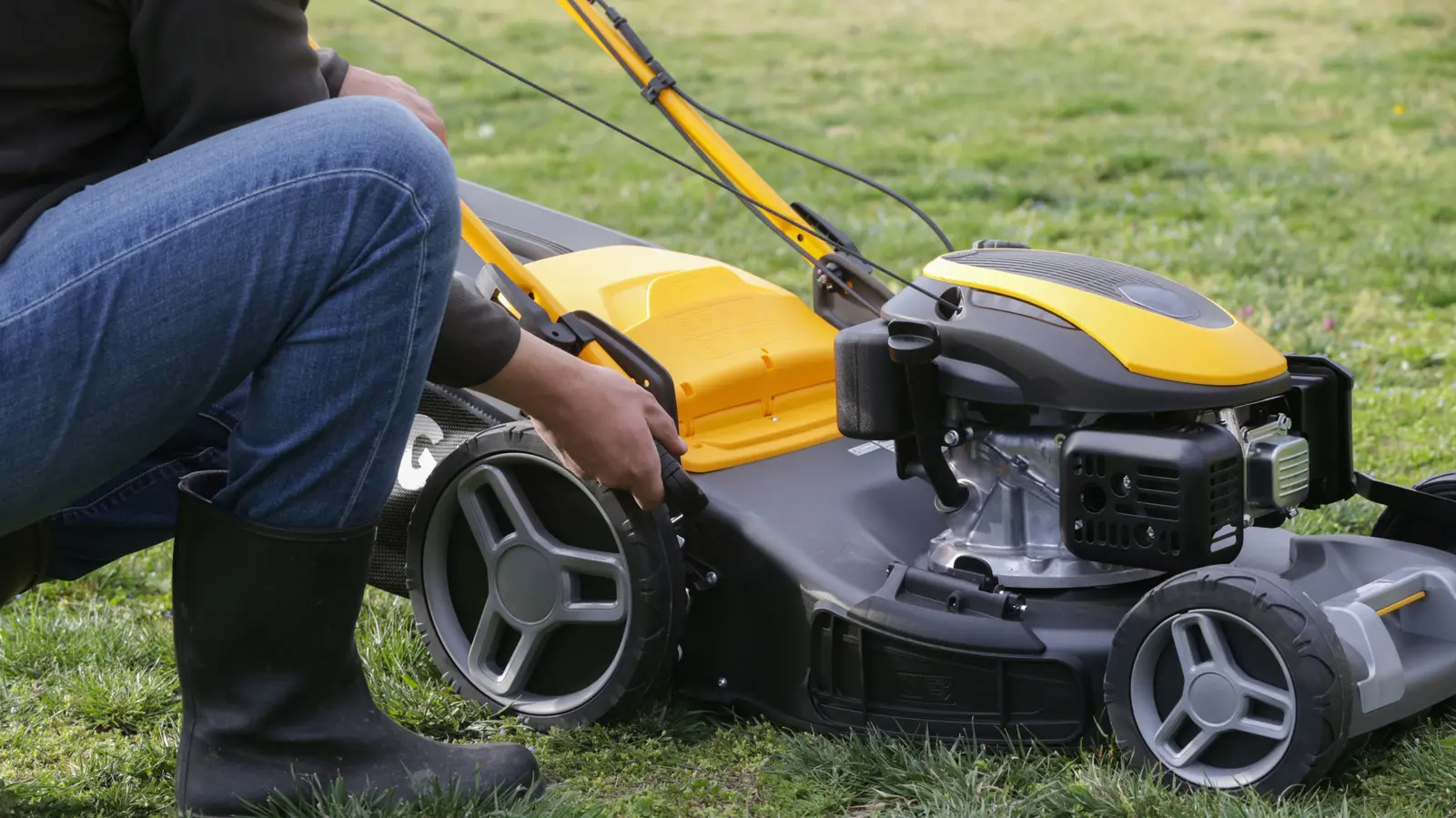
Mower decks live a hard life. Every time the engine turns over, the underside becomes a combat zone. Grass clippings, sand, dirt, stones, twigs, and the occasional forgotten toy are hurled against the metal at high speed. Moisture from freshly cut grass settles on every surface. Over the years, the combination of impact, vibration, and corrosion takes a toll. Cracks appear. Rust spreads. And eventually, owners face a familiar question: can a cracked mower deck be welded?
Why Mower Decks Crack and Rust
The conditions under a mower deck are far harsher than most people realize. The blade is designed to create lift, pulling grass upward before cutting it. That same airflow pulls in dirt, sand, and small stones. These abrasive particles constantly bombard the underside of the deck. Over time, the effect is similar to sandblasting. The protective coating, whether paint, powder coating, or galvanization, wears away in thin spots. Once bare metal is exposed, moisture from wet grass and morning dew begins the process of oxidation.
At the same time, the deck is subjected to constant vibration. The engine shakes, the blades spin, and the whole assembly bounces across uneven terrain. Any small manufacturing flaw, impact dent, or stress riser becomes a focal point for fatigue. A tiny crack can slowly grow across the metal. With every mowing session, the crack widens and the structural integrity of the deck weakens. If left untreated, a crack can eventually spread to a mounting bracket, a spindle housing, or the edge of the deck, causing dangerous flex and misalignment.
Different deck materials also age differently. Most budget and mid-range mowers use mild steel because it is inexpensive and easy to form. Mild steel is strong, but it rusts quickly once the protective coating is breached. Some premium residential and commercial mowers use aluminum decks. Aluminum does not rust in the traditional sense, but it can corrode and is more prone to crack propagation under repeated stress. Aluminum decks are lighter and resist grass buildup better, but they are also more difficult to repair. Plastic mower decks exist on some electric and small push mowers, and these are generally not repairable by welding at all.
What Welding Can and Cannot Fix
Welding can return structural integrity to a cracked metal deck by joining the broken sections back together. A clean crack in otherwise healthy steel is an excellent candidate for repair. The weld stops the crack from spreading and prevents further movement. This is particularly useful around mounting brackets, wheel supports, and spindle housings, where persistent vibration applies stress to the metal. In many cases, a properly executed weld can extend the life of a deck by years.
However, welding has limits. It cannot repair metal that has already been consumed by corrosion. Rust is not metal; it is a flaky, porous byproduct of oxidation. When rust forms, the original metal is gone. Attempting to weld over rust is futile because there is nothing solid to fuse. The weld will blow through the weakened material or simply sit on top of the corrosion. To repair a rusted deck, the affected sections must be cut out completely. A patch of new steel is then fabricated and welded into place. This is a legitimate repair method, but it requires more time and skill than closing a simple crack.
Another important limitation is heat. Mower deck steel is often relatively thin, usually between 10 and 14 gauge. A continuous long weld can easily burn through the metal or cause serious warping. The high heat of welding expands the metal, and as it cools, it contracts. This can pull the deck out of shape, making it difficult to reinstall the blade spindle or mount the deck properly. The better approach is to use short, overlapping stitch welds. These allow the metal to cool between passes and limit heat buildup. Stop-drilling is another useful technique. Before welding a crack, a small hole is drilled at each end of the crack to prevent it from propagating further. This simple step reduces the risk of the crack returning soon after the repair.
Steel and Aluminum Welding Challenges
Most steel mower decks can be repaired with a MIG welder using solid wire and shielding gas. MIG welding is accessible to many home mechanics and small shop operators. With proper cleaning and technique, a mild steel deck can be made structurally sound. The key is preparation. Every trace of paint, grease, dirt, and corrosion must be removed before welding. A grinder with a flap disc or a wire wheel is commonly used to expose bright, clean metal along the entire crack. If any residue remains, it will contaminate the weld pool and create weak, porous welds.
Aluminum decks are a different story. Aluminum disperses heat quickly, which makes it difficult to establish a stable weld pool. It also forms a thin oxide layer that melts at a much higher temperature than the aluminum itself. The welder must clean the oxide away aggressively and often use alternating current on a TIG machine to break through it. TIG welding requires precise coordination of both hands, one feeding filler rod and one controlling the torch. It is one of the most difficult welding techniques to learn. Temperature control is critical, as too much heat can cause the aluminum to collapse, and too little heat results in poor fusion. Because of this, aluminum mower deck repairs are usually best left to experienced professionals. The cost of such a repair can sometimes approach the price of a replacement deck, especially for budget-friendly mowers.
Repair vs. Replacement
The decision to weld a mower deck ultimately comes down to the condition of the surrounding metal. A clean crack in a deck that is otherwise solid is usually worth repairing. Even larger damaged areas can often be saved with fabricated patches, plug welds, or reinforcing plates. These repair methods add strength and distribute stress across a broader area, preventing the same spot from cracking again. If there is enough healthy metal to support the repair, welding is a cost-effective solution that can significantly extend the life of an expensive deck.
Replacement becomes the better option when rust has spread across large sections of the deck or into key structural components. Corrosion often hides beneath paint and looks much worse once the surface is cleaned. What appears to be a small rust bubble can reveal a thin, perforated metal underneath. Welding one area may simply shift the stress to another weak spot. The result is a cycle of repeated repairs, each one more complex than the last. At a certain point, the deck has lost too much base material to provide a safe, durable platform for the blade assembly.
There is also the question of cost. A do-it-yourself MIG weld on a mild steel deck costs little more than welding wire and electricity. A professional aluminum repair, on the other hand, can be expensive. When labor, materials, and preparation time are added, the total cost can approach or exceed the price of a new deck. It is worth researching the value of the mower and the availability of replacement decks before committing to an expensive weld repair. In many cases, a replacement deck is the more economical and safer long-term choice.
The Safety Factor
The mower deck is not just a cosmetic cover. It is a containment structure for one of the most dangerous components on any lawn machine. A typical mower blade weighs around two pounds and spins at roughly 3,000 to 3,600 RPM. If a blade breaks free, it can be thrown with enormous force. The deck is designed to keep blades and debris from escaping. A poorly repaired deck can fail catastrophically during a mowing session. A weld that looks ugly but holds is one thing, but a weld that covers a crack without restoring structural strength is a serious hazard.
This is why temporary fixes are so dangerous. Some people attempt to patch a crack with epoxy, metal-reinforced tape, or even sheet metal screws. These methods are not designed to handle the extreme vibration and impact forces inside a mower deck. They can fail without warning. A cracked deck should be inspected thoroughly before any repair. If there is any doubt about the integrity of the metal, replacement is the safer route. The few dollars saved by a questionable repair are not worth the risk of serious injury.
Ultimately, a cracked mower deck can be welded, provided the surrounding metal is still structurally sound. The repair must be done properly, with complete cleaning, appropriate welding technique, and careful attention to heat control. Patch panels and reinforcing plates can save decks with larger damaged areas. But when severe corrosion has spread through the deck, or the damage affects mounting brackets and spindle housings, welding is often just a temporary stopgap. In those cases, replacing the deck is the honest answer. The condition of the metal, the skill of the welder, and the cost of the repair should all be considered before firing up the welder.
Source: SlashGear News