

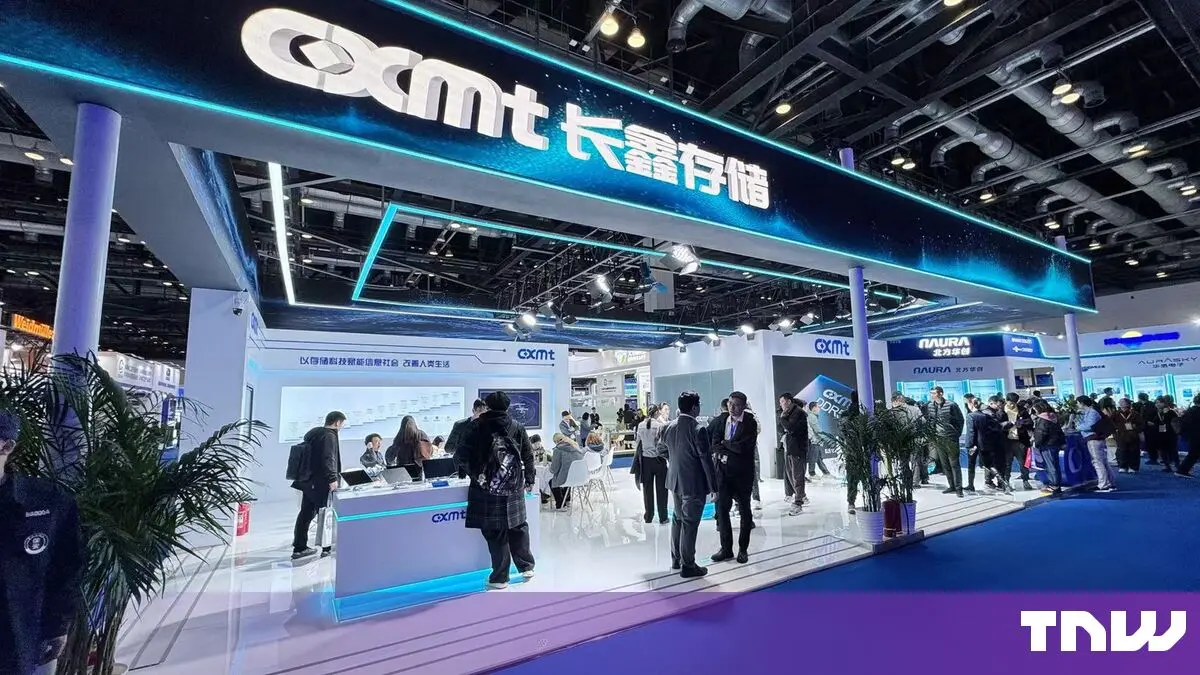
China’s largest memory chipmaker, CXMT, plans to begin making HBM3E, an advanced form of high-bandwidth memory used in AI chips, even though only 20% to 30% of the chips it produces are usable, according to people familiar with the matter. The reported yield is far below the roughly 70% achieved by the market leader, SK Hynix, and underscores the technical and economic hurdles facing China’s push to build a domestic supply of advanced AI memory.
CXMT has sent HBM3E samples to several Chinese AI chip designers, the people said. One of them said the company expects to begin limited production within the next two months. The reported yield figures and production timeline have not been independently confirmed. The plans were first reported earlier, while the yield details and timeline add new specificity to CXMT’s effort.
Key facts at a glance
- CXMT plans to start limited HBM3E production within about two months, according to people familiar with the matter.
- Only 20% to 30% of CXMT’s HBM3E chips are currently usable, compared with about 70% for SK Hynix.
- CXMT has sent samples to several Chinese AI chip designers and has prepared two versions: a standard design and an updated design intended to improve yields.
- In testing, CXMT’s HBM3E performed closer to SK Hynix’s older HBM3 than to SK Hynix’s HBM3E, one person said.
- The chip will likely cost more than comparable foreign products, according to one of the people.
- US export controls tightened in December 2024 on some advanced HBM products bound for China, pushing Chinese firms to seek memory through unofficial channels at several times the normal cost.
- Huawei, Cambricon, MetaX and Iluvatar CoreX raised prices for their AI chips by 20% to 50% as memory costs rose, according to an earlier report.
- SK Hynix held 50% of global HBM revenue in the second quarter, followed by Samsung at 33% and Micron at 18%, according to industry estimates. CXMT held 10% of global DRAM revenue, making it the fourth-largest supplier of conventional memory.
- CXMT said in September that it had caught up with Samsung and Micron in conventional memory. It also swung to a profit of nearly $20bn this year as memory prices soared.
- SK Hynix said HBM4 had beaten its target yield and would pass HBM3E in shipments and revenue in the fourth quarter. Samsung said in July that it had expanded HBM4 sales and shipped HBM4E samples.
Why HBM matters for AI chips
High-bandwidth memory is a specialized type of memory that stacks multiple DRAM dies vertically and connects them through dense pathways. The design allows memory to sit close to an AI processor and move data at much higher bandwidth than conventional memory. That bandwidth is critical for training and running large language models, recommendation systems, image generation models and other AI workloads that constantly shuttle enormous amounts of data between processors and memory.
HBM is not a commodity part that can be swapped in easily. It is sold as a stack, often integrated with advanced packaging, and must meet strict specifications for speed, power, heat and reliability. For AI chip designers, the memory is a key determinant of system performance. A processor with inadequate HBM capacity or bandwidth can be starved of data, limiting utilization and making the entire system less competitive. For memory makers, HBM is also one of the most technically demanding products in the DRAM industry, requiring advanced wafer processing, stacking, testing and packaging.
The yield gap and what it means
Yield is the share of chips from a production line that meet specifications. A 20% to 30% yield means that most of the chips produced do not meet the required standard and must be discarded or reworked. That raises the effective cost of every usable chip. It also limits how quickly a manufacturer can ramp output, because low yields consume capacity without producing much salable product.
CXMT’s reported yield is well below the roughly 70% achieved by SK Hynix. The gap matters for several reasons. First, low yields make HBM3E production expensive, and CXMT’s chip will likely cost more than comparable foreign products, according to one person familiar with the matter. That cost disadvantage could make it harder for Chinese AI chip designers to build systems that compete on price and performance. Second, low yields can slow customer qualification. AI chip designers need a stable supply of memory that meets tight specifications; inconsistent quality or limited volume can delay product launches and force customers to redesign or requalify systems.
CXMT has reportedly sent customers two versions of its HBM3E: a standard design and an update meant to improve yields. The existence of a yield-focused variant suggests the company is still tuning its process and packaging. In testing, CXMT’s HBM3E performed closer to SK Hynix’s older HBM3 than to its HBM3E, one person said. That does not mean the product is unusable, but it indicates that CXMT’s first commercial HBM3E may compete more on availability and domestic supply than on leading-edge performance.
China’s memory squeeze
Chinese AI chipmakers cannot get enough advanced memory to raise output, according to people familiar with the matter. The US tightened export controls in December 2024 on some advanced HBM products bound for China. Since then, Chinese firms have sought the memory through unofficial channels, where it can cost several times more, the people said. The result is a supply crunch that affects not only memory availability but also the pricing and competitiveness of Chinese AI chips.
The pressure is already visible in pricing. Huawei, Cambricon, MetaX and Iluvatar CoreX raised prices for their AI chips by 20% to 50% as memory costs rose, according to an earlier report. Cambricon’s latest sales missed expectations as chip supply tightened. Those developments show how a shortage of a single critical component can ripple through the AI hardware stack, raising costs for chip designers and ultimately for the cloud providers, enterprises and research institutions that buy AI systems.
Against that backdrop, even a low-yield HBM3E product has strategic value. A domestic source of advanced memory, even one that is expensive and technically behind the leading products, can reduce dependence on unofficial imports and give Chinese AI chip designers a more predictable supply. It can also help the domestic memory ecosystem learn by doing. HBM production involves stacking, testing, packaging and customer qualification, and each of those steps improves with volume and experience. Limited production can therefore be a stepping stone rather than an end state.
A market still dominated by three suppliers
The HBM market is concentrated. SK Hynix held 50% of global HBM revenue in the second quarter, according to industry estimates, followed by Samsung at 33% and Micron at 18%. Those three suppliers have spent years developing HBM and have deep relationships with AI chip designers. CXMT is not yet a significant HBM player, but it is a major conventional memory supplier: it held 10% of global DRAM revenue, making it the fourth-largest supplier of conventional memory.
CXMT said in September that it had caught up with Samsung and Micron in conventional memory. It also swung to a profit of nearly $20bn this year as memory prices soared. Those profits give the company resources to invest in advanced memory, but they do not erase the technical gap in HBM. Conventional DRAM and HBM require different process controls, stacking techniques and testing regimes. A company can be competitive in standard DRAM and still struggle with the complexities of high-bandwidth memory.
The competitive bar is also rising. SK Hynix said on Wednesday that HBM4 had beaten its target yield and would pass HBM3E in shipments and revenue in the fourth quarter. It posted record profit in the same results. Samsung said in July that it had expanded HBM4 sales and shipped HBM4E samples. In other words, while CXMT works to bring HBM3E into limited production, the leading suppliers are already moving to the next generation. That means CXMT’s HBM3E will likely be at least a generation behind the leading products when it reaches customers.
What limited production will test
Starting limited production is only the first step. CXMT will need to demonstrate that it can deliver consistent quality at volume, meet customer specifications and manage the economics of low yields. AI chip designers typically qualify memory over months, testing performance, power, thermal behavior and reliability in complete systems. A sample that works in a lab is not the same as a product that can be shipped in large volumes with predictable pricing and supply.
The company will also need to manage its capacity allocation. HBM production consumes advanced wafer capacity and packaging resources. If yields are low, CXMT may need to dedicate more capacity to produce the same number of usable stacks, limiting how much product it can sell. That could make it difficult to serve multiple customers at once, especially if demand from Chinese AI chip designers is strong. The two-version approach, with one design focused on yield improvement, suggests CXMT is trying to balance performance and manufacturability.
For Chinese AI chipmakers, the question is whether CXMT’s HBM3E can provide enough volume and quality to support their roadmaps. If it can, it may ease the supply crunch and reduce reliance on expensive unofficial imports. If it cannot, the shortage may persist, and Chinese chip designers may continue to face higher costs and constrained output. Either way, the reported plan shows that China’s memory industry is trying to close the gap in advanced AI memory, even as the leading suppliers move further ahead.
Source: TNW | Semiconductors News