

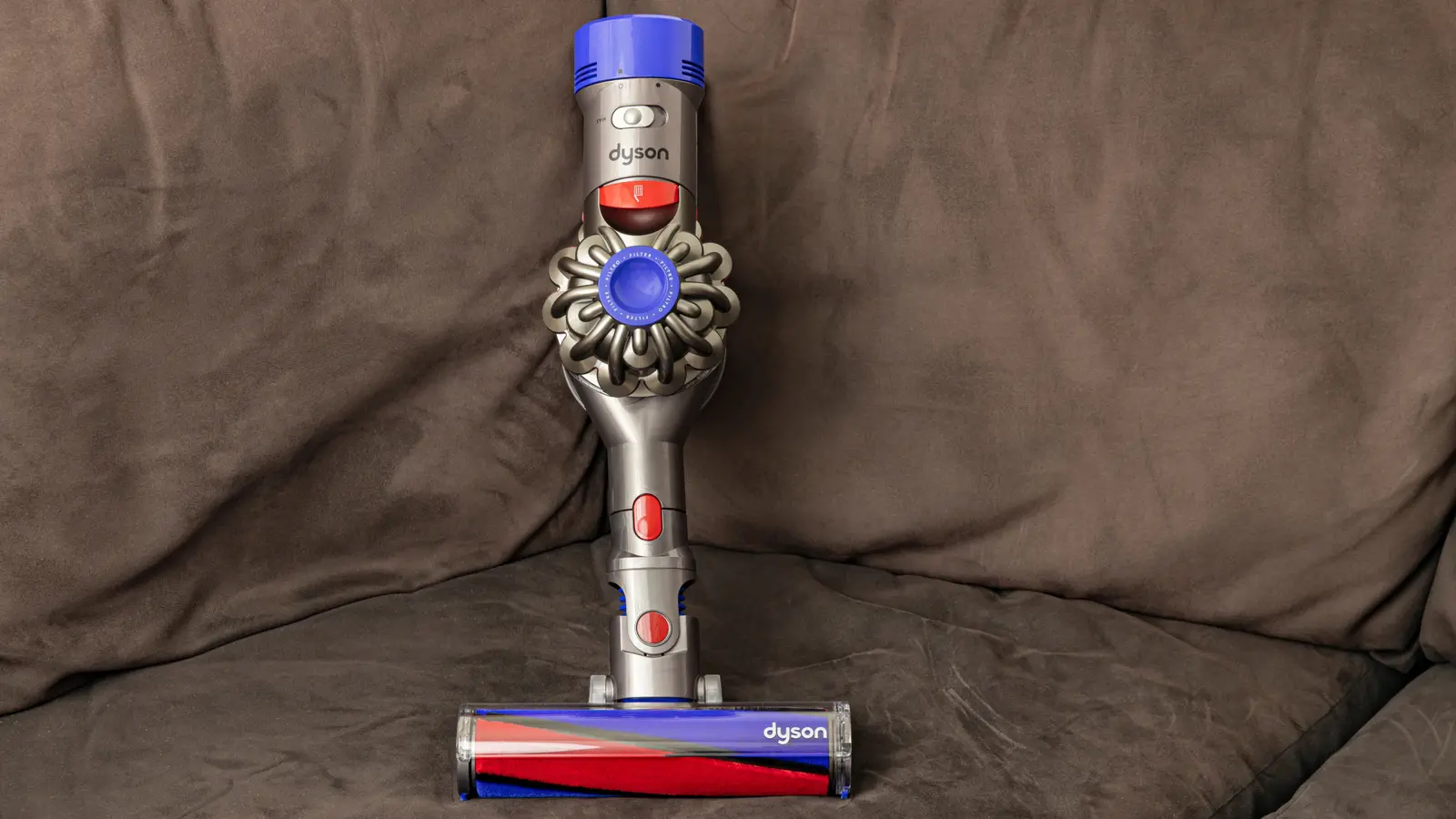
Dyson has become one of the most recognized names in the cordless vacuum market, known for powerful cyclonic technology and convenient cord-free designs. However, that reputation comes with premium pricing, and many consumers hold onto their devices for years before considering an upgrade. For owners of the Dyson V6, the search for a replacement often leads to the newer V8 series. The V6 has been discontinued, leaving existing users to decide whether the V8 offers enough improvements to justify the cost.
Dyson V8 vs. Dyson V6: Key Specs at a Glance
Before comparing the two models, it helps to understand their core specifications. The latest Dyson V8 variant, the V8 Cyclone, retails for $399.99 at major retailers such as Best Buy. Dyson claims it is the most powerful V8 model the company has built to date. It generates 150 air watts of suction, significantly more than the V6's 100 air watts. This is a 50 percent boost in suction power, which makes a noticeable difference when cleaning carpets, removing pet hair, or picking up fine debris from hard floors.
Runtime is another area where the V8 pulls ahead. The V8 Cyclone offers a maximum runtime of up to 60 minutes, while the V6 maxes out at 20 minutes. That means users can clean an entire home without needing to recharge mid-session. In contrast, the V6's shorter runtime often required users to work quickly or split cleaning into sessions.
Weight is a trade-off. The V8 Cyclone weighs 5.74 pounds, while the V6 is lighter at 4.5 pounds. For overhead cleaning or using the vacuum in handheld mode, the extra weight may be noticeable. However, the extra weight is partly due to a larger battery and more powerful motor. The V8 is slightly shorter in height than the V6, but its overall footprint remains similar, so storage and maneuverability are largely comparable.
Dust Capacity and Battery Charging
One of the more subtle differences between the V8 and V6 is dust capacity. The V8 Cyclone's clear bin holds 0.14 gallons of debris, compared to 0.11 gallons on the V6. While that is a modest increase, it seems small relative to the tripling of runtime. Users may still need to empty the bin fairly regularly, especially if they have pets or a large home. The bin itself retains the familiar one-touch empty mechanism, which is another point of continuity for long-time Dyson owners.
Charging times differ as well. The V6 can recharge fully in about 3.5 hours, while the V8 Cyclone takes closer to four hours. Although the V8 runs much longer, users will need to wait a bit longer between charges. For most people, this trade-off is acceptable, but those who rely on quick charging may want to keep the V6's faster turnaround in mind. The V8 uses a wall-mounted docking station, similar to the V6, making it easy to store and keep charged.
Design Evolution and Familiar Feel
Dyson has always favored a distinctive design language, and the V8 continues that tradition. Owners moving from the V6 will find familiar elements, such as the handheld form factor, the trigger-style power control, and the cyclonic array. The overall layout is similar, which helps existing Dyson users adapt quickly. However, Dyson has refined some details over time, including the release mechanism for the bin and the shape of the wand.
The V8's motor is also quieter than the V6's, according to Dyson. While the V6 was already fairly quiet compared to older corded models, the V8 further reduces noise, making it easier to vacuum at times when household members are resting. This is a small but appreciated improvement for daily use.
Warranty and Pricing Considerations
Both the V6 and V8 come with a two-year warranty, so buyers do not lose coverage by upgrading. That said, the V8 is positioned at a higher price point, and potential buyers should weigh whether the improvements justify the expense. For someone coming from a V6, the jump in suction and runtime alone may be enough to feel like a meaningful upgrade.
Still, there are alternatives to consider. Many other brands offer cordless vacuums with similar power and features at lower prices. Shark, Tineco, and LG have all released models that compete directly with Dyson's cordless lineup. Some of these rivals offer interchangeable batteries, motorized floor heads, or even dual-battery systems. Others focus on lightweight designs or specialized attachments that appeal to specific users. For those who are not deeply invested in the Dyson ecosystem, these options are worth examining before making a final decision.
How the V8 Improves on the V6 in Everyday Use
The real-world differences between the V8 and V6 go beyond spec sheets. The first thing most users notice is the sustained suction. In the V6, suction can drop as the bin fills, requiring more frequent emptying to maintain performance. The V8's cyclonic separation is more efficient, so airflow remains stronger for longer. This makes the V8 more effective at cleaning embedded dirt and allergens, which is a key selling point for allergy sufferers.
Battery technology has also improved. The V8's battery is designed to deliver consistent power from start to finish, whereas older batteries in the V6 could weaken as they drained. Over time, the V8's battery is also easier to replace, though Dyson does not make this a user-friendly feature for every model. Some users choose to buy a spare battery to extend the vacuum's lifespan, and the V8 benefits from the availability of aftermarket replacements.
Attachments and Accessories
Both the V6 and V8 are compatible with a range of attachments, but the V8 generally includes a newer set of tools. The V8 Cyclone ships with a direct-drive cleaner head, a combination tool, a crevice tool, and a mini motorized tool for upholstery and stairs. The V6, depending on the specific package, often included similar accessories but with older designs. The improved mini motorized tool on the V8 has better suction and less hair wrap, which is an advantage for pet owners.
The V8's cleaner head is also slightly wider than the V6's, covering more area per pass. While the difference in width is only a fraction of an inch, it can shave time off cleaning sessions, especially when combined with the longer runtime.
Maintenance and Long-Term Ownership
Like all Dyson vacuums, the V8 and V6 require regular filter washing. Dyson recommends washing the filter once a month with cold water and letting it dry completely before reinserting. The V8 has a single combined filter, while the V6 also uses a similar system. If the filter becomes clogged, suction will weaken regardless of which model you own. Replacing filters periodically is straightforward, and third-party options are widely available.
Another consideration is the battery lifespan. The V6, being older, may already have a degraded battery by this point. Many V6 owners report reduced runtime after a few years, which is one of the main reasons they consider upgrading. The V8's newer battery chemistry should provide better longevity, but it will still degrade over time. For those who want to maximize the V8's lifespan, avoiding extended periods on the charger and keeping the vacuum in a cool environment are good practices.
Is the Upgrade Worth It?
Ultimately, the decision hinges on what you value most. If suction power and runtime are your top priorities, the V8 Cyclone is a substantial improvement over the V6. The 50 AW increase in suction and threefold jump in runtime are not marginal changes; they fundamentally change the cleaning experience. The extra weight may be a drawback for some, but most users find the V8 comfortable to handle.
If you are satisfied with the V6's performance and only need a simple replacement, the V8 might feel like overkill. However, since the V6 is no longer sold new, finding a fresh V6 is difficult. The V8 represents the most direct path forward for existing Dyson owners who want a familiar yet improved device. With a two-year warranty, the latest V8 model provides peace of mind that a used or refurbished V6 cannot offer.
Before purchasing, it is wise to compare the V8 with similarly priced competitors. Some rival models offer better value, especially if they include extra batteries or more versatile attachments. But for those who prioritize brand reputation, filtered exhaust, and cyclonic performance, the V8 remains a strong choice in the cordless vacuum segment.
Source: SlashGear News