

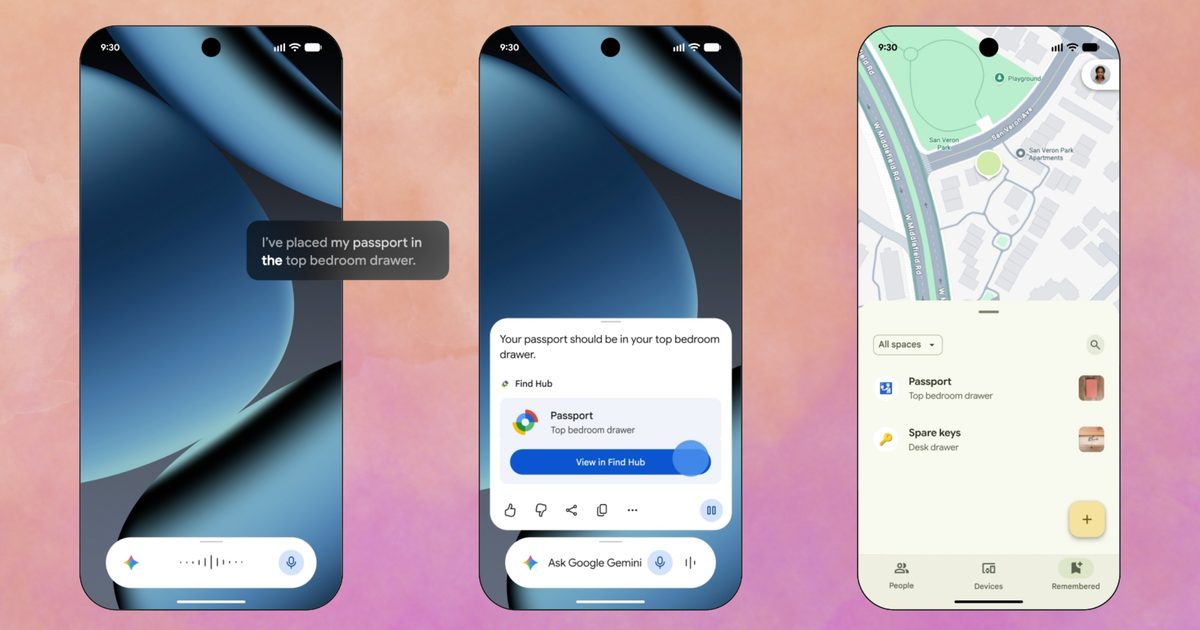
If you constantly forget where you store important documents, Gemini's latest update might actually help. Google is preparing to give its assistant a simple but practical trick: remembering where you say you left something. The feature was previewed as part of the September Android Drop, a fresh set of changes arriving on Android phones and tablets this month.
The new item-location memory feature sits inside Find Hub. It is designed for items that do not carry a tracker tag and never need to be connected to the internet. Instead, the system relies on information you provide. You can tell Gemini that you placed something in a particular room or drawer, attach a photo for extra clarity, and the assistant will save that note for later. When you need the item again, you can open Find Hub, look at the remembered tab, or simply ask Gemini where you put it.
How the Gemini item memory system works
When the new capability reaches your phone, you will be able to say something like, I put my passport in the bedroom drawer. You can add a photo of the item or the location if you want to make the saved record clearer. No accessory is required. Nothing needs to be paired, charged, or given a fresh battery. This is a meaningful difference from other Find Hub functions that rely on a network of trackers and phones to locate a physical object.
The result is not real-time tracking. Gemini is not watching your passport move from one room to another. It is only remembering the words you used and any picture you attached. If you later move the passport to a cabinet, Gemini will not automatically update the memory. You have to tell the assistant about the change. The tool is a memory aid, not a locating service, and that distinction matters when you decide whether to trust it with important belongings.
Why Find Hub is likely to become more useful
Find Hub has steadily become the central place where Google users can see where their devices and accessories are located. Adding a remembered-items layer gives the hub another role. It becomes less of a map for network-connected gadgets and more of a general assistant for people
Source: Digital Trends News