

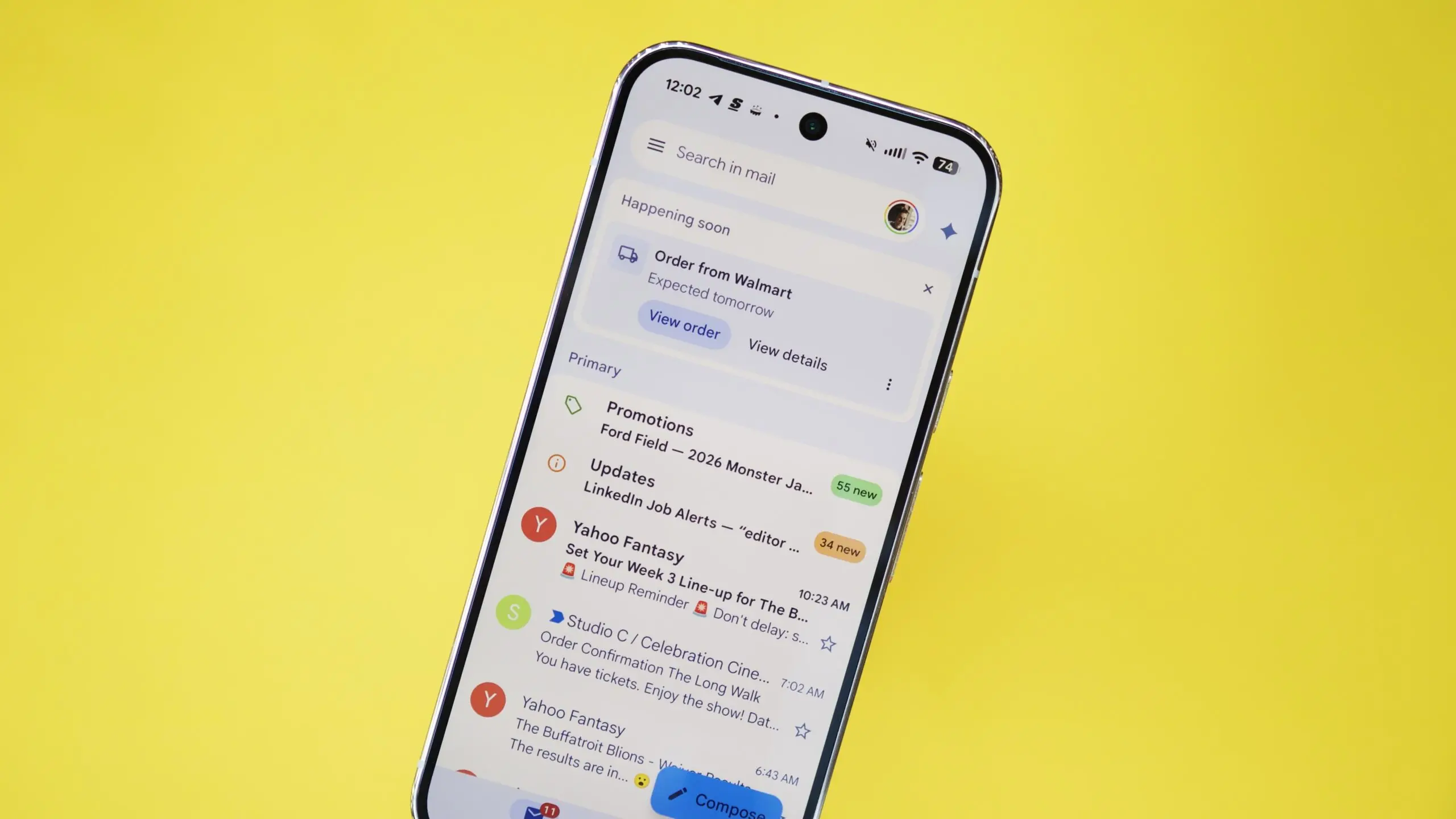
Google is preparing to launch a new initiative that could change the way political fundraising emails land in Gmail users' inboxes. The Gmail Verified Sender Program, set to begin on September 8, will provide qualifying political committees with a route to avoid Gmail's standard spam filtering. This move comes at a critical moment, as the 2026 United States midterm elections are scheduled for November 3, and campaigns across the country are gearing up for the final weeks of intense fundraising and voter outreach.
For years, political campaigns and committees have depended heavily on email as a primary tool for soliciting donations and mobilizing supporters. However, the competition for attention in crowded inboxes has led many organizations to push the boundaries of email best practices. Some have resorted to aggressive tactics, such as using misleading subject lines or sending repeated messages, which can trigger spam filters. The new Gmail program is designed to change that dynamic for a select group of politically oriented senders, offering them a more predictable path to reach potential donors and volunteers.
What is the Gmail Verified Sender Program?
According to details shared by Google, the Gmail Verified Sender Program is a framework that allows qualifying candidates, political parties, political action committees (PACs), and other political committees to have their emails delivered directly to the primary inbox instead of being filtered as spam. The program is similar to Google's existing Bulk Sender Guidelines, but it is specifically tailored to political entities. To participate, organizations must adhere to a set of strict technical and operational requirements, ensuring that only legitimate and security-conscious senders benefit from the program.
The program was first reported by a prominent national news outlet and has generated significant attention due to its timing. Launching on September 8 gives political campaigns less than two months to refine their email strategies before Election Day. This period is often the most critical for fundraising, as candidates seek to close funding gaps and mobilize late-deciding voters. The ability to avoid spam filters could provide a substantial advantage to those who qualify, allowing their messages to reach supporters' primary inboxes with greater reliability.
Requirements for Political Committees
To gain verified sender status, political committees must meet several conditions. First, they must send emails from a verified domain that is registered with the program. This domain must pass strict authentication checks, including SPF (Sender Policy Framework) and DKIM (DomainKeys Identified Mail) validation. These protocols help confirm that the emails are genuinely from the claimed sender and not spoofed or forged. Additionally, senders must comply with Google's security standards, which include protecting their accounts against unauthorized access and ensuring that their mailing infrastructure is not compromised.
One of the most notable requirements is the spam rate threshold. Participants must maintain a spam complaint rate below 0.3% over a rolling 14-day average. In practical terms, this means that for every 1,000 emails delivered, fewer than three can be marked as spam by Gmail users. This is a demanding standard, as even a small percentage of users clicking the spam button can quickly push a campaign over the limit. Google has stated that it will monitor these rates continuously, and senders that fail to comply may be suspended or removed from the program. Once removed, their emails will return to the normal filtering system, which may result in more messages being diverted to the spam folder or promotional tab.
Google's Goals and User Control
In its public statements, Google has emphasized that the program is intended to connect people with emails they actually want to receive, while still giving users full control over their inboxes. The company points out that even with verified sender status, political committees do not receive a blank check. Gmail users can still mark any message as spam, block a sender entirely, or unsubscribe using the built-in unsubscribe link. These actions will not be disabled for verified senders, and users can continue to define their own preferences regarding political email.
Google's approach reflects a broader industry effort to improve email deliverability and security while respecting user preferences. The company has spent years refining its spam filters, which use machine learning algorithms and content analysis to identify unwanted messages. Political emails have always been a particularly tricky category because they operate at the intersection of free speech, commercial solicitation, and user consent. By creating a verified lane for legitimate political committees, Google hopes to reduce the need for aggressive filtering while still preventing abuse.
The program also aligns with Google's ongoing initiatives to authenticate email senders, which were first introduced to combat phishing and spoofing. As part of these broader efforts, Google has mandated that all bulk senders, regardless of content, must meet certain authentication requirements by October 1, 2026. The Verified Sender Program for political committees effectively extends these requirements but adds the benefit of inbox placement for those who qualify.
Political Fundraising Emails and Spam Filtering
Political fundraising emails are a unique challenge for spam filters. Campaigns often send high volumes of messages, and the content is inherently persuasive, frequently using emotionally charged language to drive donations. This type of content can resemble spam, especially when it is sent repeatedly or with urgent calls to action. Additionally, campaigns may use purchased or rented lists, leading to a higher likelihood of recipients marking the emails as spam if they did not explicitly opt in.
The new Gmail program is likely to have a significant impact on how campaigns approach their email operations. For committees that qualify, the benefit is clear: higher inbox placement rates, better visibility, and potentially higher donor conversion rates. However, the strict requirements also impose new burdens. Campaigns will need sophisticated email infrastructure, careful list management, and strong engagement monitoring to stay within the 0.3% spam threshold. Smaller campaigns with limited technical resources may find this challenging, which could create a divide between well-funded national committees and smaller local operations.
Years of Allegations About Bias
The announcement of the Verified Sender Program comes after years of controversy over how Gmail handles political emails. Republican committees and candidates have repeatedly claimed that Gmail's spam filters disproportionately target their fundraising messages, while Democratic emails are more likely to reach the inbox. These allegations gained traction during the 2020 and 2022 election cycles when high-profile Republican fundraisers noticed lower deliverability rates for their campaigns.
In 2022, the Republican National Committee (RNC) filed a lawsuit against Google, alleging that the company deliberately filtered Republican fundraising emails to reduce their effectiveness. The lawsuit drew widespread attention and led to public debate over whether tech companies were biased against conservative political speech. However, the case was ultimately dismissed by a federal judge, who ruled that Google's decisions were protected by Section 230 of the Communications Decency Act, which grants platforms broad immunity for their content moderation decisions. The Federal Election Commission (FEC) also reviewed a related complaint and dismissed it, citing a lack of evidence that Google's actions constituted a violation of election law.
Google has consistently denied any political bias, stating that its spam filtering is based on user behavior and technical signals, not partisan preferences. The company has pointed out that spam detection is applied uniformly to all senders, and that political emails from both parties are subject to the same standards. The new Verified Sender Program may serve as a response to these long-running complaints, offering a transparent and neutral pathway for political committees of all affiliations to secure inbox delivery. By setting clear rules and requirements, Google can demonstrate that it is not singling out any particular group.
How the Program Could Impact the 2026 Midterms
The timing of the program is anything but accidental. With the 2026 midterm elections just weeks away, political committees are preparing to send an avalanche of emails in the final sprint to November 3. The ability to bypass spam filters could be a game-changer for campaigns, as email remains one of the most cost-effective ways to raise money. According to recent data, political fundraising emails generated billions of dollars in donations during the past election cycles, and a significant portion of that money comes from small-dollar donors who respond directly to email appeals.
For voters, the program could mean more political emails in their inboxes, at least from senders who meet the verification criteria. This is a double-edged sword. On one hand, supporters of a candidate may appreciate receiving spontaneous updates and donation requests. On the other hand, inbox fatigue is real, and an increase in political email volume could lead to more frustration, especially among those who have already made up their minds or are not interested in donating. Google's focus on maintaining a low spam rate is a mitigating factor, as campaigns will have to be careful not to over-send or irritate users, or they risk losing their verified status.
The program may also have implications for third-party vendors and email marketing agencies that work with political clients. These companies will need to adapt to the new requirements, potentially adjusting their sending infrastructure and list hygiene practices. Some agencies are already developing specialized tools to help political clients maintain their spam rates and comply with authentication standards. This could become a thriving niche industry as the program matures.
Broader Implications for Email Ecosystem
Beyond the immediate impact on political fundraising, the Gmail Verified Sender Program signals a broader shift in how email platforms are dealing with bulk senders. With the introduction of stricter sender guidelines in recent years, Gmail and other providers like Yahoo have pushed for greater accountability across the email ecosystem. These measures are designed to reduce the amount of unwanted email, improve security, and give users more control over their inboxes.
The political sender program takes this a step further by creating a tiered system of senders. Verified senders receive preferential treatment, while unverified senders may face stricter filtering. This could become a model for other categories of email, such as financial services, healthcare, or e-commerce. However, it also raises questions about fairness and the potential for gatekeeping. By defining who is a "qualifying" political committee, Google is making decisions that could influence which voices are amplified and which are relegated to the spam folder. While the criteria appear neutral on the surface, the enforcement and monitoring could lead to unintended biases.
Another important aspect is user education. Gmail users may not immediately understand why they are receiving more political emails from certain senders or why some messages that previously went to spam are now appearing in the main inbox. Google will need to communicate the existence of the Verified Sender Program clearly, so users can take deliberate action if they feel overwhelmed. The absence of a clear opt-out mechanism beyond the usual spam and block buttons could lead to user frustration, especially if the volume of political email increases significantly.
In conclusion, the Gmail Verified Sender Program is a notable development in the ongoing relationship between technology platforms and political communication. It introduces a structured, requirements-based approach that offers benefits to legitimate political committees while imposing strict conditions. The program starts on September 8, 2026, giving campaigns just under two months to adjust their strategies for the midterm elections. Whether it successfully balances the needs of senders, recipients, and regulators remains to be seen, but it is certain to influence how political email is delivered and perceived during the critical final stretch of the 2026 election cycle.
Source: Android Authority News