

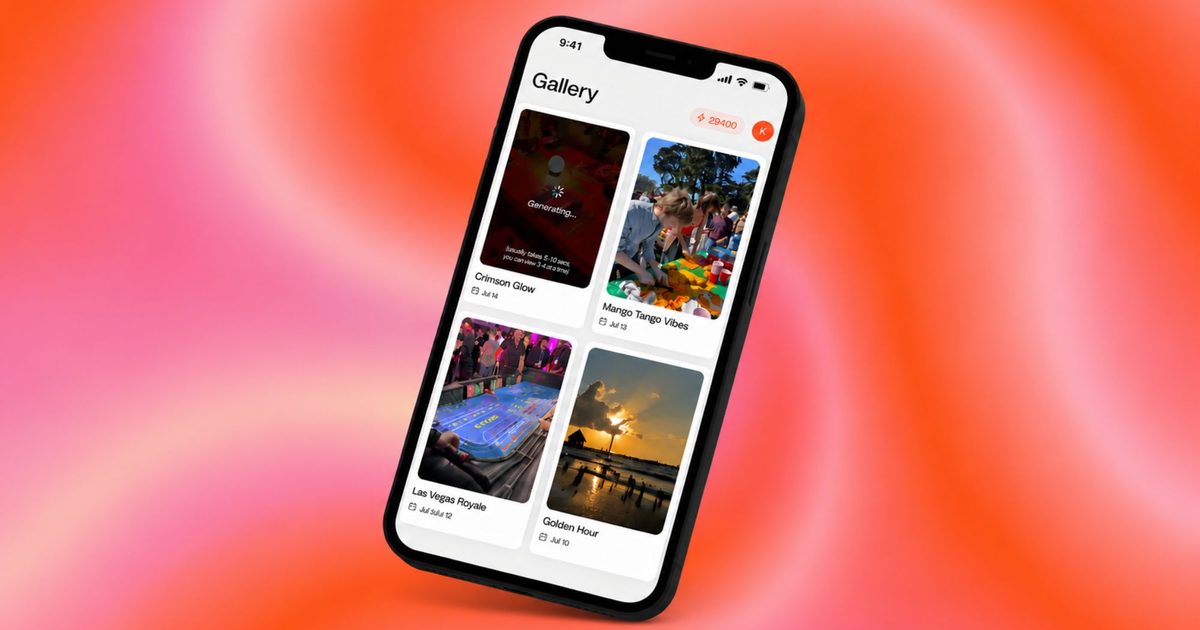
Your camera roll is likely overflowing with vacation photos, birthday clips, and random video snippets that have never seen the light of a social media feed. Many people dream of becoming consistent content creators but feel blocked by the steep learning curve of video editing. A new iOS app called Reelful aims to remove that barrier entirely by using artificial intelligence to transform raw media into polished, ready-to-post reels for TikTok and Instagram.
Reelful is designed for individuals who have a library of visual content but lack the time, skills, or patience to manually edit videos. The app promises to handle everything from scriptwriting to voiceovers to final assembly, allowing users to generate a complete reel in minutes. This approach could democratize content creation, especially for small business owners, influencers, and casual social media users who want to maintain an active presence without hiring a professional editor.
How Reelful Works: From Prompt to Post-Ready Reel
The workflow inside Reelful is straightforward and user-friendly. First, the user types a prompt describing the story they want to tell. This could be anything from a travel recap to a product demonstration or an event highlight. Next, the user records a 30-second voice sample. The app uses this sample to create a voice clone that will narrate the final video. Finally, the user selects the photos and video clips from their camera roll that they want to include. After these three inputs, Reelful takes complete control.
The app’s AI engine plans the video structure, writes a script based on the prompt and the selected media, generates the voiceover using the cloned voice, and then assembles the final cut. The output includes captions, background music, and sound effects that are synchronized with the visuals. One of the more impressive features is the ability to animate still photos. For example, a picture of someone holding a beer can be transformed into a brief moving clip where the person appears to take a sip. This breathes life into static images and makes the final reel feel more dynamic.
Once the video is ready, users can refine it through a chat interface. They can ask the app to swap the music track, tweak the script wording, adjust pacing, or modify other elements without needing to manually edit a timeline. This conversational editing process is a significant departure from traditional video editing software, which often requires dragging clips, trimming, and adjusting layers.
The Technology Behind Reelful: AI Voice Cloning and Automated Editing
Voice cloning is at the heart of Reelful’s value proposition. The app requires a 30-second voice sample to create a personalized voice model. This allows the AI to narrate the video in a tone and style that matches the user’s natural speaking voice. The technology uses deep learning models trained on thousands of hours of speech data to capture pitch, cadence, and intonation. While this is convenient, it also raises privacy and ethical considerations. Users must trust the app with their biometric voice data, and there is a risk of misuse if the voice model were to be accessed by unauthorized parties.
The automated editing engine analyzes the selected media to find the best moments. It can identify faces, objects, and actions, and then align the script with the most relevant visuals. The AI also adds transitions, text overlays, and background music that fits the mood of the story. This level of automation is possible thanks to recent advances in computer vision and natural language processing.
Reelful is not the first app to offer AI-powered video creation. Competitors like CapCut, InVideo, and Lumen5 provide similar features, but they often require more manual input or do not include voice cloning. CapCut, for example, offers automatic captions and trendy templates but relies on the user to arrange clips manually. InVideo and Lumen5 are more focused on marketing and business videos, with less emphasis on personal storytelling. Reelful differentiates itself by combining voice cloning, scriptwriting, and fully automated assembly into a single seamless experience tailored for social media.
The animation of still photos is another unique selling point. Using a technique called image-to-video generation, the app predicts motion from a single frame. This is similar to technologies used by companies like Pika Labs and RunwayML, but integrated directly into the editing pipeline. For users who have many photos but few videos, this feature can dramatically increase the dynamism of their reels.
Pricing Options and Target Audience
Reelful offers two pricing paths: one-time credit purchases and monthly subscriptions. Credit bundles allow users to buy a set number of videos without committing to an ongoing payment. The smallest bundle is five videos for $15, which works out to $3 per video. Larger bundles include 15 videos for $43 (approximately $2.87 per video) and 33 videos for $90 (about $2.73 per video). These prices are reasonable for someone who only needs to create a handful of reels, such as for a once-a-month vacation recap or a birthday tribute.
For regular creators who publish multiple times per week, subscriptions offer better value. The Creator plan costs $25 per month and includes 10 videos. The Pro plan is $50 per month for 25 videos. The Studio plan, aimed at heavy users or small agencies, costs $100 per month for 60 videos. These monthly plans bring the per-video cost down to $2.50, $2.00, and $1.67 respectively. Compared to hiring a freelance video editor, which can cost $50 to $200 per video, Reelful’s pricing is extremely competitive.
The target audience for Reelful includes influencers who need to maintain a high posting frequency on TikTok and Instagram, small business owners who want to create product demos or behind-the-scenes content, and casual users who occasionally post highlights of their life. The app may also appeal to content creators who are not native speakers of English, as the AI can generate voiceovers in a cloned voice, reducing the need to record narration themselves.
However, the app is currently only available on iOS, which limits its reach. Android users will have to wait, and a web version is also in the pipeline. This could be a significant limitation given that a large portion of the global content creator audience uses Android devices. Additionally, the requirement to record a voice sample may deter privacy-conscious users. Some may also worry about the ethical implications of voice cloning technology being used without consent, although Reelful presumably uses the sample only for the user’s own account.
Potential Impact on Content Creation
Reelful represents a broader trend of AI tools lowering the barrier to entry for creative work. In the past, producing a high-quality social media video required knowledge of editing software, access to royalty-free music, and the ability to write engaging scripts. Now, an app can handle all of those tasks with minimal human input. This could lead to an explosion of user-generated content, but it also raises questions about authenticity. If everyone can create polished reels, what sets one creator apart from another?
The app’s ability to animate still photos also blurs the line between photography and videography. Users may find themselves taking more photos knowing they can be converted into video clips later. This could shift how people capture memories, with an emphasis on static shots that can be repurposed for dynamic reels.
In terms of competition, established social media platforms are also introducing AI editing tools. TikTok has its own auto-caption and video enhancement features, and Instagram has been testing AI-driven Reels creation. Reelful’s main advantage is its focus on using the user’s own camera roll and voice, creating a personalized output that feels authentic rather than templated. The chat-based refinement also allows for creative control that other AI video makers lack.
There are also potential applications for businesses. A real estate agent could use Reelful to create virtual tours from a series of room photos. A fitness trainer could compile workout clips into a motivational reel. A chef could turn step-by-step photos of a recipe into a food video. The app’s voice cloning feature means each video can have a consistent narration style without requiring the creator to record audio separately each time.
As with any AI tool that involves personal data, trust is crucial. Reelful will need to be transparent about how voice samples are stored, used, and deleted. Any data breach could lead to malicious use of cloned voices, such as creating deepfake audio. The company has not yet published detailed privacy policies, but users should evaluate the risks before uploading sensitive content.
Looking ahead, the arrival of Android and web versions will likely broaden Reelful’s user base significantly. The web version could also enable collaborative editing, where multiple users contribute clips to a single reel. If Reelful continues to improve its AI models, the quality of the auto-generated videos will only get better, potentially challenging even professional editing software for certain use cases.
In conclusion, Reelful offers a compelling solution for anyone who finds video editing tedious or overwhelming. By automating the most time-consuming aspects of reel creation and adding a personalized touch through voice cloning, the app empowers users to share their stories more frequently and with less effort. The pricing is accessible, and the technology is impressive, though privacy concerns and iOS exclusivity are current drawbacks. As the app evolves, it could become an essential tool in the content creator’s arsenal, fundamentally changing how people turn their camera roll memories into social media moments.
Source: Digital Trends News