

Food poisoning is an unpleasant experience that most people would rather avoid. To reduce the risk, many consumers carefully inspect fruits for bruises, sniff milk before pouring, and check expiration dates on packaged goods. But these methods are far from foolproof. Harmful germs and toxins often remain invisible to the human senses, making it difficult to know whether the food on your plate is truly safe.
To address this problem, a research team at UC Berkeley has developed an innovative solution: an electronic nose, or e-nose, that can detect spoiled food and allergens before they reach your table. The project is led by Ph.D. student Carla Bassil, who has been working on this technology to bring laboratory-grade sensing to everyday food safety.
How the E-Nose Works
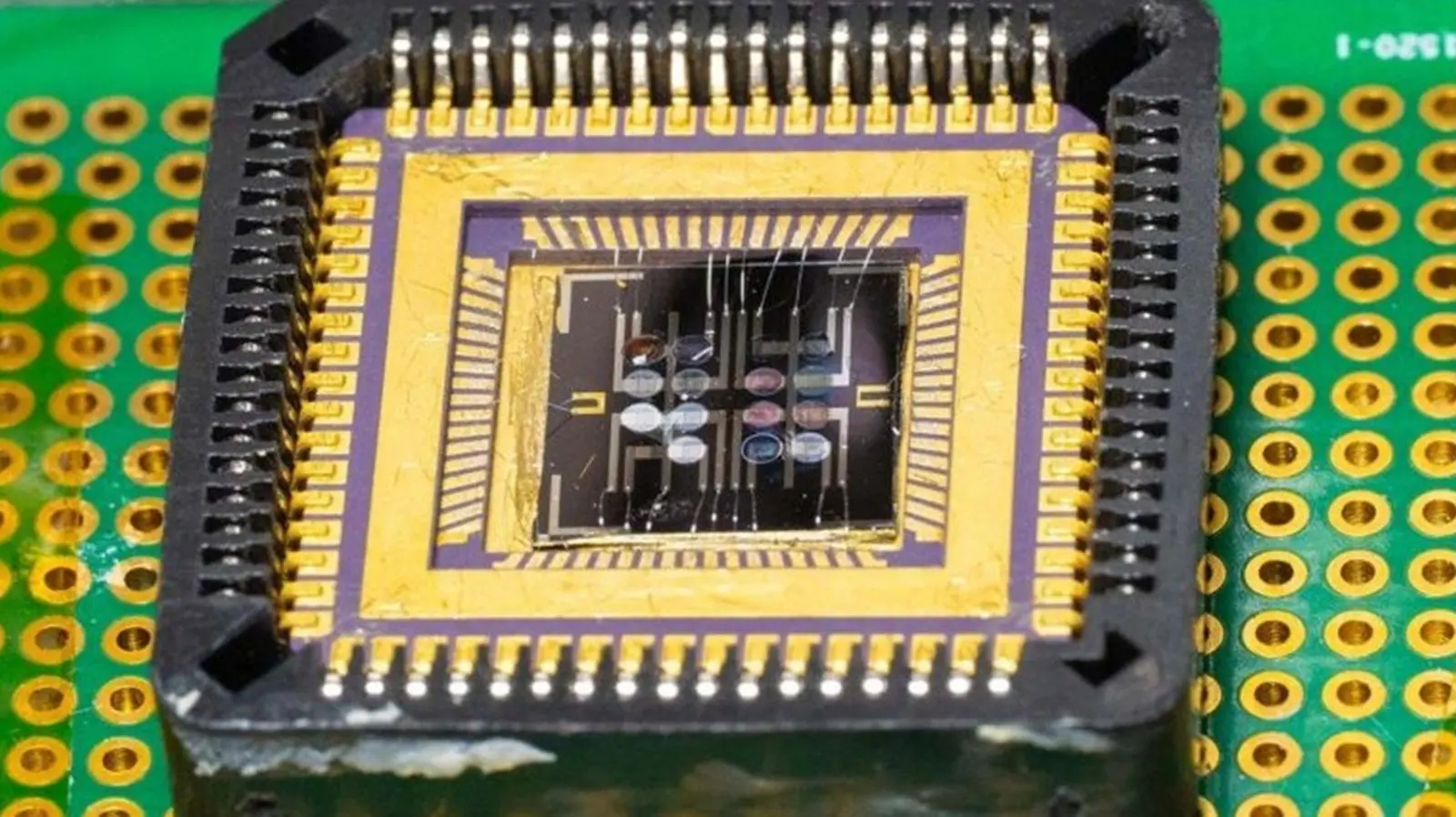
The e-nose is built around a compact chip featuring 16 small gas sensors. Each sensor is designed to target specific chemical compounds that are released by food as it spoils or by allergenic ingredients. When these compounds come into contact with a sensor, they trigger an electric signal. The pattern of signals across all 16 sensors creates a unique digital fingerprint for each smell, much like how taste buds work together to identify flavors.
Bassil explained that the device can be thought of as a set of digital taste buds. Each sensor responds uniquely to various gas molecules presented to it, allowing the system to distinguish between different foods and their states of freshness. This approach goes beyond simple detection; it aims to interpret the complex chemical language of food.
The e-nose has been trained using machine learning, a branch of artificial intelligence that enables computers to learn from data without being explicitly programmed for every scenario. In this case, the system was fed a wide range of gas signal patterns from foods such as raw chicken and milk, both when freshly stored and when left out at room temperature for several days. Over time, the e-nose learned to recognize the difference between fresh and spoiled items.
Impressive Accuracy So Far
In current testing, the e-nose can predict spoilage and allergens with an accuracy rate of 92.6%. This high level of performance suggests that the device could one day serve as a reliable tool for both consumers and the food industry. Imagine being able to scan a suspect leftover container or a salad bar item and immediately know whether it is safe to eat.
The artificial nose is also remarkably sensitive. It can detect as little as 0.05 grams of walnut, which is approximately one hundredth of a shelled walnut. This level of sensitivity is far beyond human capability and could be life-changing for people with severe allergies.
Challenges Still to Overcome
Despite its promise, the e-nose faces several significant hurdles before it can be deployed in real-world settings. One major issue is that its sensitivity has not yet been tested in foods that contain more than one type of gas. In a typical meal, multiple ingredients release various compounds simultaneously, and the e-nose must be able to pick out a specific signal from this chemical chaos. For example, detecting a tiny piece of walnut in a salad or baked good is much harder than detecting it in isolation.
Another challenge is the environment where the e-nose would be used. A refrigerator, for instance, contains many different foods, each releasing their own gases. The e-nose would need to consistently identify a spoiled item even when surrounded by the odors of other foods. This is a complex problem that the research team is still working to solve.
The e-nose is also still learning how everything smells. While detecting a single odor is relatively straightforward, attempting to identify multiple smells with one chip has proven tricky. The device currently confuses hazelnuts with peanuts, meaning the compounds these nuts produce may trigger the same sensors and be difficult to differentiate. This is a critical issue for allergen detection, because a mistake could put an allergic person at risk.
Similarly, a rotten boiled egg and raw chicken release comparable raised levels of certain gaseous compounds, creating another challenge for the e-nose. Because these two foods produce similar chemical signatures, the system can struggle to tell them apart. This limitation highlights the need for more sophisticated training data and sensor arrays.
Learning From Chemical Complexity
The confusion between certain foods points to a broader scientific issue: odor perception is not a simple one-to-one mapping of molecules to smells. Many gases are released by multiple foods, and the concentration and combination of these gases play a large role in determining the final smell. The e-nose must learn to interpret not just individual compounds but also the ratios and patterns that make each food unique.
To improve the system, Bassil plans to test the e-nose in more environments and expose it to a wider variety of foods. This will help the machine learning algorithm refine its understanding of different gas profiles. The goal is to enhance both sensitivity and accuracy, so the e-nose can eventually handle the messy, real-world conditions where food safety matters most.
Future Applications
If these challenges can be overcome, the e-nose could have a profound impact on public health. Foodborne illnesses affect millions of people each year, leading to hospitalizations and even deaths. A portable, accurate e-nose could help reduce these numbers by enabling people to check food before eating it.
Bassil envisions that the e-nose could someday be available as a smartphone app. Users would simply place their phone near a food item, and the app would analyze the gas signals to determine if it is safe. This would put advanced sensing technology directly into the hands of consumers, making food safety more accessible than ever before.
Beyond personal use, the e-nose could be employed in restaurants, grocery stores, and food processing plants. It could help quality control teams quickly identify spoiled batches or detect undeclared allergens in packaged foods. The technology might also be adapted for other applications, such as environmental monitoring or medical diagnostics, where detecting specific gases is crucial.
The development of the e-nose is part of a broader trend at UC Berkeley, where researchers have unveiled various innovative prototypes. For instance, the same institution has produced an insect-sized jumping robot and a wearable sweat sensor. These projects demonstrate the university's commitment to advancing technology that solves practical problems.
The e-nose represents a fascinating intersection of chemistry, engineering, and artificial intelligence. While it is not yet perfect, its current performance shows that electronic sensing can rival and even surpass human abilities in specific contexts. With continued research and refinement, this technology could completely change how we determine food safety.
Source: SlashGear News