

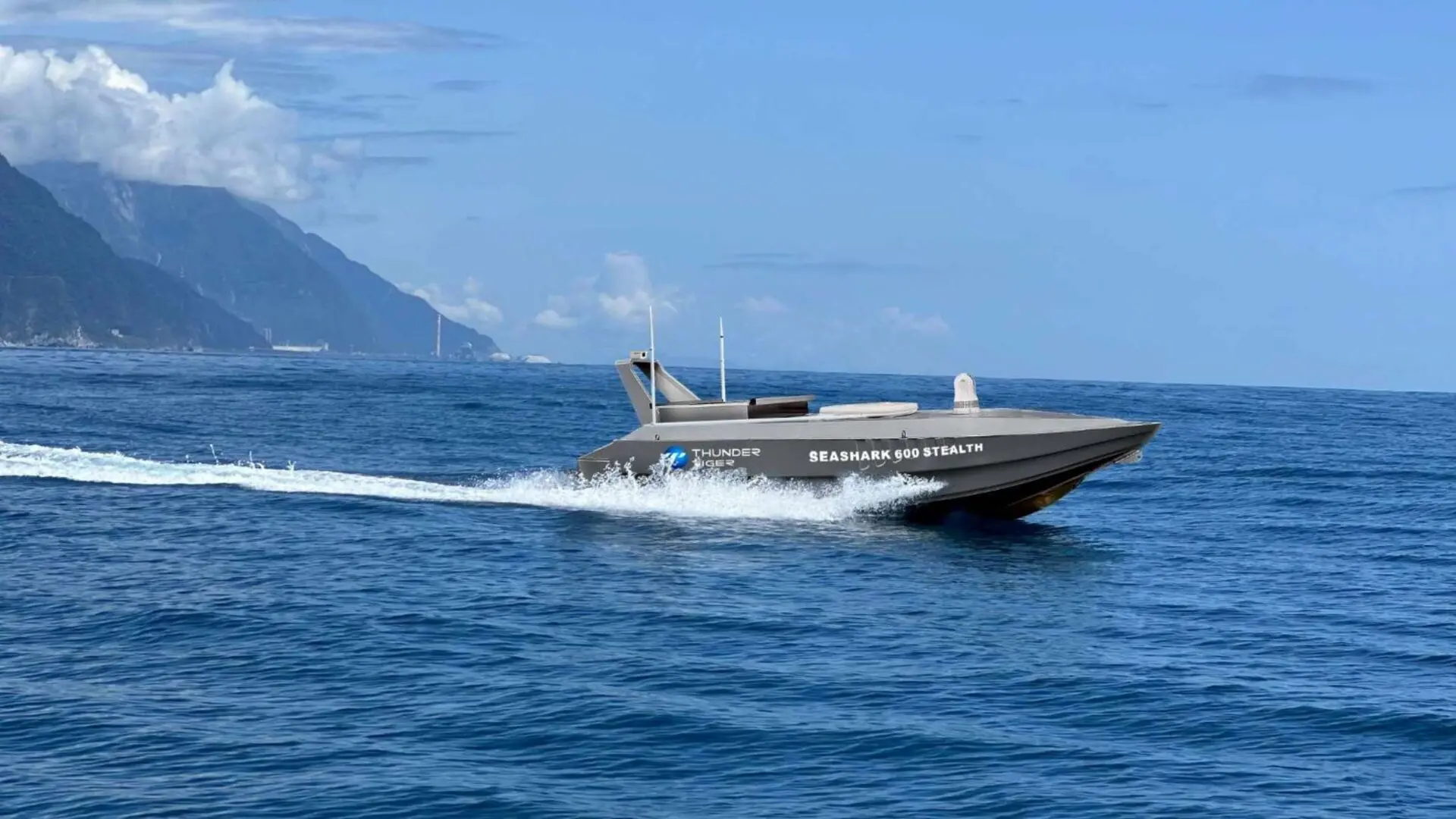
In a historic first, Hivemind AI software has carried out an on-water swarming test during a mission in Taiwan, demonstrating the growing capability of autonomous systems in military operations. The trial involved a coordinated group of uncrewed surface vessels and aerial drones operating in unison, controlled by Hivemind's artificial intelligence, with no human input for individual vehicle decisions. The successful test signals a major leap forward in the integration of swarming technology into real-world maritime environments, especially in a region known for its complex geopolitical tensions.
What Is Hivemind AI?
Hivemind is an AI software platform designed to enable autonomous swarming among various types of drones, whether they operate in the air, on land, or at sea. Unlike traditional remotely piloted systems, Hivemind allows each vehicle to make its own decisions based on shared situational awareness. The platform uses sophisticated machine learning algorithms and decentralized control architectures, meaning that even if one vehicle is lost or communications are severed, the rest of the swarm can continue the mission.
One of the key features of Hivemind is its ability to operate in GPS-denied environments. This is particularly important in contested areas where adversaries may attempt to jam signals. By relying on on-board sensors, visual odometry, and collaborative navigation, the swarm can maintain coordination without external references. The software has been tested in various simulations and real-world demonstrations over the past several years, but this was the first time it was used in a maritime swarm scenario in the Taiwan theater.
The Significance of On-Water Swarming
Maritime swarming presents unique challenges compared to land or air operations. Water surfaces are highly dynamic, with waves, currents, and weather conditions constantly altering the environment. Additionally, communication over water can be more difficult due to the lack of natural obstacles to relay signals and the limited range of radio frequencies. Hivemind's successful on-water test demonstrates that the software can adapt to these conditions in real time.
The ability to deploy a swarm of uncrewed surface vessels is of strategic importance for naval forces. Such swarms can perform a variety of missions, including reconnaissance, mine countermeasures, anti-submarine warfare, and even offensive strikes. By using multiple small, relatively inexpensive vehicles, a military can saturate an adversary's defenses and overwhelm their targeting systems. Swarming also increases the resilience of the force: if one vessel is disabled or destroyed, others can quickly adjust and fill the gap.
In the context of Taiwan, the strategic implications are profound. The island nation faces a significant military threat from across the Taiwan Strait, where large numbers of ships, missiles, and aircraft could be used in an invasion or blockade scenario. Swarm technology offers a potential asymmetric advantage for Taiwan's defense, allowing a smaller force to counter a much larger one by using coordinated autonomous operations. The on-water test is likely a demonstration of concepts that could be applied to defending shipping lanes, detecting incoming threats, and disrupting amphibious landings.
The Taiwan Mission Context
The test took place as part of a broader military mission focused on Taiwan, although specific details about the location and participating forces have not been fully disclosed. It is believed to be the first operational exercise of its kind in the region, indicating a high level of technical maturity and trust in the AI system. The mission likely involved cooperation between multiple branches of the armed forces, combining naval assets with aerial drones to achieve a common objective.
Taiwan has been actively seeking ways to enhance its self-defense capabilities in light of increasing Chinese military pressure. The island's military has invested heavily in smart weapons, unmanned systems, and cyber defense. AI-driven swarming is seen as a force multiplier, enabling a smaller number of operators to control a larger number of platforms. This test may pave the way for more integrated use of autonomous systems within Taiwan's existing defense architecture.
How the Swarming Test Worked
During the exercise, several uncrewed surface vessels were launched into the water, along with a team of aerial drones. The Hivemind software was embedded in each platform, allowing them to form a mesh network. As the swarm moved, the vehicles continuously exchanged data on their positions, sensor readings, and the surrounding environment. The AI jointly planned routes, assigned tasks, and adjusted formation in response to simulated threats.
One of the most impressive aspects was the swarm's ability to detect and track a mock enemy vessel. The drones and surface craft worked together to triangulate the target's location and maintain continuous surveillance, even when some platforms moved out of optimal range. This kind of cooperative sensing is a cornerstone of swarming theory and was proven to work effectively in a maritime setting.
The test also included exercises in electronic warfare resistance. The AI system was forced to operate under simulated jamming conditions, and it responded by reconfiguring the network and relying on optical sensors and short-range radio links. This capability is vital in a real conflict scenario, where adversaries would likely attempt to disrupt communications.
Development History of Swarming AI
Swarming algorithms have been studied for decades, inspired by the collective behavior of insects such as bees and ants. In the military domain, the United States and other nations have been experimenting with drone swarms since the early 2000s. Early tests focused on basic flocking behaviors and simple waypoint navigation. Over time, the software has evolved to include more advanced functions like task allocation, adaptive formation, and collaborative decision-making.
Hivemind builds on this foundation with a modular and scalable architecture. It can be installed on a wide range of hardware, from small quadcopters to larger fixed-wing aircraft and boats. The software is designed to be platform-agnostic, meaning that different types of drones can operate together seamlessly. This flexibility is a key advantage, as military forces often need to integrate equipment from various manufacturers and eras.
The first major public demonstration of Hivemind occurred a few years ago when the company behind it showcased a swarm of drones performing a mock autonomous strike. Later, the software was adapted for ground vehicles, and there were experiments with loitering munitions. Each test has contributed to the maturity of the system, building confidence in its reliability and safety mechanisms. The on-water test is a continuation of this pattern, expanding the domain expertise to the seas.
Implications for Future Warfare
The success of the on-water swarming test has broad implications for the future of combat. It proves that autonomous swarms are no longer theoretical but can be deployed in realistic operational settings. This will likely accelerate the adoption of similar technologies by other countries and branches of the armed forces. The ability to field large numbers of intelligent, cooperative drones could change the calculus of naval power, making expensive platforms like aircraft carriers more vulnerable to saturation attacks.
At the same time, the test raises important questions about the ethics and rules of engagement for autonomous weapons. While Hivemind operates with a human supervisor who can intervene at any time, the software itself can make tactical decisions at machine speed. If deployed in a conflict, commanders must trust the AI to distinguish between civilian and military vessels, to avoid escalation, and to comply with the laws of armed conflict. These are ongoing debates that will shape how swarming systems are used.
For Taiwan, the timing of this test is significant. As tensions in the region continue to rise, innovative defense solutions are critical. Autonomous swarms offer a way to provide persistent surveillance along the coast, to protect vital infrastructure, and to complicate any adversary's planning. They also reduce the risks to human personnel, a major consideration for an island nation with a limited population. The successful demonstration suggests that Taiwan, or its allies operating on its behalf, is seriously exploring these options.
Technical Challenges and Solutions
Operating a swarm of surface vessels and drones over water presents several technical challenges. The vehicles must contend with saltwater corrosion, varying wave heights, and the lack of visual landmarks. Hivemind uses a combination of LIDAR, radar, sonar, and optical cameras to build a dynamic model of its surroundings. The AI also uses the collective input from all vehicles to fill in gaps, so if one vessel has a clear view of a target, it shares that information with the rest of the swarm.
Communication is another hurdle. On water, high-frequency radios can be limited by line-of-sight, and satellite communication may be jammed. To overcome this, the swarm often relies on a mobile ad hoc network where each vehicle acts as a relay for others. This spreads the network across a large area and makes it more resilient. In the Taiwan test, the system successfully maintained connectivity among the various platforms, even as they dispersed over a wide area.
Another challenge is the need for precise synchronization. In a swarm, all vehicles must coordinate their movements to avoid collisions and to execute maneuvers as a single coherent unit. Hivemind uses a decentralized decision-making process that continuously negotiates with the other vehicles. The test proved that this process can work at sea, where wind and currents push vehicles off-course. The AI's ability to constantly recompute and adjust is a testament to the robustness of its algorithms.
Strategic Reactions and Cooperation
The news of the successful swarming test has generated significant interest among defense analysts. Many view it as a breakthrough that could shift the balance of power in the Indo-Pacific. There are reports that other countries in the region, such as Japan and Australia, are paying close attention to the development. They may seek to collaborate or acquire similar technologies for their own defense needs. The United States has long been a leader in autonomous systems, but this test shows that the technology can be adapted to the specific geographic and operational requirements of Taiwan.
It is likely that more tests will follow, perhaps involving larger numbers of vehicles and more complex missions. The on-water test sets the stage for integrated operations, where swarms of drones work alongside conventional submarines, surface ships, and aircraft. The ultimate goal is to achieve a fully networked battlespace where every sensor and shooter is connected in real time, and AI helps to make sense of the overwhelming amount of data.
Despite the technological success, there are still many hurdles to overcome. Reliability, safety, and human-machine teaming are areas that require further research. The software must be made even more resistant to cyber attacks and electronic warfare. And the costs of manufacturing large numbers of autonomous vehicles must come down to make the concept practical on a large scale. But the Taiwan mission has provided a solid proof of concept, moving swarming technology from the laboratory to the ocean.
As the first on-water swarming test concludes, the implications are clear: autonomous swarms are becoming a reality. They promise to provide new defensive and offensive capabilities, especially for nations facing asymmetric threats. The successful deployment in the context of a Taiwan mission underscores the urgency and importance of such innovation. With continued refinement and investment, Hivemind AI is poised to play a crucial role in the future of maritime security.
Source: TechRadar News