

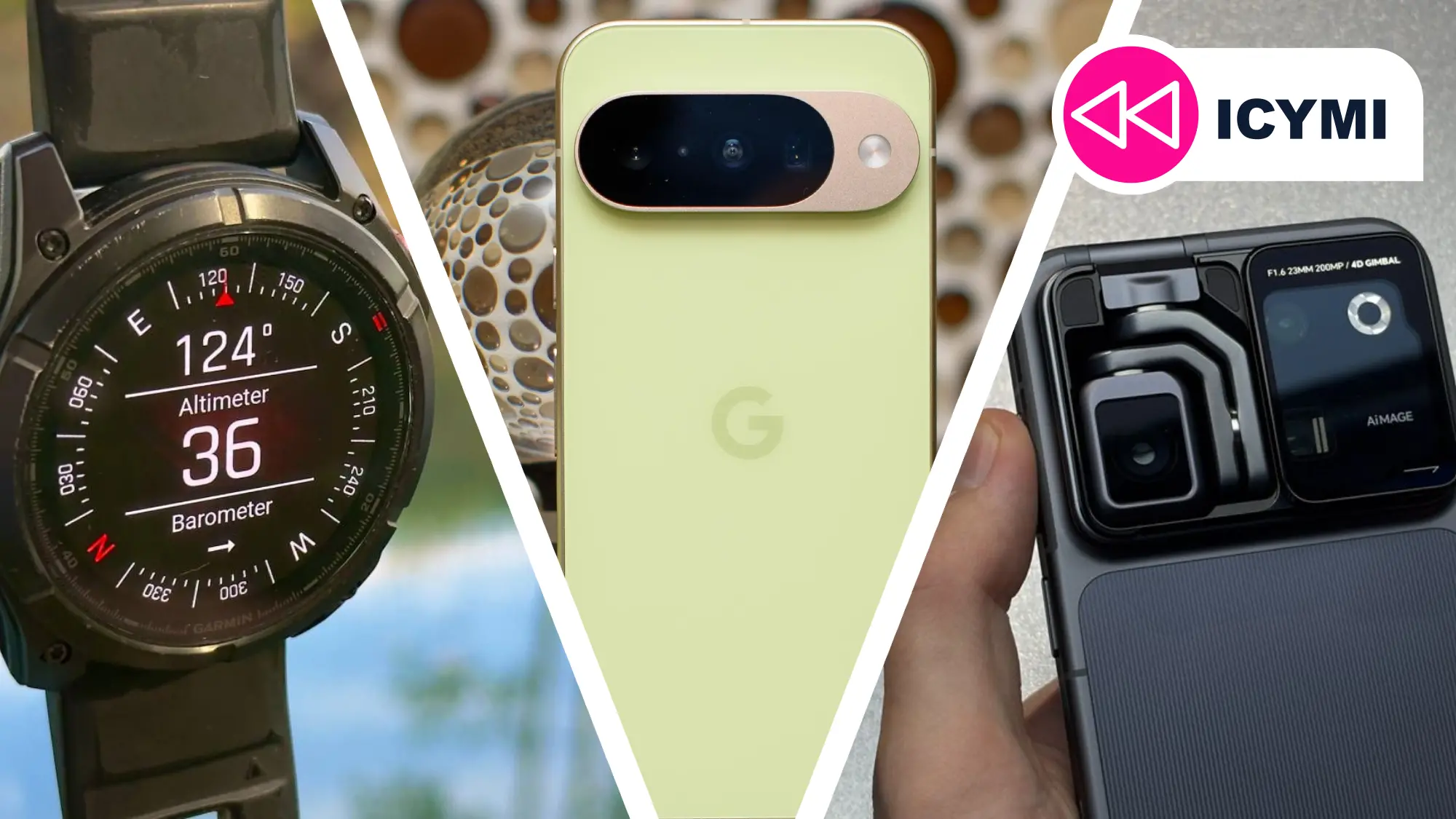
If you blinked this week, you might have missed one of the busiest news cycles in tech. From Google's next-generation Pixel 11 launch to Honor's surprisingly emotional Robot Phone concept, the industry showed once again that innovation never slows down. Here are the seven biggest tech stories you need to know, with the key facts and context that matter.
Google Pixel 11 Launch: A Smarter Flagship
Google used the first half of the week to pull the wraps off its Pixel 11 lineup, confirming that the next flagship phones will arrive earlier than many expected. The headline features include a fully customized Tensor chip that focuses on on-device AI, a brighter LTPO display, and a redesigned camera bar that houses a new periscope telephoto sensor. Google also spent considerable time on battery life, promising a 25 percent larger cell in the standard model and faster wireless charging across all versions. What stood out most, however, was the software: Gemini-powered tools can now summarize incoming notifications, suggest replies based on context, and even take over complex tasks like booking restaurant reservations. The Pixel 11 launch marks a clear shift in Google's strategy from hardware specs to ambient AI experiences. Early impressions from demo units suggest the camera system remains best-in-class, especially in low light, where the new image signal processor reduces noise without losing texture. The launch date is set for later this fall, with preorders opening immediately after the event.
Honor's Robot Phone: A New Kind of Personal Assistant
Honor closed the week with one of the most talked-about surprises in recent memory: a concept device that the company calls the Robot Phone. Unlike traditional smartphones, this device uses a multimodal AI agent that can observe the screen, interpret user intent, and operate apps on behalf of the owner. In the demo, the Robot Phone navigated a food delivery app, compared prices, and completed a checkout with almost no manual input. Honor says the goal is to move from touch-driven interfaces to intent-driven interfaces, where the phone acts as a personal concierge rather than a passive tool. The company was careful to call it a concept, noting that privacy and security frameworks still need to be refined before production. Still, the announcement sent ripples across the industry because it challenges the assumption that app UIs are the final layer of the mobile experience. Developers may soon need to design for AI agents, not just human thumbs. Honor says the robot phone will appear in select markets as a limited developer unit next year.
Qualcomm's New Chipset Redefines Mid-Range Power
Qualcomm used a midweek announcement to reveal the Snapdragon 7s Gen 4, a chipset aimed at the upper mid-range tier. The new silicon brings flagship features like hardware-accelerated ray tracing and on-device generative AI to phones that cost far less than $500. Qualcomm says the GPU performance has improved by 40 percent compared to the previous generation, while the integrated modem supports the latest Wi-Fi 7 and 5G carrier aggregation. The chip also includes a new low-power AI engine that allows live translation and photo editing without an internet connection. Several vendors, including Xiaomi and Realme, are expected to release phones with this chip before the end of the quarter. The announcement is significant because it narrows the gap between flagship and affordable devices, putting advanced photography and intelligent features into more hands globally.
Samsung's Foldable Battery Breakthrough
Samsung Display surprised analysts with a public demonstration of a new battery technology designed specifically for foldable devices. The prototype uses a stacked electrode structure that increases energy density by 30 percent while maintaining the flexibility needed for a folding display. Samsung says the solution could come to commercial foldables within two years, enabling thinner devices with larger capacities. The demo included a bendable battery that survived over 200,000 folding cycles without significant degradation. This development matters because foldables have long faced a tradeoff: making them thin enough to feel comfortable and packing enough battery to last a full day. Samsung's new approach solves both problems at once. Industry insiders believe the technology could also benefit rollable displays and wearable devices, where space is at a premium. The company has not confirmed which product will use the battery first, but the foldable segment is the obvious candidate.
OpenAI Announces a More Premium Subscription
OpenAI made waves with a brief update to its consumer product strategy, introducing a new premium tier for ChatGPT that gives users extended access to advanced reasoning models and faster response times. The subscription, which sits above the existing Plus plan, includes a larger context window, priority access during peak hours, and early experimental features in the Settings menu. OpenAI did not reveal exact pricing, saying it would vary by region, but analysts expect it to be near $59 per month. The move comes as competition in AI assistants has intensified, with Google, Anthropic, and Meta all launching high-profile consumer tools in recent weeks. OpenAI's announcement also clarified that free users will continue to receive the base model with no sudden restrictions. The company says the goal is to keep core features accessible while offering power users a path to more advanced capabilities.
Meta Expands AI Glasses to New Markets
Meta confirmed that its Ray-Ban smart glasses are rolling out to ten additional countries in Europe and Asia, following a period of strong demand in the United States. The glasses have become a surprise hit because they combine stylish frames with a 12-megapixel camera, open-ear audio, and an AI assistant that can identify objects, translate signs, and provide real-time information. The latest update adds a live mode that streams video directly to Facebook and Instagram while the wearer narrates. Privacy advocates have renewed their calls for clearer indicators when recording is active, but Meta says the new glasses include a sturdier LED light and a warning label in every region. The expansion is a strategic push to capture a larger share of the wearable AI market before Apple and Google accelerate their own glasses projects. Meta's partners at EssilorLuxottica expect to double production this year.
Tesla's Over-the-Air Update Adds Smarter Autopark
Electric vehicle maker Tesla started pushing a software update that significantly improves its Autopark feature. The new version uses the vehicle's neural network to identify parking spaces that are not clearly marked, including curbside spots and residential driveways. Once a space is selected, the car executes the maneuver at a slower, more cautious speed while the driver monitors the process through the mobile app. Tesla says Autopark now works in 95 percent of typical downtown parking scenarios, up from roughly 70 percent before the update. The update also includes a revamped energy app that shows battery degradation trends and a trip planner that factors in elevation and weather. While not as flashy as a new phone launch, the update demonstrates the growing importance of software-defined vehicles, where features can improve over time without visiting a service center. Tesla's approach is becoming the standard for the industry, and this latest release shows why.
Source: TechRadar News