
The computing industry has always run on prediction, rumor, and occasionally spectacular overconfidence. Long before every roadmap became a secret and every patent a weapon, engineers, executives, and founders were often surprisingly candid about where they thought technology was headed. Sometimes they were right. Sometimes they were very, very early. And sometimes they gave us the kind of quote that only gets better with age.
As the pace of tech accelerated, so did the appetite for bolder claims. A new chip architecture, operating system, search engine, mobile device, social network, cloud platform, cryptocurrency, or AI model always had the potential to reset the conversation almost overnight. In that environment, the quotable sound bite became part prediction, part marketing, and part public performance for an eager audience of enthusiasts eager to dissect every word.
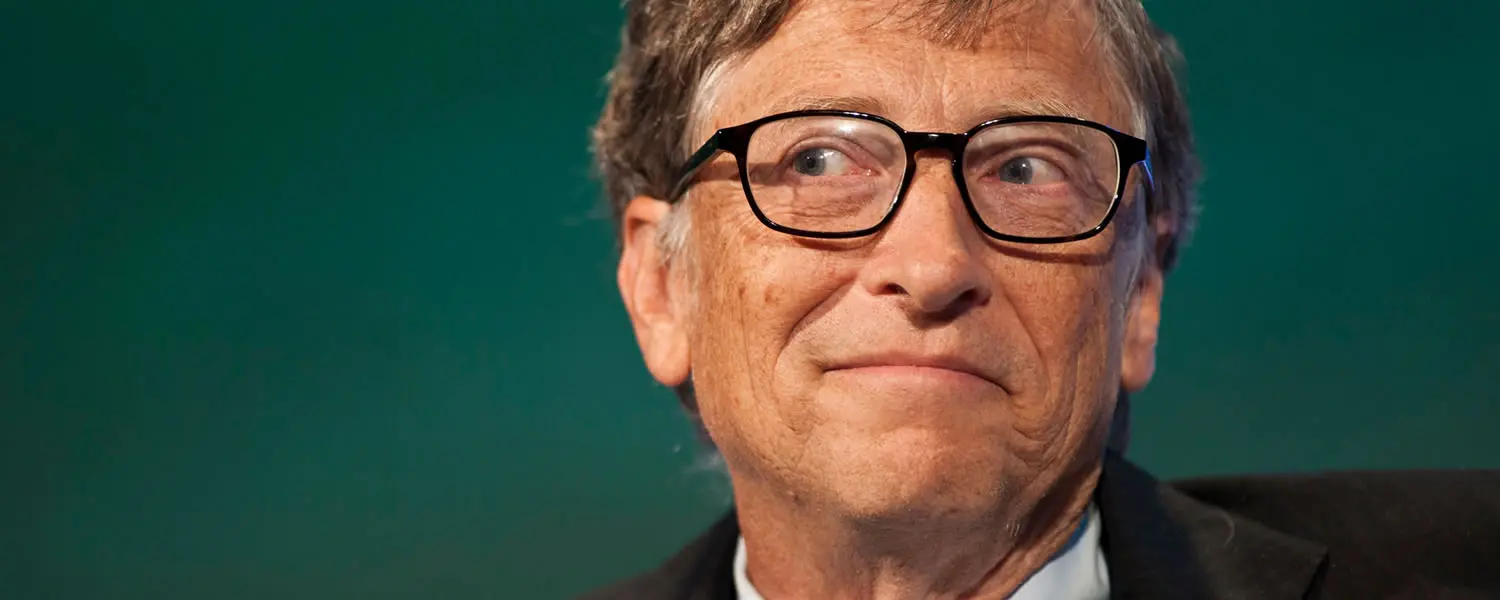
Bill Gates and the Spam That Would Not Die
At the World Economic Forum in January 2004, Microsoft's founder and then-Chairman Bill Gates declared that "two years from now, spam will be solved." To be fair, spam filters did get a lot better. To be less fair, 20 years later your inbox, texts, social feeds, and comment sections would all like a word. The quote remains a classic example of a prediction that sounded plausible at the time but underestimated the ingenuity of spammers and the scale of the problem.
Moore's Law: The Prediction That Became a Rule
Not every prediction ages like that. Three years before co-founding Intel, Gordon E. Moore published "Cramming More Components Onto Integrated Circuits" in the April 1965 edition of Electronics magazine. In it, Moore observed that the number of components on an integrated circuit had roughly doubled every year and predicted that this trend would continue for at least another decade. It was so accurate, and eventually became a self-fulfilling prophecy, that it became known as Moore's Law. The observation guided the semiconductor industry for decades, even as engineers began to hit fundamental physical limits. Today, Moore's Law is often declared dead or dying, but its legacy as the most successful tech prediction in history remains intact.
The iPhone Skeptics
In April 2007, Microsoft CEO Steve Ballmer told USA Today: "There's no chance that the iPhone is going to get any significant market share. No chance." Ballmer was mocking the iPhone's price, missing keyboard, and business appeal, which all seemed fair in 2007 Microsoft terms. Unfortunately for Microsoft, consumers had other ideas. The iPhone would go on to redefine the smartphone and eventually make Microsoft's mobile ambitions irrelevant. A few months later, BlackBerry co-CEO Mike Lazaridis said of the iPhone: "I couldn't type on it and I still can't type on it, and a lot of my friends can't type on it… It's hard to type on a piece of glass." He wasn't entirely wrong about the keyboard. He was wrong about the billion people who decided they didn't care.
Apple's Dark Days and Dell's Boomerang
Before he returned to Apple, Steve Jobs said in February 1996: "If I were running Apple, I would milk the Macintosh for all it's worth—and get busy on the next great thing. The PC wars are over. Done. Microsoft won a long time ago." Less than a year later he was back at Apple, and a decade later the iPhone changed the scoreboard entirely. Around the same time, Michael Dell, CEO of Dell Computers, was asked what he would do if he was CEO of Apple. His answer: "What would I do? I'd shut it down and give the money back to the shareholders." Apple later became one of the most valuable companies on Earth, which made the quote an all-time boardroom boomerang.
IBM's Louis Gerstner declared in July 1999 that "the era of the PC is over." IBM had already moved away from the PC business spiritually before selling it off for real years later. The funny part is that the PC era did not end, it just stopped belonging to IBM.
The Rise of Cloud and AI
Satya Nadella sent an email to employees on his first day as Microsoft's CEO in February 2014: "Our industry does not respect tradition—it only respects innovation." That turned out to be less corporate poetry than a warning shot. Microsoft would soon look very different, especially once cloud and AI became the new center of gravity.
Mark Zuckerberg's October 2021 founder's letter promised "an embodied internet where you're in the experience, not just looking at it." Meta put its whole company name behind this bet. A few years later, the metaverse looked less like the next mobile internet and more like the thing everyone forgot once ChatGPT showed up.
Bill Gates said in March 2023 that OpenAI's GPT model was "the most important advance in technology since the graphical user interface." From anyone else that might sound like AI hype; from Gates, it is at least historically interesting hype. Anthropic CEO Dario Amodei warned in May 2025 that "AI could wipe out half of all entry-level white-collar jobs." It hits differently when the warning comes from one of the people building the thing. Depending on your view, it was either responsible honesty or the darkest product marketing campaign in history.
OpenAI CEO Sam Altman wrote in January 2025: "We are now confident we know how to build AGI as we have traditionally understood it. We believe that, in 2025, we may see the first AI agents 'join the workforce' and materially change the output of companies." That stands as the boldest single claim of the AI boom, made by the person with the most to gain from everyone believing it. Whether it ages like Moore's Law or like everything else on this page is the trillion-dollar question.
Hardware, Linux, and the Geek
Intel CEO Pat Gelsinger told the press in March 2021, "The geek is back." He returned to Intel with engineer energy and a lot of nostalgia behind him. The hard part was that Intel did not just need the geek back, it needed the process lead, the manufacturing crown, and Wall Street's patience back too.
In October 1999, Linux.com site manager Trae McCombs predicted: "In five years we're going to sit around and laugh that we even had operating system wars; there's just going to be Linux. We're going to take over." Linux did take over servers, supercomputers, Android phones, embedded devices, and much of the cloud. It just forgot to conquer the consumer desktop on the way there.
Elon Musk said in June 2018 that "engineering is magic… Or at least the closest thing to magic that exists in the real world." On rockets and EVs, the quote holds up pretty well. The trick is that real-world magic still comes with production delays, recalls, and firmware updates.
Masayoshi Son of SoftBank claimed to have seen the internet revolution coming and started the Vision Fund "at the very beginning of the AI revolution." Son has a remarkable habit of seeing the future early, but also of selling some of his best assets before the rest of the world catches up.
Nvidia's Jensen Huang declared at Computex in May 2023: "Everyone is a programmer now—you just have to say something to the computer." That was both a great AI soundbite and the most Nvidia way possible to say demand for GPUs was about to explode. Developers may dispute the "everyone is a programmer" part, but Nvidia shareholders probably did not. Linus Torvalds once said at Aalto University in Finland, "Nvidia is the single worst company we've ever dealt with… Nvidia, f you." In what may be tech history's greatest reversal, Nvidia became the world's most valuable company in 2024, its GPUs powering the AI revolution predominantly on Linux servers. Nvidia has since released open-source kernel drivers, and Torvalds later acknowledged he uses one of their cards himself.
The Internet, Google, and Social Media
Nicholas Negroponte, director of MIT's Media Lab, predicted in November 1989 that "in the future, the primary means of communication with computers will be through speech, not through graphics." He didn't specify how far into the future, which was lucky. Sergey Brin joked, "We are currently not planning on conquering the world." Technically, not planning is not the same as not doing. Mark Zuckerberg said in 2011, "The question isn't 'What do we want to know about people?' It's, 'What do people want to tell about themselves?" The next decade made that distinction feel a lot more complicated. Salesforce's Marc Benioff called for Facebook to be broken up, saying "It's addictive; it's not good for you; they're after your kids, they're running political ads that aren't true."
Stephen Hawking reminded us in 1988 that "we are just an advanced breed of monkeys on a minor planet of a very average star. But we can understand the universe. That makes us something very special." It is not a tech prediction so much as the reason tech predictions exist at all. Eric Schmidt told The Atlantic in October 2010, "We know where you are. We know where you've been. We can more or less know what you're thinking about." That phrasing sounded like a privacy nightmare wearing a conference badge and remains one of the most accidentally honest Big Tech quotes.
Robert Metcalfe predicted in an InfoWorld column in December 1995 that the Internet would "go spectacularly supernova and in 1996 catastrophically collapse." He was so wrong he famously ate his own column. Sheryl Sandberg said in 2015 that "social media has created a historical shift from the historically powerful to the historically powerless. Now everyone has a voice." The harder lesson was that giving everyone a voice also gives everyone a megaphone, a mob, and an algorithm. Zuckerberg dismissed the idea that fake news on Facebook influenced the 2016 US presidential election as "a pretty crazy idea," only to regret the comment a week later.
E-Commerce and Cloud Skeptics
Jeff Bezos told Charlie Rose in May 1999 that Amazon wanted to build "a place where people can come to find and discover anything that they might want to buy online." In hindsight, it was closer to a mission statement for eating retail and several adjacent industries. Box CEO Aaron Levie joked on Twitter that "Jeff Bezos is opening a retail store and owns a newspaper. Turns out everything we thought about the internet is wrong." Steve Jobs dismissed Amazon's Kindle in January 2008, saying "people don't read anymore." Two years later, he launched Apple's own e-reader platform, iBooks, alongside the iPad.
Oracle's Larry Ellison mocked cloud computing as "complete gibberish" in September 2008, saying "The computer industry is the only industry that is more fashion-driven than women's fashion. Maybe I'm an idiot, but I have no idea what anyone is talking about." Oracle later embraced cloud because customers and revenue kept insisting on it. Sometimes the gibberish becomes the business model.
PC History and the IBM PC
When IBM entered the personal computer market in August 1981, Tandy's Radio Shack division financial VP said, "There definitely is a new kid on the block, but there is nothing that IBM has presented that would blow the industry away." Tandy President John Roach added, "I don't think it's that significant." By 1989, the IBM PC and its clones had captured 83.6% of the personal computing market.
Ken Olsen, founder of Digital Equipment Corporation, supposedly said in 1977, "There is no reason anyone would want a computer in their home." The quote aged badly because the home computer became not just useful, but eventually the gateway to work, school, games, shopping, and everything else. John C. Dvorak bet against the scanner/printer/fax/copier combo in November 1990. The device did fly, though usually while jamming, begging for ink, or refusing to scan until you replaced cyan.
The Future of Tablets and Phones
Steve Jobs described the computer as "the equivalent of a bicycle for our minds" in a 1990 film. That remains one of the best tech quotes ever. But in 2003, Jobs said, "There are no plans to make a tablet. It turns out people want keyboards… we look at the tablet, and we think it is going to fail." Apple shipped the iPad seven years later. BlackBerry CEO Thorsten Heins said in April 2013, "In five years I don't think there'll be a reason to have a tablet anymore," but BlackBerry didn't make it long enough to be proven either way.
AI: From Turing to Musk and Beyond
Alan Turing said in 1951 that machines would "outstrip our feeble powers” and that "we should have to expect the machines to take control.” The eerie part is how modern the concern still sounds. Elon Musk warned in October 2014 that "with artificial intelligence we are summoning the demon.” He later said AI could destroy humanity without even thinking about it, and a decade later AI safety became a boardroom topic anyway. Marc Andreessen responded in June 2023: "AI will not destroy the world, and in fact may save it.” Peak Silicon Valley confidence.
Crypto, Unicorns, and Hype
John Legere of T-Mobile called family plans "one of the biggest evils in this industry" before offering to pay customers' termination fees. Adam Neumann's WeWork IPO filing claimed "our mission is to elevate the world's consciousness,” for an office-rental company losing billions. The IPO collapsed within weeks. Bloomberg's Matt Levine joked about being "in the Ponzi business,” and Sam Bankman-Fried replied it had "a depressing amount of validity.” That quote looked much worse after FTX collapsed. Jack Dorsey said on the Joe Rogan Experience that Bitcoin might become the internet's native currency. Jamie Dimon called Bitcoin "worse than tulip bulbs” and "a fraud" in 2017, then his bank later held spot Bitcoin ETFs.
Microsoft, DOS, and Mobile
Lotus dismissed Windows as a long-term graphical interface for the masses in June 1989, just before Windows 3.0 launched. Bill Gates admitted in November 2019 that Microsoft's antitrust battle distracted him from building a phone OS, saying "instead of using Android today, you would be using Windows Mobile.” Brad Silverberg said DOS would be "with us forever,” and Borland's Philippe Kahn claimed "no one wants to work with Microsoft any more.” Purchase orders kept Microsoft very popular.
Entrepreneurs and the Human Side
Linus Torvalds joked, "My name is Linus, and I am your God,” and added that Linux required being "a sneaky bastard.” Eric Schmidt predicted a bifurcation into a Chinese-led internet and a non-Chinese internet led by America. Jack Ma advised, "You should learn from your competitor, but never copy. Copy and you die.” Tony Hsieh said businesses suffer when they forget about culture. Steve Jobs told customers "just avoid holding it that way" about the iPhone 4 antenna, and threatened "thermonuclear war" against Android. Tony Fadell noted, "There is a reason they call it hardware - it is hard.” Warren Buffett stayed away from tech he couldn't understand, Travis Kalanick compared Uber to a political campaign, Drew Houston said "you only have to be right once,” and Ken Kutaragi wanted PS3 buyers to think "I will work more hours to buy one.”
Richard Bader of Intel said the confusing market "provides us with some sort of job security.” AMD's Jerry Sanders called Intel's Pentium name better suited "for a toothpaste,” and John C. Dvorak declared "nobody is going to call it the Pentium.” Both were wrong. Susan Wojcicki compared coding to writing, Tim Cook said Apple would be "the first modern smartwatch,” and Clifford Stoll dismissed online databases and e-books in 1995 as silly. Reed Hastings said Netflix competes with sleep, and Scott McNealy blamed Microsoft Office for the productivity dip.
These quotes form a running time capsule of tech culture. Some were brilliantly prescient, others spectacularly wrong. All of them remind us that even the smartest people in the room are still guessing. Whether the next big prediction becomes Moore's Law or a self-eaten column depends on time, luck, and the willingness to admit that technology is always full of surprises.
Source: TechSpot News