

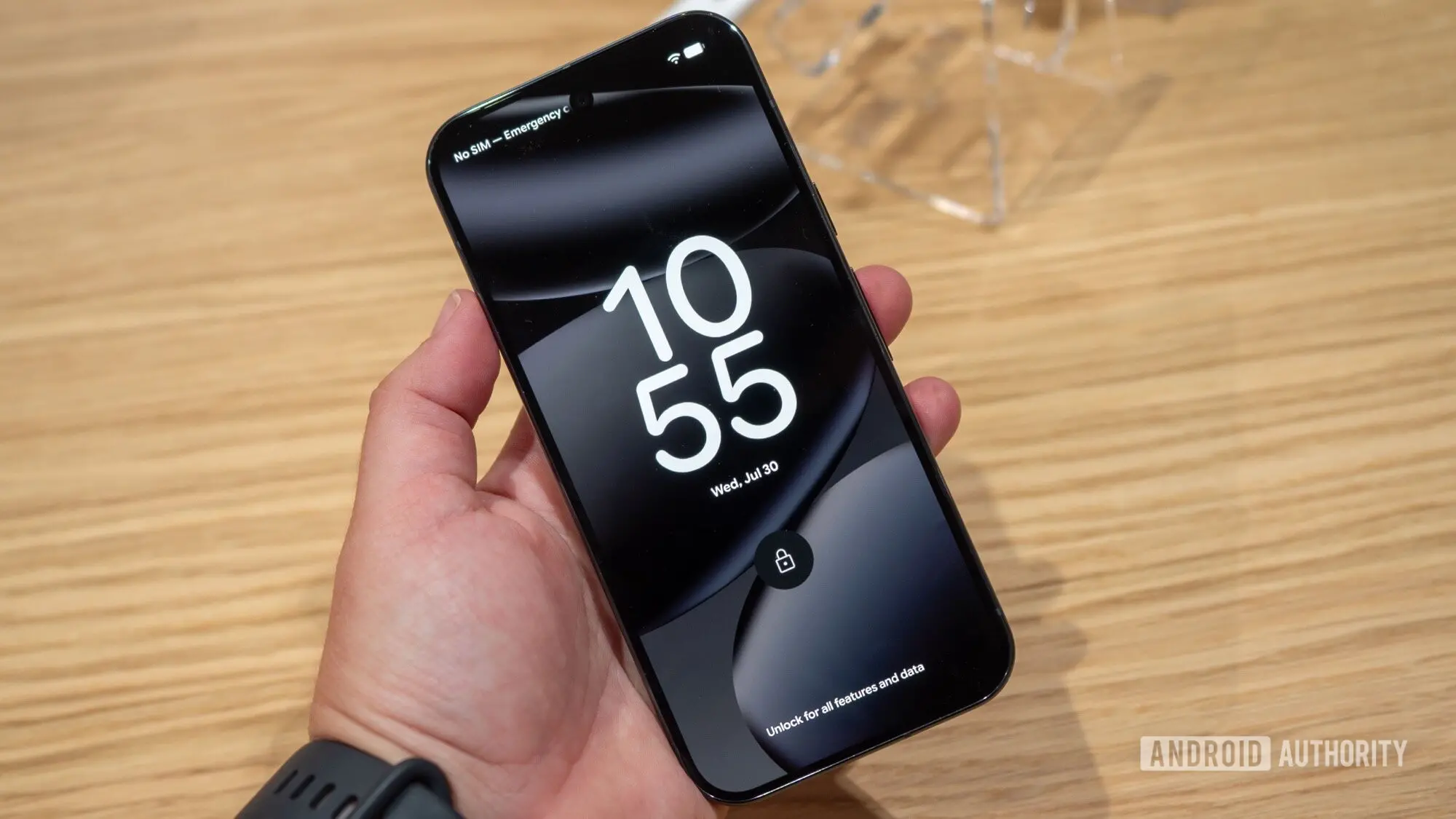
Google is pushing the boundaries of agentic AI in 2026, with initiatives like Gemini Intelligence designed to proactively accomplish tasks across apps. Now, evidence from an APK teardown suggests that Android may soon allow trusted apps to see and control screen contents even when the device is locked. This development could significantly enhance automation capabilities, reducing the friction of unlocking a phone for routine tasks.
Code strings discovered in the Companion Device Manager app by Nerd's Chalk and corroborated by Android Authority point to a new feature called "trusted pairing." These strings include prompts for confirming a PIN to pair an app with a device, as well as descriptions of two primary capabilities: proactive assistance and screen automation. The proactive assistance feature appears to use an app's screen content to provide suggestions, similar to Google's Magic Cue functionality. Screen automation, on the other hand, allows apps to see and interact with screen content to help users complete tasks even when the screen is locked.
This is a significant leap from current automation tools, which typically require the device to be unlocked. For example, Android's existing automation apps like Tasker or MacroDroid can only run tasks when the screen is on or with certain workarounds. With this new system, a trusted app could perform actions like replying to messages, accepting calendar invites, or modifying settings without the user needing to unlock the phone. This aligns with Google's broader strategy of making AI more proactive and less reliant on explicit user commands.
The security implications are carefully addressed. Users must enter their device PIN to authorize a trusted app, ensuring that only explicitly approved applications can access the locked screen. This is similar to how Android's smart lock or trusted devices work, but focused on app-level trust rather than device context. Additionally, users can toggle these features on or off in Android settings, providing granular control over which apps can operate in the background.
Historically, Android has been cautious about allowing background interactions due to privacy and security risks. The ability for an app to see and control the screen on a locked device could be misused if not properly secured. However, the PIN confirmation step adds a layer of consent, and Google's ongoing work on Android's permission system (such as runtime permissions and scoped storage) suggests that this feature will be tightly regulated. It is likely that only apps with specific system-level access, such as those from trusted OEMs or Google's own services, will be able to request this capability.
The potential use cases for locked-device automation are vast. For instance, a smart home app could automatically adjust thermostat settings based on time of day without requiring the user to unlock their phone. A banking app could display transaction alerts and allow quick actions like blocking a card. In the workplace, enterprise apps could automate onboarding flows or security checks while the device remains locked. Google's own Google Assistant could also leverage this to perform tasks like setting reminders or controlling music playback without unlocking.
Another interesting angle is the possibility of extending this feature to Googlebooks, Google's new platform that integrates Gemini Intelligence. If the same trusted pairing mechanism works across devices, users could have a seamless experience where their phone and laptop share automation capabilities. For example, a task started on a locked phone could be handed off to a Googlebook when the user moves to their desk.
From a technical standpoint, the teardown reveals that this functionality is built into the Companion Device Manager app, which is responsible for managing connections between Android devices and accessories. This suggests that the feature may initially support Android devices paired with each other or with peripherals like smartwatches or headphones. However, the code strings do not explicitly limit the scope to companion devices, indicating that it could be a general-purpose system API.
The discovery also sheds light on Google's focus on agentic AI, which is AI that can act autonomously to achieve goals rather than just responding to queries. Gemini Intelligence, announced earlier in 2026, is the flagship of this effort. By enabling automation on locked devices, Google removes a key barrier: the requirement for user presence and input. This could make AI agents more useful in scenarios where the user cannot physically interact with the device, such as when driving or when the device is in a bag.
Competitors like Apple and Microsoft are also exploring similar capabilities. Apple's Shortcuts app can run automations with some constraints, but it typically requires the device to be unlocked. Microsoft's Copilot is deeply integrated into Windows and mobile, but its ability to act on locked screens is limited. Android's approach, if implemented widely, could give it a competitive edge in the AI-driven assistant space.
However, there are challenges. Battery life could be impacted if apps constantly monitor the screen on a locked device. Google will need to optimize the system to allow only intentional and efficient automation. Additionally, user trust is critical; if a malicious app somehow bypasses the PIN requirement, it could cause serious privacy breaches. Google's Play Protect and app review processes will need to be robust.
Looking ahead, this feature could evolve into a full-fledged app ecosystem where developers can create custom agents that run in the background. Google might eventually allow users to grant permanent trust to certain apps, similar to how Android's accessibility services work. The line between a simple automation tool and a full AI agent could blur, leading to a future where your phone anticipates and fulfills needs without any direct input.
The code strings found in the Companion Device Manager app are not final, and there is no guarantee that these features will make it to a public release. APK teardowns reveal work-in-progress code that may change or be scrapped. However, given Google's public statements about agentic AI and the strategic importance of Gemini Intelligence, it is highly likely that this capability will eventually be rolled out. Users and developers should watch for upcoming Android beta releases to see if the feature appears in testing.
In summary, the evidence points to a future where Android devices can be more autonomous, performing tasks on behalf of users without the need to unlock the screen. The combination of trusted app pairing, PIN confirmation, and granular controls addresses security concerns while opening up new possibilities for productivity and convenience. As the digital ecosystem becomes more interconnected, such features will become essential for seamless user experiences.
Source: Android Authority News