

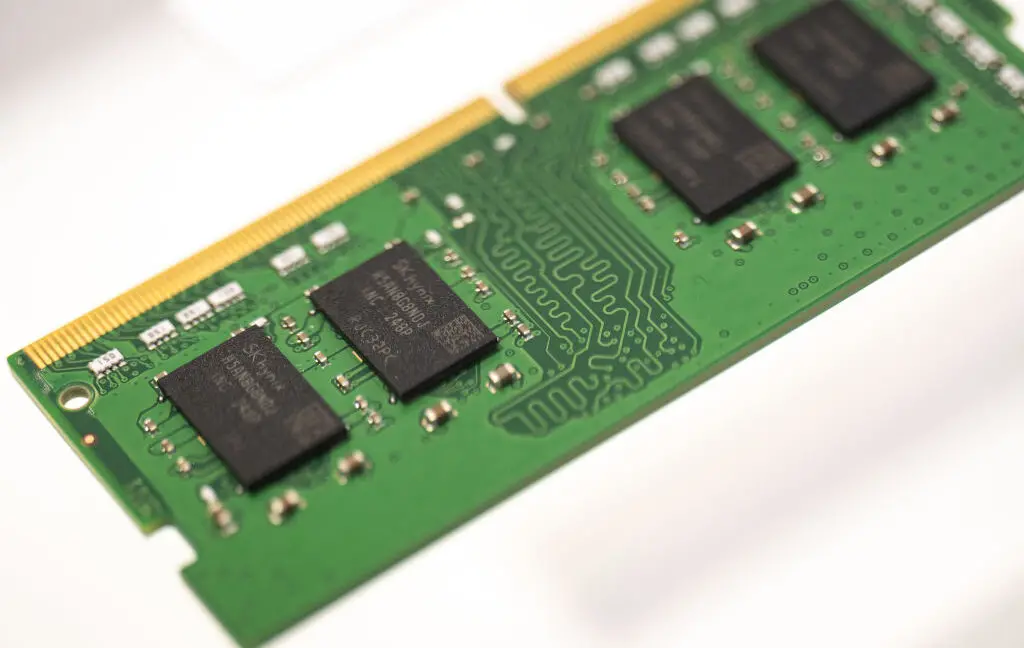
Memory executives are warning that the global RAM shortage will not ease quickly. Micron CEO Sanjay Mehrotra told investors that demand for the company’s memory will exceed available supply for at least the next couple of years, while a senior Samsung executive said high-bandwidth memory will take a much larger share of DRAM wafer capacity by 2027. Together, the comments point to a market that is tightening rather than loosening, with consequences that stretch from artificial intelligence data centers to prebuilt PCs, smartphones, streaming sticks, and gaming consoles.
Mehrotra’s remarks focused on Micron’s business-to-business sales rather than the consumer RAM market. Micron no longer sells consumer memory, and its current business centers on high-bandwidth memory for AI accelerators and DRAM for servers. Even so, the company’s outlook matters to anyone who buys a device with memory inside. Manufacturing capacity is being directed toward AI and server products, which limits the supply of memory available for consumer devices. When the most profitable and fastest-growing customers absorb available output, consumer markets feel the squeeze through higher prices, reduced configurations, or both.
Supply and Demand Are Moving in Opposite Directions
Mehrotra described the supply-demand environment as only getting tighter. That phrase captures the central problem in the memory market: demand is rising across several fronts at once, while adding new capacity is slow and expensive. AI models are growing larger, context windows are expanding, more users are accessing systems concurrently, and enterprises are deploying more agents. Each of those trends increases the need for memory capacity and for higher-performance memory. Consumer devices add another layer of demand, even as manufacturers try to allocate scarce supply to data center customers.
The shortage is not simply a matter of one product category running short. It reflects a broader imbalance between wafer capacity and the mix of memory products the market wants. Memory manufacturing requires clean rooms, specialized equipment, and long lead times. Once a fab is built, production does not instantly reach full volume. Clean-room output ramps gradually, and the industry’s transition to more advanced nodes does not deliver the same productivity gains per wafer as earlier generations. Those technical limits make it harder to solve a shortage by simply running existing factories harder.
Micron’s 2027 Output Is Largely Spoken For
Micron’s visibility into future demand is unusually clear. Mehrotra said 75 percent of Micron’s memory output for 2027 is already accounted for, and most of the company’s current sales discussions concern 2028. Demand for high-bandwidth memory is even outpacing demand for Micron’s DRAM. For 2027, a large part of the HBM volume is already sold out, and prices are much higher than 2026 prices. That combination of sold-out capacity and rising prices shows how much bargaining power memory suppliers hold in the current cycle.
The company also plans to open new clean rooms for memory manufacturing in 2028, but Mehrotra cautioned that new facilities will not immediately end the shortage. Even after construction is complete and the first wafers are produced, production ramps up only gradually. The industry also faces a difficult product mix as HBM moves from 3E to a greater mix of 4 and 4E. The trade ratio involved in producing HBM creates headwinds for supply growth, and future node transitions are expected to deliver less productivity gain per wafer. In other words, the next wave of capacity will arrive into a market that may still be hungry for more memory.
Why HBM Is Consuming More Wafer Capacity
Samsung executive Kim Taewoo provided a complementary view of the same pressure. He said HBM will account for almost 30 percent of DRAM manufacturers’ wafer capacity in 2027, compared with 20 percent this year. That shift matters because HBM is not just another memory product. It is a specialized, stacked form of memory designed for AI accelerators and other high-performance systems. Producing HBM requires significant wafer capacity and sophisticated packaging, and the trade ratio can make each bit of HBM more costly in capacity terms than conventional DRAM.
As HBM takes a larger share of wafer capacity, less capacity remains for the DRAM used in consumer devices. That does not mean consumer DRAM disappears. It means the available supply is likely to be smaller, more expensive, or both. Device makers may respond by reducing memory configurations, raising prices, or shifting product mixes toward higher-margin models. Those decisions can be painful in competitive markets where consumers are sensitive to price and where memory is often one of the largest components in the bill of materials.
The Consumer Market Is Already Feeling the Crunch
Consumers have already encountered the effects of the memory crunch. The shortage has raised costs for prebuilt PCs and pushed original equipment manufacturers to offer lower RAM configurations at higher prices. Prices for other gadgets, including smartphones, streaming sticks, and gaming consoles, are also up. These products depend on memory for everything from basic multitasking to gaming performance and video playback. When memory becomes scarce, manufacturers must decide where to allocate it and how to protect margins.
The retreat from consumer RAM sales is one sign of how the market has changed. Micron’s Crucial brand stopped selling RAM to consumers, a change announced in December 2025. A senior executive pointed to AI-driven demand for data center memory and the company’s interest in improving supply and support for larger, strategic customers in faster-growing segments. That decision does not mean consumer memory has vanished, but it does show that consumer buyers are no longer the priority for at least one major supplier. When a manufacturer steps back from a retail market, the remaining suppliers face more demand, and buyers face fewer options.
Clean Rooms, Nodes, and the Limits of Capacity Expansion
The memory industry has been through repeated cycles of shortage and oversupply. In past downturns, manufacturers cut capital spending, and in upturns they raced to add capacity. The current cycle is complicated by the AI boom, which has created a new class of high-value memory customers. Data center operators and AI chip designers are willing to pay for HBM and server DRAM, and memory makers are responding by allocating scarce wafer capacity to those products. The result is a two-tier market: strong demand and high prices in AI-related memory, and constrained supply for consumer memory.
Adding capacity is not a quick fix. A new clean room requires planning, construction, equipment installation, process qualification, and yield improvement. Each step takes time, and the output that eventually reaches the market may be committed to customers years in advance. Node transitions add another layer of complexity. Advanced nodes can produce more bits per wafer, but the gains are diminishing. When productivity improvements slow, manufacturers need more wafers to meet demand. That increases the importance of raw capacity and makes shortages more persistent.
The HBM transition amplifies this effect. As the mix shifts from HBM 3E to HBM 4 and 4E, the trade ratio becomes a supply headwind. The industry must devote more capacity to deliver the same amount of HBM, while also meeting demand for conventional DRAM. That combination can keep the market tight even after new clean rooms begin production. Mehrotra’s warning that supply will remain limited even after the 2028 clean rooms are built reflects the difference between adding capacity and adding enough capacity to satisfy demand.
What the Shortage Means for Device Buyers
For PC buyers, the most visible effect is likely to be higher prices and less generous memory configurations. Prebuilt systems may ship with less RAM than buyers might expect, and upgrades may become more expensive. For gamers, memory-sensitive workloads can suffer when systems have less headroom. For smartphone buyers, memory costs can influence storage and RAM options, especially in lower-priced models. Streaming sticks and gaming consoles also depend on memory, and their prices can rise when component costs increase.
The shortage also affects the pace of innovation in consumer devices. When memory is scarce, product planners may delay memory-heavy features or reserve them for premium models. Software developers may need to optimize for lower memory footprints. Enterprises may face higher costs for servers and data center equipment, which can feed into cloud pricing and IT budgets. The effects are not uniform, but they tend to spread through the technology supply chain.
Micron’s inability to say when supply will catch up with demand is itself significant. The company cited larger models, growing context, more concurrency, greater use of agents across enterprises, and continued consumer demand as forces driving greater need for memory capacity, memory content, and higher-performance memory. Those trends are not easy to reverse. They are built into the direction of AI computing and the expectations of modern software. As long as they continue, memory demand is likely to remain strong. The consumer market is already adjusting through higher prices and lower configurations, while suppliers continue to allocate capacity toward AI and server customers. The companies’ statements indicate that the imbalance is expected to persist through at least 2028.
Source: Ars Technica News