

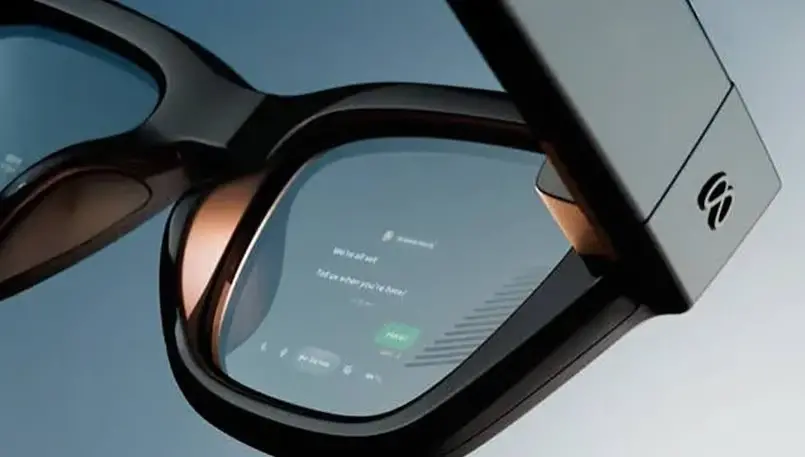
Norway is preparing to impose temporary restrictions on AI glasses and other camera- and microphone-equipped wearables in selected public places, opening a new front in the debate over privacy in increasingly connected everyday objects. The government has signaled that it will send legislation to the Storting, Norway's parliament, as quickly as possible, though no national ban is currently in force.
The proposal follows warnings that people can be photographed, filmed or recorded without realizing it. Because AI glasses often look like ordinary eyewear, bystanders may not know that a camera or microphone is active. That uncertainty has pushed officials to consider targeted restrictions while they study the technology and its implications more closely.
Several details remain unresolved, including exactly where restrictions would apply and how lawmakers will define the devices covered. Those choices will determine how far the rules reach and whether they affect only a handful of products or a broad class of body-worn technology.
Higher-risk public spaces are first in line
Norway's announcement identifies several categories of places where AI glasses could be restricted. Government officials plan to send legislation to the Storting as quickly as possible.
- Parks, beaches, museums, shopping centers and public events
- Schools, kindergartens, playgrounds and other places frequented by children
- Health facilities, including doctors' offices
- Swimming pools, gyms and other facilities with changing rooms or showers
Universities and other higher-education institutions are also being considered. Private use would remain possible where other people are not at risk of being recorded without consent. Officials expect exemptions for vulnerable groups and certain socially beneficial uses.
An expert group will examine body-worn technology separately and advise the government on permanent national regulation. Temporary restrictions would give officials time to study the technology and its privacy implications before developing longer-term rules.
Device scope could extend past AI-branded glasses
Government officials are considering whether the temporary rules should cover ordinary glasses with cameras and audio recording, eyewear that combines cameras with AI, or other body-worn technology with recording or AI functions. That distinction matters because regulation based on capability rather than marketing could apply to a much wider range of products as companies add cameras, microphones and AI features to everyday wearables.
Norwegian privacy law already applies to some uses of smart glasses. In a June response to Parliament, then-Digitalisation Minister Karianne Tung said biometric remote identification without consent would often already be illegal. She also identified a problem specific to smart glasses because people nearby may have difficulty knowing when audio, images or other information are being collected.
Potential reach grows as more vendors, such as Samsung and Google, enter the category. Several product lines could therefore encounter the same rules depending on which capabilities lawmakers include. Administrative controls, camera access and data handling remain important considerations for organizations evaluating the devices.
Privacy concerns are not new to wearable cameras
Camera-equipped eyewear has raised privacy questions for more than a decade. Early attempts to bring smart glasses to the mass market prompted backlash from people worried about covert recording, facial recognition and the possibility that everyday conversations could be captured and stored. Those concerns faded from headlines for a time, but they never disappeared. The arrival of AI assistants, cloud storage and improved computer vision has made the issue more urgent.
Modern AI glasses can combine a camera, microphone, wireless connectivity and a voice assistant in a package that resembles regular frames. Some models allow users to take photos, record short videos, ask questions about what they see and receive spoken answers. The convenience is obvious for people who want hands-free access to information. The risk is equally obvious for bystanders who may not know whether they are being recorded or analyzed.
Privacy regulators across Europe have paid close attention to these capabilities. Under the General Data Protection Regulation, which applies in Norway through the European Economic Area agreement, personal data can only be collected and processed when there is a lawful basis. Recording identifiable people without consent can violate data protection rules, especially when the recording is continuous, covert or used for purposes such as profiling. Norway also has a national data protection authority that can investigate complaints and issue guidance.
The challenge with AI glasses is not only the recording itself. It is the difficulty of providing notice and obtaining consent in public or semi-public settings. A sign on a door may be enough for a fixed camera in a shop, but it is far less practical when the camera is moving with a person through a park, a school corridor or a crowded event. That mismatch between traditional privacy rules and wearable technology is one reason officials are considering a temporary ban while they work out a more durable approach.
Schools, gyms and health settings face distinct risks
The locations identified in the Norwegian proposal reflect a set of shared concerns. Schools, kindergartens and playgrounds involve children, who may be especially vulnerable to recording and distribution of their images. Health facilities involve sensitive information that can be inferred from a person's presence or conversation. Gyms and swimming pools involve changing rooms and showers, where privacy expectations are high. Parks, beaches and public events are open spaces, but they can still contain people who do not expect to be recorded by a nearby wearable device.
Officials have not yet published a final list of covered locations, and the scope may change as the legislation moves through Parliament. The government has also indicated that private use would remain possible where other people are not at risk of being recorded without consent. That qualification suggests the rules are intended to protect bystanders rather than to prohibit the technology outright.
Exemptions for vulnerable groups and socially beneficial uses are also expected. Those could include accessibility tools for people with visual impairments or other assistive applications. The balance between protection and access will be one of the most difficult questions for lawmakers and the expert group advising them.
Workplace policies are moving ahead of national law
Even before the national proposal, Norwegian employers had started making their own decisions. In August, the Digitalisation Ministry urged public and private leaders to decide whether smart glasses or similar devices should be allowed in their workplaces. Officials also referred to AI appearing in earbuds, caps and other everyday wearable objects.
Several organizations acted. DNB prohibited smart glasses across its premises over risks involving sensitive customer information and business secrets. Equinor does not allow the devices in its offices without explicit permission, citing information security and unauthorized recording. Moss municipality introduced a temporary restriction covering AI glasses, camera glasses and similar body-worn technology across municipal operations.
These moves show that organizations are not waiting for national legislation. For employers, the first step is to focus on device capabilities instead of product names. A product marketed as ordinary glasses may still include a camera or microphone. A cap, badge, earbud or pendant may also capture audio or images. Policies should identify wearables that can record or analyze surrounding audio and images, then map them to offices, meeting rooms, customer-facing areas and other locations where sensitive information is handled.
Policies should also address employee-owned devices and visitors, with documented exceptions for approved work or accessibility uses. That means considering not only what employees bring through the door but also what contractors, clients and guests may wear during meetings or site visits. Clear rules, visible signage and consistent enforcement can reduce uncertainty for staff and visitors alike.
Data governance questions for IT and security teams
IT and security teams should also check what happens after information is captured. They should determine whether recording functions can be disabled centrally, whether access is logged, where recordings are stored and who can review them. If the device relies on a cloud service, the organization should understand where data is processed, how long it is retained and whether it can be used for model training or other secondary purposes.
Human review of footage captured through Meta AI glasses has demonstrated how recordings can move into AI training workflows. Always-listening smart glasses can create similar governance issues around meetings and confidential conversations. A device that appears to be a simple accessory may therefore introduce risks that touch on data protection, intellectual property, client confidentiality and regulatory compliance.
Procurement teams can make those answers part of device approval before new wearables enter an office. Suppliers should be asked whether cameras and microphones can be physically disabled, whether a visible recording indicator is mandatory, how firmware updates are handled and what audit trails are available. Contracts should also address data ownership, breach notification and the deletion of recordings when they are no longer needed.
Norway's final law will determine the national rules, but employers do not need to wait to decide how recording-capable wearables fit inside their own security and privacy policies. The temporary restrictions, if adopted, would give officials time to study the technology and its privacy implications before permanent national regulation is developed.
Source: eWeek News