

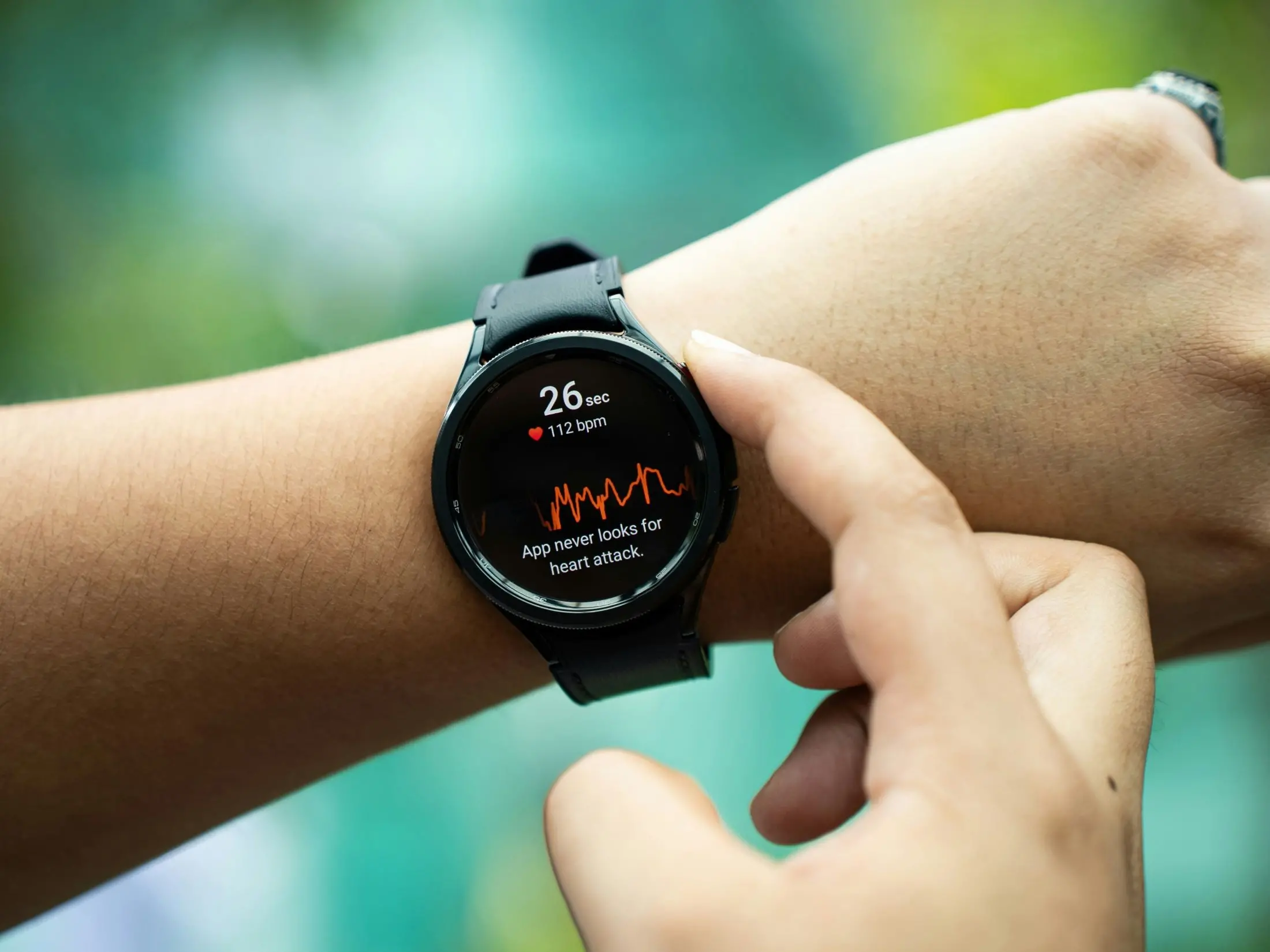
Samsung Health has long been a central hub for fitness and wellness tracking, but its latest evolution places artificial intelligence at the core of how wearable biosignal data is interpreted. Rather than merely collecting numbers, Samsung Health now uses AI models to analyse the complex physiological signals captured by devices like the Galaxy Watch and Galaxy Ring. This shift marks a significant step towards a more intelligent, proactive approach to personal health monitoring.
Biosignals are continuous streams of physiological data that reflect the body's internal state. Common examples include heart rate, heart rate variability, blood oxygen saturation, skin temperature, and electrodermal activity. Wearable sensors capture these signals non-invasively, and with the help of AI, they can be translated into meaningful insights about a user's overall wellbeing. Samsung Health leverages on-device and cloud-based AI to identify patterns, detect anomalies, and provide personalised recommendations.
Understanding biosignals in modern wearables
Modern wearable devices are equipped with an array of sensors that measure various biosignals. The optical heart rate sensor, for instance, uses photoplethysmography to detect blood volume changes with each heartbeat. This data is used to calculate instantaneous heart rate, resting heart rate, and heart rate variability. Skin temperature sensors measure thermal changes that can indicate fever, circadian rhythms, or ovulation. SpO2 sensors estimate blood oxygen saturation, which is crucial for detecting respiratory issues or sleep-related breathing disorders.
The raw data from these sensors is noisy and can be affected by motion, ambient light, and individual physiology. AI models are particularly adept at processing such imperfect datasets. They can filter out noise, compensate for motion artifacts, and extract reliable signal features. This enables more accurate tracking of metrics like sleep stages, stress levels, and recovery status. For example, during exercise, accelerometer data can be combined with heart rate data to estimate effort and caloric burn with greater precision.
How Samsung Health uses AI for biosignal analysis
Samsung Health applies AI models across several key areas of wellness and clinical support. One prominent application is heart rhythm analysis. The electrocardiogram (ECG) app on compatible Galaxy Watch models records electrical signals from the heart to detect atrial fibrillation. The AI algorithm interprets the waveform and flags irregular rhythms, allowing users to seek medical attention when necessary. This feature has been cleared by food and drug administrations in several countries and has proven to be a valuable screening tool.
Another area is sleep tracking. The sleep AI model analyses movements, heart rate, and blood oxygen levels throughout the night to classify sleep stages: light, deep, and rapid eye movement. It also generates a sleep score and gives users personalised suggestions to improve sleep quality. By correlating biosignals with reported symptoms, the system can identify habits that may contribute to poor sleep, such as late caffeine intake or high evening stress.
In addition, Samsung Health uses AI to assess stress and emotional wellbeing. By calculating heart rate variability and electrodermal activity, the model estimates a stress level and provides breathing exercises or mindfulness prompts when stress markers are elevated. This real-time feedback can help users manage their mental health more proactively.
Advanced health features driven by AI
Samsung's continuous investment in health research has led to the development of advanced features that go beyond basic tracking. For instance, the Body Composition feature uses bioelectrical impedance analysis alongside algorithm-driven estimates to measure skeletal muscle mass, basal metabolic rate, body water, and body fat percentage. The AI model provides trends over time and encourages users to set realistic body composition goals.
Another notable feature is the Irregular Heart Rhythm Notification (IHRN), which periodically checks for signs of atrial fibrillation in the background. Unlike the on-demand ECG, this continuous assessment relies on a lightweight AI model that processes optical heart rate data while the user goes about their day. If multiple readings suggest an irregular rhythm, the user is notified and advised to consult a healthcare professional.
Blood pressure monitoring and beyond
Samsung has also introduced blood pressure monitoring on its smartwatches in certain regions. The Blood Pressure app uses pulse transit time, derived from the time difference between heartbeats and pulse arrival at the wrist, combined with a calibration equation developed using traditional cuff measurements. An AI model improves accuracy by factoring in variables such as wrist circumference and skin pigmentation. While not a substitute for medical devices, this feature empowers users to measure and track their blood pressure more frequently.
Looking to the future, Samsung is exploring non-invasive glucose monitoring and advanced hydration sensing. These emerging technologies rely heavily on AI to extract weak signals from spectroscopic or electrical sensors. If successful, they could revolutionise how people with diabetes and chronic conditions manage their health on a daily basis.
Research partnerships and clinical validation
Samsung Health has partnered with leading academic institutions to validate its AI algorithms and develop new health monitoring approaches. A notable partnership with the University of California, San Francisco (UCSF) focuses on cardiovascular health. Together, they have conducted large-scale clinical studies using wearables to detect atrial fibrillation and assess the impact of lifestyle on heart health.
Similarly, collaborations with the Massachusetts Institute of Technology (MIT) have explored innovative ways to capture vital signs using wireless signals and advanced signal processing. These partnerships help ensure that Samsung's AI models are not only technically advanced but also clinically meaningful and scientifically sound. The insights gained from these studies feed back into product development, enabling features that are tailored to diverse populations.
Privacy and security in AI-driven health platforms
As AI models process highly sensitive biosignal data, privacy and security are of utmost importance. Samsung Health is designed with multiple layers of protection. Strong encryption safeguards data during transmission and storage. Users have granular control over what data is collected, how it is used, and when it is deleted.
On-device AI processing minimises the need to upload raw biosignal data to the cloud. Many features, such as heart rate alerts and sleep analysis, can operate entirely on the wearable device or a paired smartphone. Only anonymised or aggregated data is used to improve models, and users must grant explicit consent for any data sharing.
Samsung also recognizes the importance of transparency. Detailed privacy policies explain what data is collected and for which purpose. Users can review their stored health data and export it at any time. These measures build trust and ensure that the convenience of AI-driven health insights does not compromise user privacy.
Impact on preventive healthcare
The integration of AI with wearable biosignals has the potential to transform preventive healthcare. Instead of relying solely on periodic check-ups, users can monitor their health continuously. AI models can detect subtle deviations from a person's baseline well before symptoms appear. For example, an increase in resting heart rate or a drop in heart rate variability may indicate an impending illness or overtraining. Early warnings allow users to rest, adjust their exercise routine, or seek medical advice promptly.
Furthermore, longitudinal tracking creates a rich dataset that helps individuals understand the long-term effects of lifestyle choices. By correlating physical activity, sleep, nutrition, and stress with health trends, Samsung Health encourages healthier decisions. The AI acts as a digital coach, offering nudges to stand up, breathe, or walk more based on real-time biosignal interpretation.
Wearable ecosystem and future outlook
Samsung Health is not limited to a single device. The platform integrates data from Galaxy Watch, Galaxy Ring, and wearable earphones, as well as third-party devices via Health Connect and open APIs. This ecosystem approach provides a comprehensive picture of a user's health. The AI models benefit from this diversity of data, as combining signals from multiple sources enhances accuracy and contextual understanding.
The Galaxy Ring, introduced as a compact and comfortable wearable, extends Samsung Health's capabilities to users who prefer not to wear a smartwatch. Despite its small size, it packs sensors for heart rate, skin temperature, and movement. AI models adapted for the ring's signal characteristics deliver consistent and reliable insights, proving that sophisticated biosignal analysis is possible in a minimalist form factor.
Looking ahead, Samsung continues to innovate in the health AI space. Emerging areas include mental health assessment through voice analysis, respiratory rate estimation, and even early detection of conditions like sleep apnea. The convergence of hardware advancements, AI models, and wider clinical validation will improve the quality and reliability of wearable-driven health insights. As these technologies mature, they promise to play a crucial role in everyday health management, empowering individuals with knowledge that was once only accessible through medical professionals.
Source: AI News News