

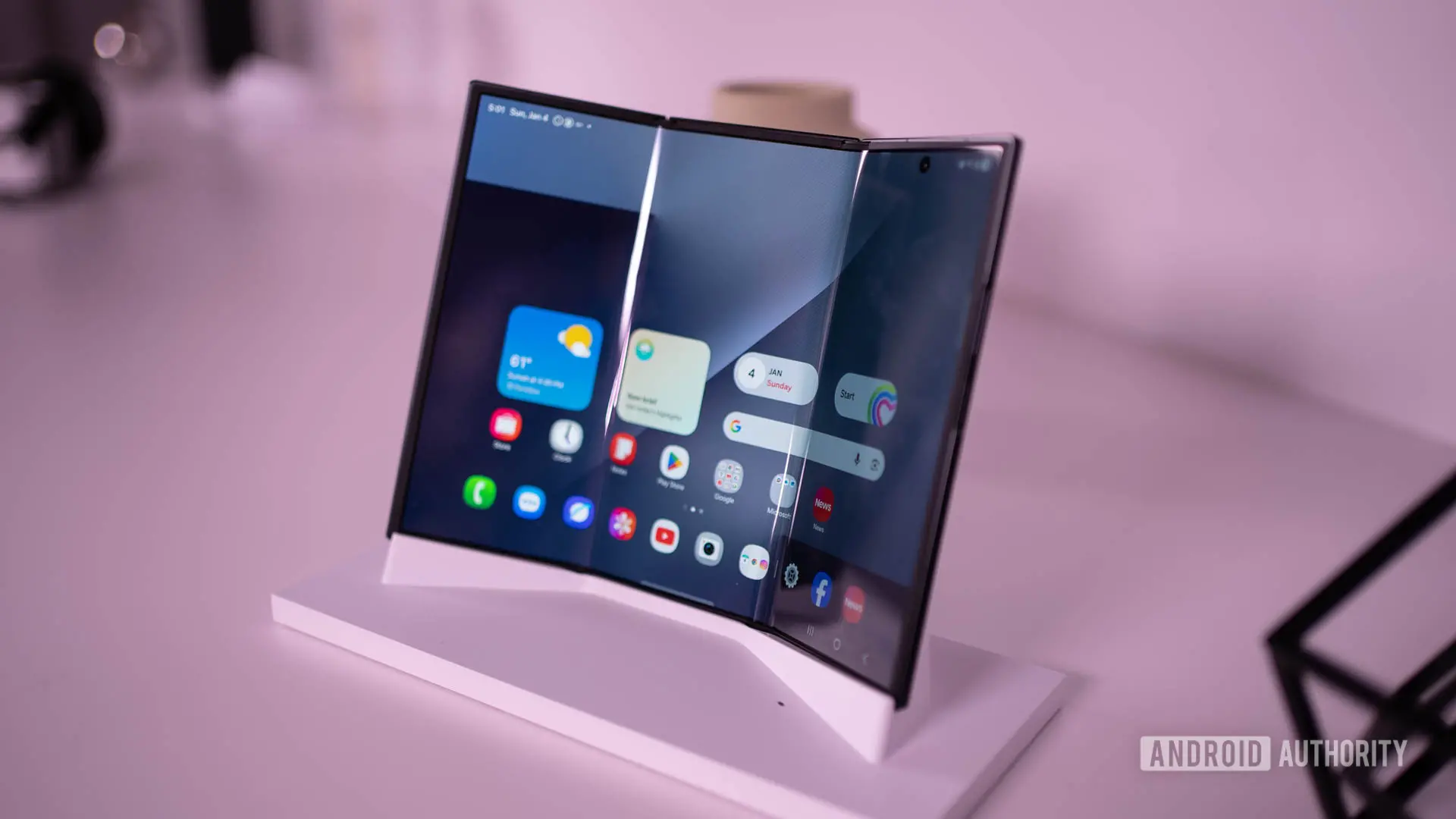
Just days after Samsung unveiled the Galaxy Z Fold 8, Galaxy Z Fold 8 Ultra, and Galaxy Z Flip 8, reports are already emerging about what could be the company’s most ambitious flagship smartphone plans yet. According to a Korean publication, Samsung is preparing to launch the so-called Galaxy Z TriFold 2 next year, and this device might become a regular member of the company’s foldable phone lineup instead of having a limited run as it did this time around. The report also indicates that Samsung has started early development of the next Galaxy Z TriFold and has already shared details of the project with component partners.
The publication claims that the company plans to launch four foldable phones next year, including the Galaxy Z Flip 9, Galaxy Z Fold 9, Galaxy Z Fold 9 Ultra, and the second-generation Galaxy Z TriFold. If true, this counters earlier rumors that Samsung planned to end the Galaxy Z Flip series with this year’s Galaxy Z Flip 8. Moreover, the move would also coincide with another major shakeup on Samsung’s slab phone side. The report reiterates earlier rumors that the Galaxy S27 family will consist of four devices: the Galaxy S27, Galaxy S27 Plus, Galaxy S27 Pro, and Galaxy S27 Ultra. Together, that would give Samsung a “4+4” flagship strategy, with four premium Galaxy S phones in the first half of the year, followed by four foldables in the second half.
The Evolution of Samsung’s Foldable Strategy
Samsung has been a pioneer in the foldable smartphone market since it introduced the original Galaxy Fold in 2019. Over the years, the company has iterated on the design, improving durability, display quality, and software optimization. The Galaxy Z Fold series has become synonymous with large-screen productivity, while the Galaxy Z Flip series targets a more compact, fashion-forward audience. The introduction of the Galaxy Z TriFold this year marked a new chapter, featuring a tri-fold design that unfolds into a tablet-sized screen. However, it was launched as a limited edition device with low production numbers, likely to test market reception.
Now, with the Galaxy Z TriFold 2 reportedly moving to mass production, Samsung appears confident that there is enough demand for a tri-fold phone. The tri-fold concept offers a unique form factor that bridges the gap between smartphones and tablets, providing a larger screen without significantly increasing the device’s footprint when folded. The first-generation Galaxy Z TriFold was praised for its innovative hinge mechanism and expansive display, but it also faced challenges such as higher cost and potential durability concerns. By developing a second generation and planning to produce it in larger numbers, Samsung aims to address those issues and appeal to a broader audience.
This expansion of the foldable lineup to four devices suggests that Samsung sees the foldable category as a key growth driver for its premium smartphone business. The Galaxy Z Fold 9 and Galaxy Z Fold 9 Ultra will likely continue to offer the classic book-like foldable experience, while the Galaxy Z Flip 9 maintains the clamshell design. The Galaxy Z TriFold 2 will occupy a niche of its own, targeting power users who want maximum screen real estate in a portable form factor. Meanwhile, the rumor that Samsung may end the Galaxy Z Flip series appears to be premature, as the company now seems committed to offering multiple foldable options.
The Galaxy S27 Pro and the 4+4 Strategy
On the slab phone side, Samsung’s Galaxy S series has traditionally comprised three models: the base model, the Plus, and the Ultra. The addition of a Galaxy S27 Pro would create a fourth tier, potentially aimed at users who want a smaller premium device with top-tier camera capabilities. The Galaxy S27 Pro could sit between the S27 and S27 Plus, or it might be a pro-focused variant with enhanced imaging features. This move would give Samsung a more diverse lineup to compete with rivals like Apple, which offers multiple iPhone Pro models, and Chinese manufacturers that often release multiple premium devices each year.
The “4+4” strategy would mean Samsung releases eight flagship smartphones annually—four in the first half (Galaxy S27 series) and four in the second half (foldables). This is a significant increase from the current slate, which usually includes three Galaxy S models and three foldables (Z Fold, Z Flip, and one Ultra or special edition). By splitting the releases, Samsung can maintain constant momentum in the premium market and cater to different user preferences. For instance, early adopters who prefer traditional slab phones can upgrade in the first half, while those interested in foldable technology can wait for the second half. Additionally, the staggered launch schedule helps Samsung avoid cannibalizing sales within its own portfolio.
Technical and Market Implications
Scaling up the production of the Galaxy Z TriFold 2 is not trivial. The tri-fold mechanism requires a more complex hinge design and a special display that can bend in two places. Samsung has been investing in ultrathin glass (UTG) and advanced hinge technologies to improve durability. If the company manages to produce the TriFold 2 in larger volumes, it could drive down costs and make the device more accessible. This would also force competitors like Huawei, which already offers tri-fold prototypes, to accelerate their own plans. However, Samsung must ensure that the device meets its quality standards, as any durability issues could damage the brand’s reputation.
On the software side, Samsung’s One UI already has features tailored for foldable screens, such as multitasking with multiple windows and app continuity when folding/unfolding. The tri-fold device adds another layer of complexity, as the screen can be used in partially folded states. Samsung will need to continue optimizing the user experience to take advantage of the unique form factor. The company has a strong developer community and typically works with app partners to ensure compatibility, which will be crucial for the success of the TriFold line.
Furthermore, the inclusion of the Galaxy S27 Pro suggests that Samsung wants to capture users who desire a premium camera experience but find the Ultra too large. The Pro model could inherit some camera features from the Ultra, such as advanced zoom and improved sensors, while maintaining a more manageable size. This would help Samsung compete with the iPhone 17 Pro or Pro Max from Apple, which also differentiate based on size and camera capabilities.
Comparisons with Competitors
Apple has not yet entered the foldable market, but rumors suggest it may release a foldable iPhone in the next few years. Samsung’s aggressive expansion of its foldable lineup could help it solidify its lead before Apple arrives. Meanwhile, Chinese brands like Xiaomi, Oppo, and Huawei have released foldable phones, but they are often limited to specific regions. Samsung’s global reach and strong brand presence give it an advantage in promoting and selling multiple foldable models.
However, the market for foldable phones remains relatively small compared to traditional smartphones. According to industry analysts, foldables accounted for only about 1-2% of total smartphone shipments in 2025. Samsung’s strategy to release four foldable models may be overly optimistic if demand does not grow significantly. The company might be betting that the tri-fold design will attract new users who were not interested in previous foldables. But if the market does not expand, Samsung could end up with excess inventory and reduced profit margins.
Supply Chain and Production Challenges
The report highlights that Samsung has already shared details of the TriFold 2 project with component partners. This is a crucial step in ensuring a smooth supply chain for the new device. The tri-fold display requires custom flexible OLED panels, which are likely sourced from Samsung Display, a subsidiary. The hinges and protective layers also need specialized manufacturing processes. By involving partners early, Samsung can secure the necessary materials and avoid production delays that plagued the first generation.
Additionally, the company must balance production capacity between the various foldable models. If all four foldables are produced in large volumes, Samsung might need to allocate more resources to its factories in Vietnam and South Korea. Any hiccups in the supply chain could lead to shortages or quality issues. The company has experience dealing with such challenges, as seen with previous Galaxy Z Fold launches, but the tri-fold adds another layer of complexity.
Timeline and Launch Expectations
The report suggests that the Galaxy Z TriFold 2 could launch alongside the Galaxy Z Fold 9 series around July next year. This timeline seems plausible given that Samsung typically unveils its new foldables in July or August. The Galaxy S27 series would launch earlier, around February, following the usual Galaxy Unpacked event cycle. If everything goes according to plan, consumers could see the full 4+4 lineup by mid-2027.
Of course, these plans are still well over a year away, and Samsung could change its roadmap before launch. The company often tests multiple prototypes and may decide to cancel or postpone some models based on market conditions. For example, if the first Galaxy Z TriFold does not sell well, Samsung might reconsider the second generation. However, the positive reception to the tri-fold concept at trade shows and among early adopters gives the company reason to continue.
Moreover, the Galaxy Z TriFold 2 could bear the same display size specs as the current model, but Samsung could significantly increase production now that the concept has been tested in the market. This suggests that the company is confident in the design and is ready to scale up. The publication also speculates that development has started early enough for the new TriFold to debut alongside the Galaxy Z Fold 9 series around July next year, rather than launching separately as a special edition device.
In the broader context, this expansion reflects Samsung’s desire to dominate the premium smartphone segment. The company faces stiff competition from Apple in the high-end market, and foldables offer a way to differentiate itself. By offering eight flagship devices annually, Samsung can target every possible niche—from small-screen productivity (Galaxy S27) to large-screen multitasking (Galaxy Z TriFold 2). The question remains whether consumers will embrace such a wide variety or if they will be confused by the choices. As with any major shift, Samsung will need to effectively market these devices and explain the differences to potential buyers.
The tech industry will be watching closely as Samsung moves forward with these plans. If successful, the 4+4 strategy could become a new template for other smartphone makers, further blurring the lines between traditional smartphones and foldables.
Source: Android Authority News