

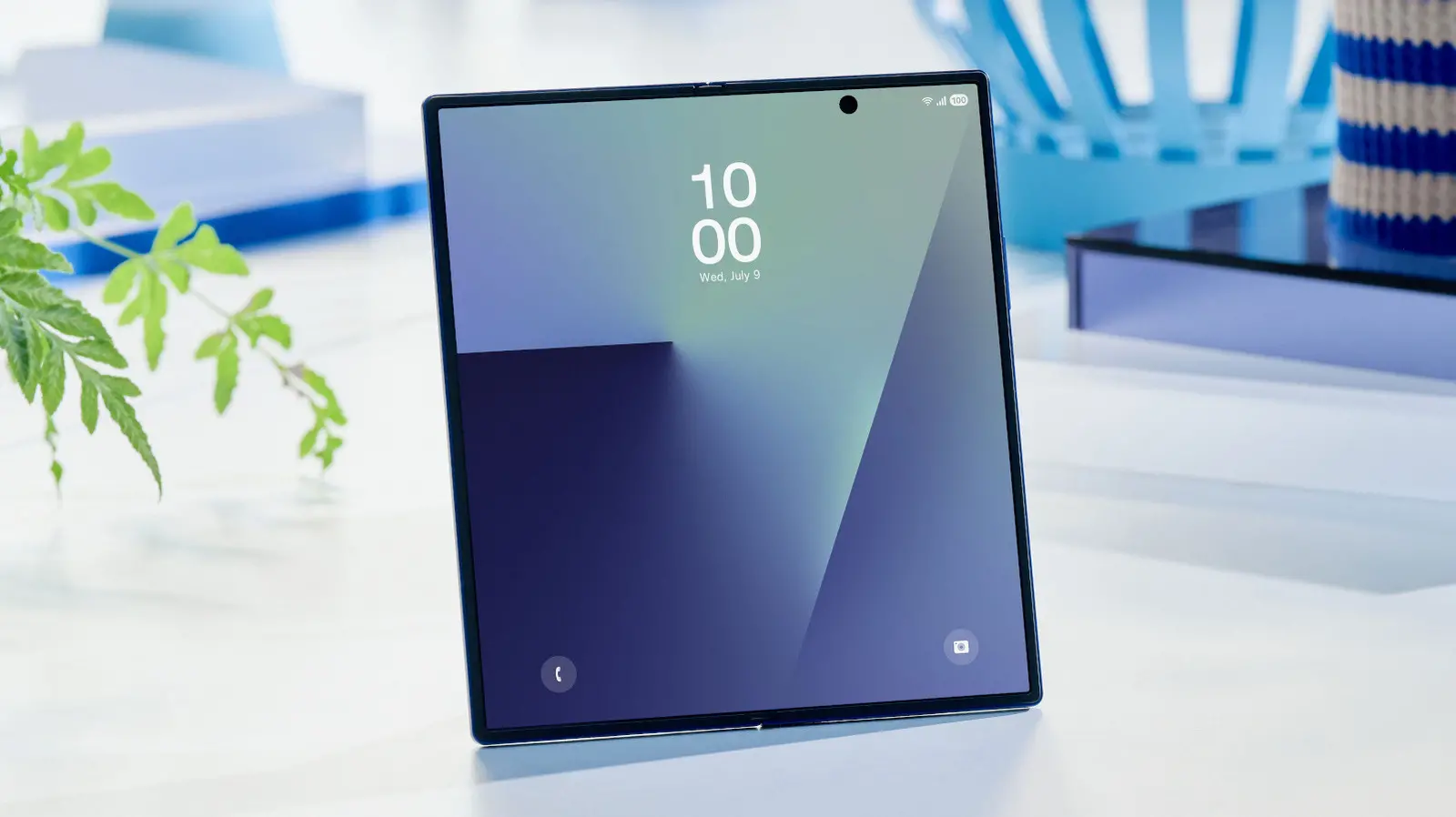
Samsung has officially introduced its next-generation foldable display technology, named Flex Titanium, which promises to significantly enhance durability and reduce the visibility of the center crease that has long been a hallmark of foldable devices. The technology will debut with the upcoming Galaxy Z Fold 8 and Galaxy Z Flip 8, expected to be unveiled at Samsung's Unpacked event on July 22. This development builds on what the company describes as 'seven generations of foldable innovation and engineering expertise,' marking a critical milestone in the evolution of foldable smartphones.
The Flex Titanium display incorporates two key structural components designed to address the primary weaknesses of earlier foldable screens: fragility and the persistent crease. Beneath the OLED panel, Samsung has placed a titanium alloy film that provides 20 times greater mechanical stiffness compared to previous materials used in foldable displays. This film acts as a rigid support layer that resists deformation, making the screen harder to damage from impacts or excessive pressure. Below that film sits a titanium plate, which serves as a stable foundation when the device is unfolded while maintaining the flexibility needed for repeated folding cycles. The titanium plate is engineered with advanced hole processing technology that eliminates air gaps between the display module and its adhesive, further enhancing structural integrity and reducing the likelihood of crease formation over time.
Kyung-Jin Yoo, Executive Vice President of Samsung Display, elaborated on the technical innovations, stating that the micro-patterned holes in the folding section of the titanium plate provide the necessary flexibility without compromising durability. These holes are precisely laser-drilled to allow the plate to bend smoothly while delivering robust support across the entire unfolded surface. According to Samsung, this design not only reduces the visible crease but also improves the overall lifespan of the display, as the titanium components resist micro-cracking and stress fatigue better than previous metal or polymer layers.
Foldable display technology has evolved significantly since Samsung launched the original Galaxy Fold in 2019. Early models were plagued by screen failures, debris ingress, and highly visible creases that detracted from the user experience. Over successive generations, Samsung refined its hinge mechanisms, introduced ultra-thin glass (UTG), and optimized the folding layers to reduce the crease from a deep groove to a slightly visible line. The Flex Titanium system appears to be the next leap forward, aiming to make the crease virtually imperceptible—a feat that would bring foldables closer to the seamless experience of traditional slab phones.
At CES earlier this year, Samsung showcased a demonstration unit with a 'seamless' foldable display that drew significant attention from tech enthusiasts and analysts. The exhibit placed a phone using the new Flex Titanium prototype next to an older Samsung foldable device, and the difference was striking: the older phone displayed a prominent, wavy crease along the fold line, while the new prototype appeared perfectly flat and smooth when viewed under bright lighting. This hands-off preview hinted at the capabilities of the Flex Titanium technology, but the official announcement now provides more concrete details.
Further evidence of the reduced crease came from a leaked video reported by 9to5Google, which purported to show the Galaxy Z Fold 8 Ultra. In the footage, the device's inner screen looked nearly flawless, with no visible crease even when the phone was tilted to catch reflections. While such leaks should be treated with caution, they align with Samsung's claims and the CES demonstration, fueling anticipation for the Unpacked event.
Beyond the crease reduction, the Flex Titanium technology offers practical benefits for everyday users. The increased mechanical stiffness means the display is less susceptible to damage from accidental drops, pressure from objects in a pocket, or even the light pressure from a stylus. Samsung has not yet provided full specifications for the new foldables, but the use of titanium—a material known for its high strength-to-weight ratio—suggests that the devices themselves may be lighter and more durable overall. Titanium has previously been used in smartphone frames (such as the iPhone 15 Pro) but its application in foldable display layers is a novel approach that could set a new industry standard.
Industry analysts have noted that Samsung's leadership in the foldable market faces increasing competition from Chinese manufacturers like Huawei, Oppo, and Xiaomi, which have introduced their own foldable devices with ultra-thin glass and improved hinge designs. However, Samsung's deep investment in display technology, including its subsidiary Samsung Display, gives it unique advantages in controlling the entire supply chain—from panel production to final device assembly. The Flex Titanium launch is seen as a strategic move to maintain its dominant position ahead of rival launches later this year.
From a manufacturing perspective, the adoption of titanium alloy films and plates presents challenges in mass production due to the metal's hardness and cost. Samsung Display has likely refined its processes over several years to achieve the necessary precision in hole patterning and layer lamination. The company has not disclosed production yields or cost implications, but such advanced materials typically add to the bill of materials, which may influence the final retail price of the Galaxy Z Fold 8 and Flip 8.
As the July 22 Unpacked event approaches, the tech community is eagerly awaiting hands-on reviews and independent testing of the Flex Titanium display. If Samsung's claims hold true, the upcoming Galaxy foldables could represent a significant turning point for the form factor, addressing the two biggest complaints that have hindered widespread adoption: fragility and the unsightly crease. With the titanium-enhanced resilience and a nearly invisible fold, the company is betting that the next generation will finally convince mainstream consumers to embrace foldable smartphones as their daily drivers.
Source: Engadget News