

Sonos has spent much of 2026 positioning itself for a major rebound. After a rocky period marked by app missteps and product delays, the company has used its Sonos Play early-access program and a steady cadence of app redesigns to rebuild trust with its most loyal users. This fall, the company is preparing its biggest reveal yet, and I traveled to New York City to see what's coming. While the new hardware is certainly impressive, the more compelling story lies in how Sonos is reshaping its software and making its speakers smarter, context-aware, and more conversational than ever before.
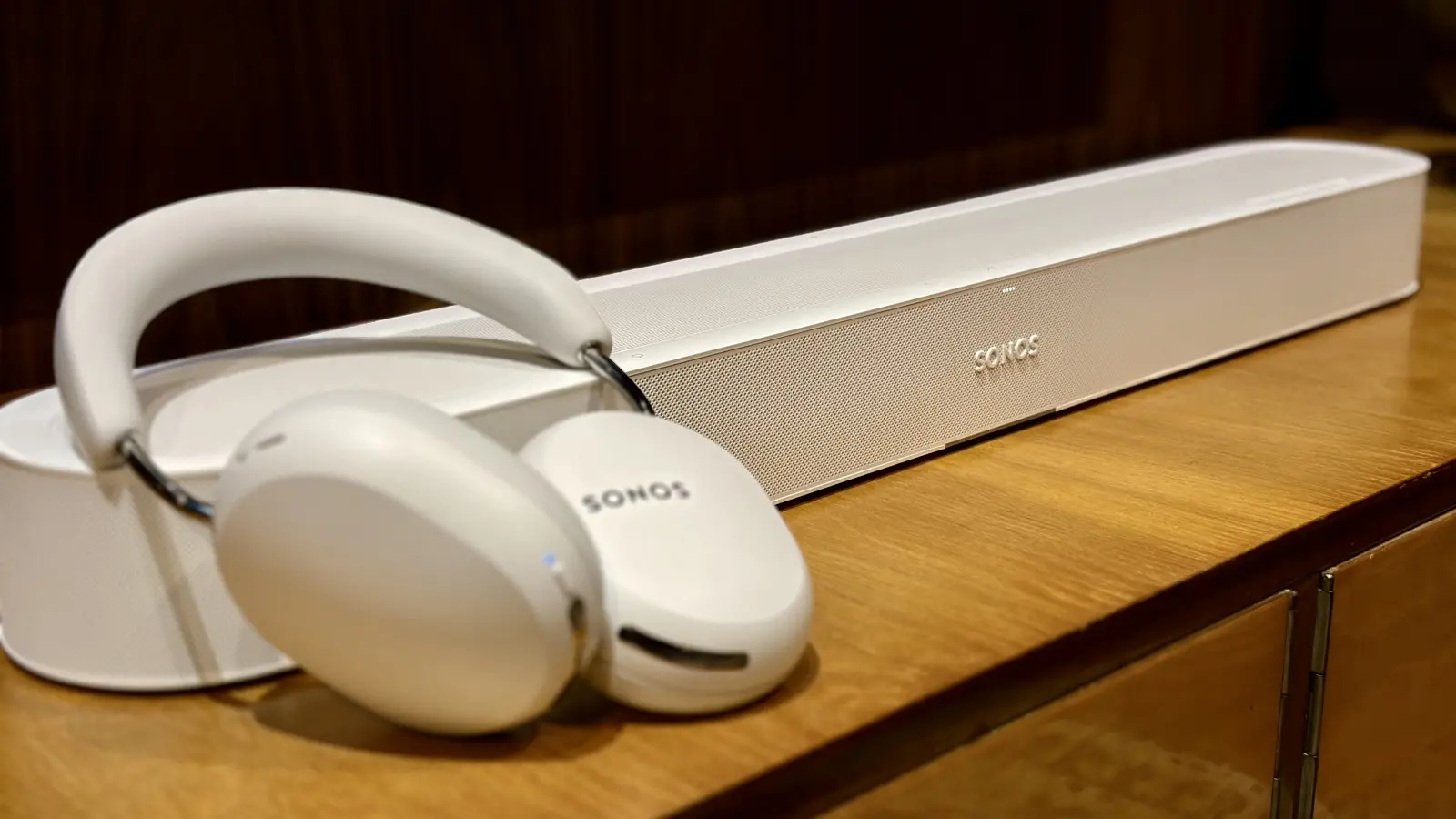
From a hardware standpoint, the highlights are the Sonos Ace Ultra headphones and the Beam Ultra soundbar. Both ship with upgraded audio components and a refined design language. Yet none of these changes are what will drive headlines. What matters is the way these devices connect to a new version of the S2 platform, which Sonos is now calling Sonos 27. That operating system update brings a substantial AI upgrade, unveils a cloud-powered voice assistant, and makes your speakers feel less like music players and more like ambient computing devices.
Sonos's fall from grace was swift and self-inflicted. In 2024, a redesigned app stripped out core features, angered long-time users, and led to executive departures. The company has spent the following years slowly rebuilding trust, releasing incremental fixes, and committing to a more transparent development process. Sonos Play is evidence of that shift, giving customers early access to firmware and asking for feedback before public launches. With Sonos 27, the company is trying to prove that it has learned from that painful chapter and is ready to move forward with a stronger, more adaptable ecosystem.
1. A Smarter Voice Assistant and Open AI Integration
For years, Sonos's built-in voice assistant was a minimalist tool, capable only of basic playback controls, timers, and weather checks. With the arrival of Sonos 27, the company is aiming far higher. Sonos 27 represents a fundamental shift in the platform, moving from on-device command processing to cloud-based processing. That move enables the assistant to handle more complex, contextual, and conversational queries, allowing you to speak naturally to your speaker, asking follow-up questions or layering requests across music and smart-home functions.
The new Sonos 27voice is specifically designed for music discovery and curation. It is built to understand context, so you can ask it to play something "upbeat for a workout" and then refine with "but with strong bass lines" without needing to restart the request. This kind of natural language processing is a major leap from the "play X on Y" commands that defined the earlier voice assistant. Sonos's decision to move voice processing off-device means the assistant can take advantage of more powerful models in the cloud, making it far more flexible and responsive to everyday speech patterns.
AI That Differs from Industry Heavyweights
Smart speakers have largely been defined by their voice assistants. Amazon Alexa powers everything from Echo to third-party speakers. Google has Gemini embedded across its Nest lineup. Apple has been gradually introducing Siri improvements around the home. Sonos has never had the resources to compete head-on with those AI giants, and for years it didn't try. Instead, every Sonos speaker relied on whichever assistant you chose to connect through the Sonos app, whether Alexa, Google Assistant, or the anemic built-in voice control. With Sonos 27, the company is trying a different playbook: don't make your own universal assistant; make an interface that lets any AI model integrate deeply.
Perhaps the most forward-looking aspect of Sonos 27 is its support for MCP, or Model Context Protocol. This open integration layer allows AI models from ChatGPT, Claude, Gemini, and others to operate within the Sonos ecosystem. Instead of everyone being forced into one voice AI, users can choose the model they prefer. It is an approach that acknowledges the reality of AI fragmentation; no single model serves every user's preferences or concerns about privacy and ethics. Sonos 27mcp enables open AI-to-application integration, granting models from ChatGPT, Claude, and Gemini permission to "live" inside your Sonos speakers. This open approach allows users to converse with any MCP-compatible model, which is ideal for those who may have negative feelings about a specific model while favoring another.
Custom Agents Bring Personality
Sonos Custom Agents, expected in 2027, will take this integration even further. Using APIs from Anthropic, OpenAI, or Gemini, users can create a custom agent that lives on a specific speaker in their home. During the briefing, Sonos gave a particularly memorable example: a chef persona with a cartoonish French accent residing on a kitchen Era 100 to guide you through recipes. Another example was a music-buff agent on the Era 300 in your listening room, offering trivia about the album currently spinning. Your imagination and API limits are the only real constraints on what these agents can be and do.
It's like having a character move into your house and help out with daily tasks. You could create a butler who announces the weather when you pass the hallway, a DJ who curates playlists based on the time of day, or a home assistant that can discuss the news. The possibilities are as broad as the APIs themselves. What makes this strategic approach refreshing is that it finally answers the question of why Sonos speakers cost more than competitors. Rather than treating speakers as a container for someone else's voice assistant, Sonos is positioning its speakers as a platform for personalized, purpose-built AI experiences.
2. Headphones That Finally Belong
When Sonos launched its first Ace headphones in 2024, they were a well-regarded pair of Bluetooth headphones, whether compared to rivals from Bose or Sony, but they never truly felt like part of the Sonos family. The Ace Ultra aims to fix that by integrating the headphones into the broader Sonos system. The design remains over-ear with plush earcups, and the physical controls carry over, including the Content Key button near the bottom of the ear cup.
The headline feature is called Headphone Linking. With built-in Wi-Fi, the Ace Ultra can stream directly from the Sonos app just like any other Sonos speaker. This gives higher-resolution audio than Bluetooth alone. But the more interesting part is the ability to pass audio between the headphones and your speakers. The demo Sonos prepared imagined you in the bedroom listening to two Sonos Fives. Press the Content Key on the Ace Ultra and you pull that music from the speakers into your headphones. Walk to the living room, press the key again, and the music is pushed from your headphones to the Beam Ultra soundbar.
I was admittedly skeptical when Sonos described this with the phrase "it's not magic, but it's not not magic." It did feel clever to watch the hand-off happen seamlessly, especially because there's no need to open the app or fiddle with a device switcher. However, I remain on the fence about how often this feature will matter in real life. For me, listening with headphones is usually an intentional escape from the room, not something I do in parallel with the speakers. I will have to spend more time with it before I fully understand where it fits into a daily routine.
The Ace Ultra also uses Wi-Fi/Bluetooth hybrid connectivity much like Sonos's portable speakers. When home, the headphones are a fully-fledged member of your Sonos system, preferring Wi-Fi for stability and quality. When you take them on the go, Bluetooth is the simple fallback, connecting to your phone or laptop as any standard pair of wireless headphones would. This dual-protocol approach ensures that the transition from indoor to outdoor use is seamless without draining battery or complicating the connection process.
One important limitation is that the Ace Ultra will not support Sonos 27voice. You cannot talk to the assistant while wearing the headphones, which feels like a significant omission given the update's emphasis on voice. Sonos confirmed to me that when the Ace Ultra is connected to the system, the microphones of nearby speakers are disabled, so there's no opportunity to accidentally trigger them with a wake word. Still, the lack of voice assistant support on the flagship headphones is a software decision that may puzzle users who expect the most expensive product in the portfolio to receive all the platform's newest features. It also means you cannot use the headphones to control linked smart home products, discover music, or query what song is currently playing unless you pull out your phone and use the Sonos app instead.
3. Portables That Do Double Duty
Sonos Fabric is a presence-sensing layer that gives the system spatial awareness. It knows when you or a compatible speaker are in a particular room. This might sound abstract, but its real-world benefits are tangible. With the Sonos Ace Ultra, Move 2, or Sonos Play, the system can automatically detect when you move from one speaker zone to another and redirect audio without manual switching. Instead of manually selecting in the app which speaker the headphones should connect to, Sonos Fabric can detect which speaker you intend to switch audio to and from, with no app fiddling needed.
During the event, I got to test one of these features by pairing two Play speakers with the Beam Ultra. The Play speakers, essentially portable speakers that can be shuttled between rooms or to the backyard, can now serve as rear-channel speakers for a home theater setup. There's no requirement that they stay wired into that configuration, which makes them radically more versatile. When you bring a pair of Play speakers near your soundbar, the system recognizes them, and they instantly become the surround channels. When you need to take them elsewhere, you just pick them up.
This flexibility felt like the most genuinely useful announcement of the entire keynote. The sound quality enhancement was immediately noticeable when I listened to a movie scene with two Play speakers as rears. The sense of space and immersion was much greater than relying on the soundbar alone or using virtual processing. More importantly, since the speakers aren't locked into a permanent home theater configuration, you can still use them separately for music when you want. Presence sensing is central to ensuring smart home products run smoothly in the background of your life, and Sonos Fabric looks like a reliable foundation for that future.
For outdoor enthusiasts, this means one pair of portable speakers can cover both your backyard barbecue and your Sunday movie night without sacrificing quality in either scenario. Sonos Fabric is also the technology that enables headphone linking to feel smooth and automatic, since it knows when you're near which speaker. If you have two Move 2 or Play speakers, you can set them up as rear speakers without locking them into a permanent surround configuration, which is a degree of freedom that most home theater systems don't allow.
Honorable Mention: App Upgrades
Sonos also detailed several app upgrades coming throughout the year. These are less dramatic than AI updates, but they directly address long-standing complaints from users about the app's navigation and usability. In June, Sonos already announced that the app would receive several design and user experience changes, including improved volume control and UI conformity across platforms.
During the demo, Sonos showed off the app optimized for iPad, taking advantage of the larger display with a richer layout. iOS users will get Live Activities for seeing playback status and controlling their system from the Lock Screen. Android users will eventually get new widget customization options, providing faster control directly from their home screen. Sonos previously rolled out a more responsive volume scrubber, and this batch of improvements builds on that iterative approach.
The most unusual addition is a two-finger volume gesture. With the app open, you can place two fingers anywhere on the screen and twist them clockwise to increase the volume, or counterclockwise to decrease it, almost like turning a physical knob. It struck me as one of those features that seems gimmicky at first, but eventually grows on you and becomes your most-used app feature. Because it works anywhere on the screen, you no longer need to locate the tiny volume slider before adjusting sound levels.
The company is also working to make the entire app experience more cohesive across iOS and Android, which has been a pain point for years when features would arrive on one platform and not the other. These design and user experience changes are rolling out gradually, with more expected later this year. Sonos's focus on app polish suggests that the company has learned from its 2024 missteps; no matter how compelling the hardware gets, a frustrating app will undermine the entire experience.
Sonos has made it clear that its path forward is not just about making better-sounding hardware, but also about making the entire system aware, adaptive, and open to third-party intelligence. Whether that bet pays off will depend on how the company executes these cloud features and how gracefully Sonos Fabric behaves in chaotic real-world homes. The fall launch of the Ace Ultra, Beam Ultra, Sonos 27, and Play speakers will provide the first real test. I look forward to putting them through their paces in everyday listening scenarios and exploring how the new AI layer changes the way we interact with our home audio systems.
Source: ZDNET News