

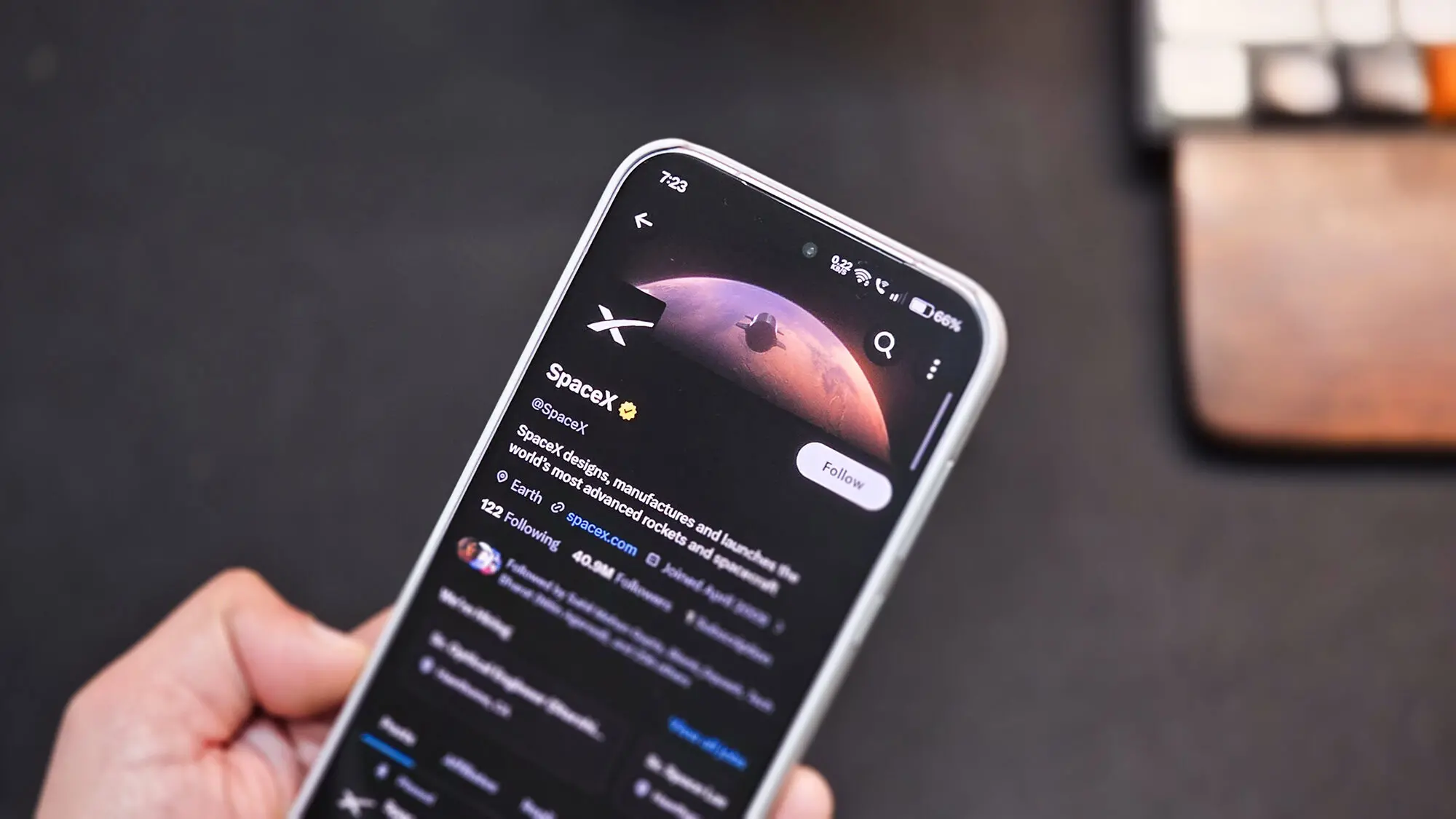
When reports first emerged that SpaceX was quietly exploring a Starlink-branded mobile carrier, the idea seemed like a distant ambition. At the time, the company had reportedly been pitching investors on a consumer wireless service, backed by its $17 billion acquisition of EchoStar's 65MHz of spectrum and a possible terrestrial network to complement Starlink's satellite constellation. Just weeks later, SpaceX has gone from hinting at those plans to openly confirming them, revealing a roadmap that could reshape the US mobile market.
Speaking during the company's first earnings call since its IPO, SpaceX President Gwynne Shotwell confirmed that the company intends to build a terrestrial mobile network alongside its satellite infrastructure. The confirmation lays out the clearest picture yet of what Starlink Mobile will eventually become. “The spectrum that we purchased from EchoStar does have terrestrial components, so we definitely intend to build out the terrestrial component,” Shotwell said. Rather than relying solely on satellites, SpaceX wants a hybrid network that combines space- and ground-based infrastructure into what it describes as a “true mobile service.”
A Hybrid Network Built on Spectrum and Satellites
The hybrid approach is central to SpaceX's strategy. Today, Starlink's direct-to-cell service operates using around 5MHz of spectrum leased from carrier partners, primarily for basic connectivity outside cellular coverage. That service has been positioned as a safety net for people stranded in remote areas, allowing text messages and later voice and data in dead zones. But the company has always made clear that direct-to-cell was a first step, not the final product.
Once the EchoStar acquisition closes, SpaceX will have access to 65MHz of spectrum—more than 13 times the bandwidth it currently uses for direct-to-cell. That expansion will be paired with next-generation satellites that Shotwell said will make Starlink Mobile 100 times better than the current service. The performance leap would come from a combination of higher spectrum capacity, advanced beamforming, and more efficient satellite hardware that can handle a much larger volume of users.
The race for spectrum has been a defining theme in the US wireless industry for decades. AT&T, Verizon, and T-Mobile have spent tens of billions of dollars in government auctions to acquire low-band, mid-band, and millimeter-wave spectrum. SpaceX's purchase of EchoStar's 65MHz gives it a meaningful but still modest slice of the radio frequency landscape. Rather than trying to outbid the traditional carriers, SpaceX is counting on a different architecture to deliver comparable or better service.
Smaller Base Stations Instead of Massive Tower Buildouts
The company also shared more about how it plans to build its terrestrial network without matching the enormous infrastructure spending of traditional carriers. Building a nationwide cellular network typically requires hundreds of thousands of towers, each connected to a wired backhaul, equipped with radios, and maintained through years of operation. That model has created high barriers to entry, which is why only a few major carriers dominate the US market.
SpaceX intends to bypass that model. Instead of deploying large cellular towers everywhere, Elon Musk said the company is developing a distributed network of smaller base stations that could be integrated with existing Starlink installations on homes and businesses. Many of the same rooftops already hosting Starlink dishes today could eventually help deliver mobile coverage as well. That approach turns every Starlink customer into a potential mini cell site, dramatically reducing the cost of network deployment.
These small base stations would use the spectrum acquired from EchoStar to provide local coverage and capacity, while Starlink's satellite constellation handles areas that lack terrestrial infrastructure. The system would work as a mesh of sorts, with rooftop nodes connecting to nearby phones and relaying traffic to the satellite backbone or directly to the fiber-connected dish. It is an unconventional design, but one that leverages SpaceX's existing strengths in manufacturing and satellite operations.
How SpaceX Plans to Win Customers
Notably, SpaceX still owns far less spectrum than AT&T, Verizon, or T-Mobile. Those carriers each control hundreds of megahertz of licensed spectrum across multiple bands, and they have invested heavily in 5G network improvements over the past few years. Rather than trying to beat those carriers at their own game, SpaceX wants to differentiate by coverage and resilience.
SpaceX expects to win customers away from the three major US carriers by eliminating dead zones and providing more resilient connectivity during natural disasters. The company has already demonstrated its satellite service's value in emergency situations, helping people in hurricane-affected areas send texts when local networks went down. With a terrestrial component added, Starlink Mobile could automatically switch between satellite and ground nodes, keeping users connected in ways that traditional carriers cannot match.
Musk went even further, saying the company believes Starlink Mobile could ultimately deliver higher bandwidth than today's traditional cellular networks. That claim is bold, especially given the physical limits of radio spectrum and the shared nature of satellite links. But SpaceX's engineers have been pushing the boundaries of signal processing and satellite design for years, and the next-generation satellites are expected to use advanced phased-array antennas and multiple beams to increase throughput.
The competitive implications are significant. AT&T, Verizon, and T-Mobile have long benefited from their extensive tower networks, which provide broad coverage and high capacity in urban and suburban areas. But all three carriers still struggle with rural dead zones and congestion in dense environments. SpaceX's hybrid network could specifically target those weaknesses, offering a unified service that works anywhere—indoors, outdoors, rural farms, city canyons, and even airplanes.
The company's path to market is not without challenges. Starlink Mobile will need regulatory approvals from the Federal Communications Commission to use the EchoStar spectrum terrestrially. EchoStar had already received some approvals for its own terrestrial use, but transferring and repurposing those licenses will require additional review. SpaceX also needs to integrate the base stations with the consumer dish hardware in a way that keeps costs low and installation simple. Power consumption, local zoning, and interference with existing networks are all issues that must be resolved.
Another question is the business model. Starlink's consumer internet service has typically required upfront equipment purchases and monthly fees higher than traditional broadband in many regions. For a mobile service to compete with established carriers, pricing will need to be aggressive, at least in the early years. The company may also bundle Starlink Mobile with its existing internet service, creating an appealing package for rural users who currently have few options.
SpaceX's long-term vision is to become a one-stop connectivity provider for everything from fixed home broadband to direct-to-smartphone service. The satellite constellation already has thousands of units in orbit, and the next generation will add even more capacity. If the terrestrial network can be deployed quickly and cost-effectively, Starlink Mobile could become a genuine fourth option for American consumers.
The announcement also signals how the broader satellite communications industry is evolving. Companies like Amazon's Project Kuiper, T-Mobile's partnership with Intelsat, and various other direct-to-cell initiatives are exploring similar hybrid models. But SpaceX has the advantage of being vertically integrated—it builds its own satellites, launches them on its own rockets, and can now develop its own terrestrial infrastructure without relying on third-party tower companies.
During the earnings call, Shotwell and Musk provided few details about the initial markets for Starlink Mobile. The company said it will launch by the end of next year with next-generation satellites, but did not specify whether the service would first be available in the United States or roll out internationally. The EchoStar spectrum covers parts of the US, but future frequencies in other countries could allow for global expansion over time.
For now, the key takeaway is that SpaceX has moved beyond the exploratory phase. The company has a clear intention, a spectrum asset, and a timeline for launching a true mobile service. Whether it can successfully compete with the deeply entrenched carriers remains to be seen, but the promise of eliminating dead zones and building a more resilient network is a powerful one for consumers who have grown tired of dropped calls and poor rural coverage.
As the next-generation satellites begin launching and the terrestrial base station network takes shape, the US mobile landscape could look very different in just a few years. Starlink Mobile may not instantly replace AT&T, Verizon, or T-Mobile, but it gives millions of customers another reason to reconsider who provides their phone service. The upcoming rollout will be watched closely by industry executives, regulators, and consumers alike.
Source: Android Authority News