

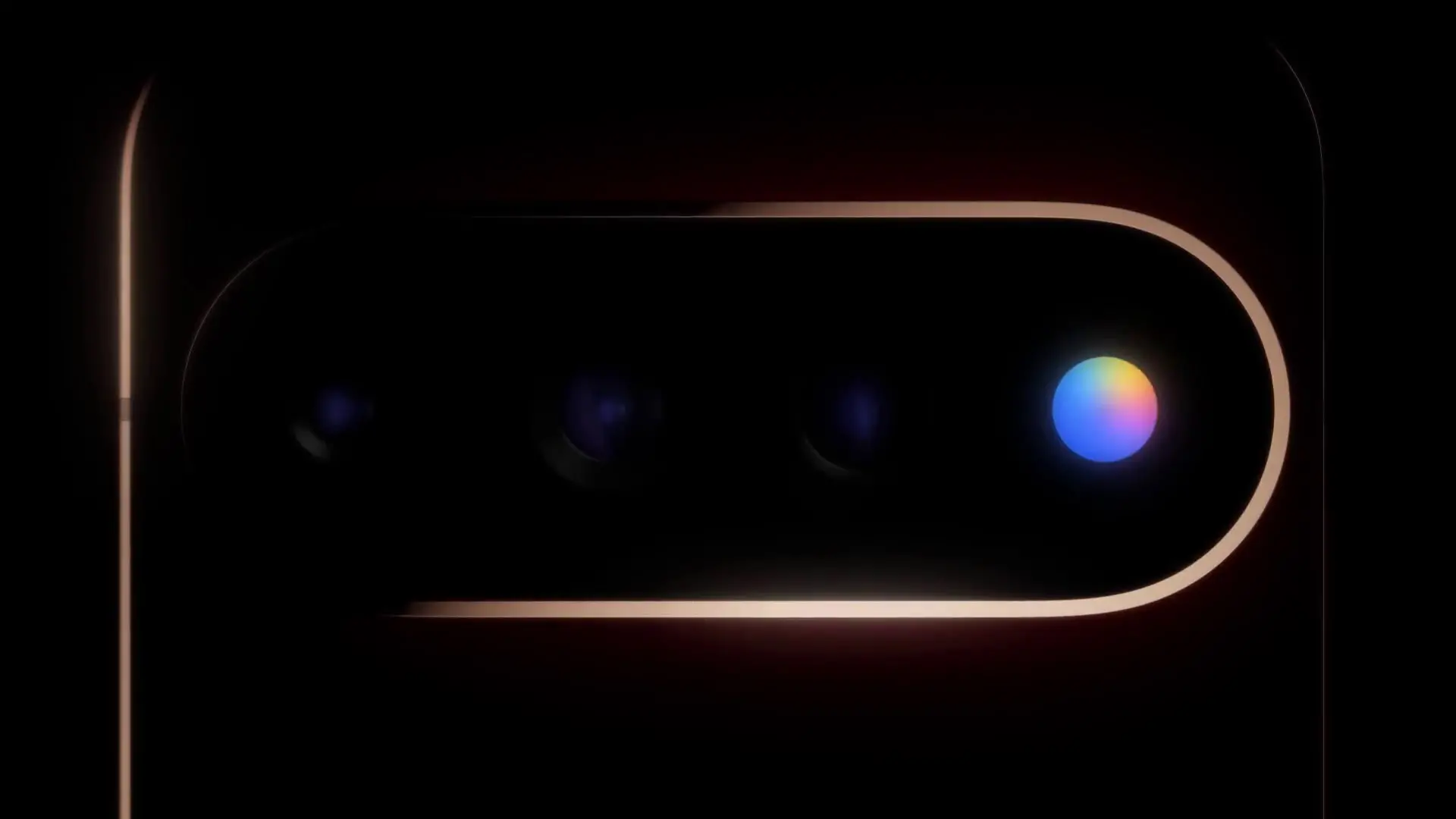
The Pixel 11 series is due to launch this month, and with the Pixel 11 Pro, Google is introducing a new, mysterious round LED light panel on the rear that swirls and swirls and swirls. Currently referred to as Pixel Glow, it has sparked both enthusiasm and skepticism among the Android community. A recent reader poll conducted by Android Authority reveals a deeply divided audience: while a plurality of dedicated fans are genuinely excited about the feature, a loud minority is quick to dismiss it as yet another gimmick in a long line of smartphone novelties.
What is Pixel Glow?
Pixel Glow is a small circular LED light embedded in the back panel of the upcoming Pixel 11 Pro. Based on leaked renders and early hands-on descriptions, the light appears to be capable of swirling, pulsing, and cycling through various colors. Google has not yet officially detailed its purpose, but early suggestions point to it functioning as a notification alert. That would place it in the same category as the notification LEDs found on many Android phones of the past decade.
If that sounds familiar, it's because it is. The smartphone industry moved away from dedicated notification lights years ago, largely in favor of always-on displays and ambient notifications. However, a small but vocal segment of users has long clamored for their return. The Pixel Glow may be Google's answer to that demand, but the company could have bigger plans in mind.
The poll results: a community divided
Android Authority ran a reader poll asking whether readers are looking forward to Pixel Glow. The poll garnered just over 1,600 votes, a relatively lean sample, but the data still offers a snapshot of sentiment among the most engaged Pixel fans.
According to the results, 45% of respondents say Pixel Glow “looks great!” and that they are looking forward to seeing what it can do on the device. This group appears bullish on the feature, with many likely hoping that Google has more in store than a simple messaging notification. A further 35.4% of respondents are holding off on forming an opinion, at least until the feature is fully detailed. This wait-and-see attitude is understandable, as Google has revealed very little about the feature's actual functionality.
On the other end, just under 1 in 5 readers do not believe the feature is remotely interesting. Many of those who left comments on the poll articles were far more blunt. One commenter, using the handle James TS, wrote, “Just what everyone has been asking for. Another way for your device to get your attention.” Another commenter, bella07112021, said, “They really have run out of ideas, I think my temperature sensor on my 10 pro is more useful.” A third added, “Nobody cares about flashing lights on the back of a Pixel, they want better battery life and more stable updates and better performance.”
Some critics even offered design alternatives. Reader bfortino suggested, “Really should have been a matrix led bar across the visor not a tiny dot.” An LED ring around the camera visor would certainly have been a more visually striking feature, reminiscent of the HTC One series or the Nothing Phone's Glyph interface. Instead, Google appears to have opted for a more subdued implementation.
The nostalgia factor: notification lights of the past
To understand why Pixel Glow has generated so much excitement, it helps to look back at the history of notification LEDs. Before always-on displays became standard, most smartphones used small LEDs to alert users to missed calls, messages, and other notifications. These lights were often customizable, allowing users to assign specific colors to specific contacts or apps. For many, that subtle glow on a desk or nightstand was an essential part of the phone experience.
Remember the Motorola E399? It was a cult favorite among those who appreciated its light system, which danced to music and alerted users to messages from special contacts. That phone, released in the early 2000s, became a benchmark for how a notification light could be both functional and fun. Pixel Glow may be drawing on that legacy, but it remains to be seen whether Google can capture the same magic with a single round LED on the back of a high-end flagship.
Modern smartphone makers have experimented with similar ideas. Nothing's Glyph interface on the Phone (1) and Phone (2) uses a series of LED strips on the back to provide notification alerts, call progress indicators, and even a flashlight fill light. Samsung and LG once offered notification LEDs as well, and LG's arching light on the G8 was particularly noteworthy. However, these features have often been viewed as novelties rather than must-have functionality. The challenge for Google is to make Pixel Glow feel essential, not just nostalgic.
What could Pixel Glow actually do?
If Pixel Glow is not just a notification light, what could it be? Early speculation has ranged from camera-related functions to a new way to interact with Google Assistant or Gemini Live. The second part of the poll asked readers what they would prefer Google uses Pixel Glow for. The results show a strong desire for versatility and openness.
An overwhelming 46% of respondents chose “All of the above,” indicating that they want Pixel Glow to serve multiple purposes across the phone. A further 25% said they want Google to open the API and let any app developer use it. That would effectively turn Pixel Glow into a canvas for third-party creativity, much like Nothing's Glyph interface.
Other options in the poll included specific contact calls (7%), unread messages from specific contacts (10%), Gemini Live (3%), battery charging (6%), and timers and alarms (2%). The low enthusiasm for a Gemini Live integration suggests that users are not eager for Pixel Glow to be tied to the AI assistant. Instead, they prefer practical uses such as notifications and app customization.
Google's track record with innovative features
Google is no stranger to introducing hardware features that initially seem puzzling. The Pixel 4 series attempted to bring Motion Sense soli radar gestures to the smartphone market, a feature that was eventually discontinued after poor adoption. The Pixel 5 brought a rear fingerprint sensor after years of face unlock. The Pixel 10 Pro, as referenced by one commenter, includes a temperature sensor that many users have found to be of limited practical use.
Yet Google has also succeeded in making features stick. The Now Playing music recognition feature on Pixel phones, which uses on-device machine learning to identify songs in the background, was once considered a niche novelty. It is now a beloved part of the Pixel experience. The same could be true for Pixel Glow, provided Google delivers a meaningful and well-integrated implementation.
Given that the Pixel 11 Pro is expected to be powered by the Tensor G5 chip, Google has an opportunity to use Pixel Glow in conjunction with on-device AI. For instance, the light could change colors based on the priority of notifications, or it could pulse in a specific pattern to indicate that Gemini Live is listening. It could even sync with the camera app to act as a visual countdown timer or a selfie frame indicator. The possibilities are vast, but so far Google has remained tight-lipped.
The timing: a decisive month for Pixel
The Pixel 11 series is scheduled to debut on August 12, which means we won't have to wait much longer to learn more about Pixel Glow. This will be a critical launch for Google, as competition in the Android flagship space has intensified with the release of new devices from Samsung, OnePlus, and others. The Pixel 11 Pro will need more than just a glowing LED to stand out.
Still, the fact that a relatively simple hardware feature has generated the amount of debate it has is noteworthy. It shows that Pixel fans care about the details and are willing to embrace something different. At the same time, the loud criticism serves as a reminder that not every feature will resonate with everyone.
As the launch date approaches, we'll likely see more leaks and official teasers that shed light on Pixel Glow's true purpose. Until then, the debate rages on. Is Pixel Glow a clever revival of a forgotten feature, or a sign that Google has indeed run out of ideas? The answer may depend on how well it is implemented, and whether it earns a permanent place in the everyday Pixel experience.
Regardless of which side you fall on, one thing is certain: the Pixel 11 Pro is already generating conversation, and that is often half the battle in the crowded smartphone market.
Source: Android Authority News