

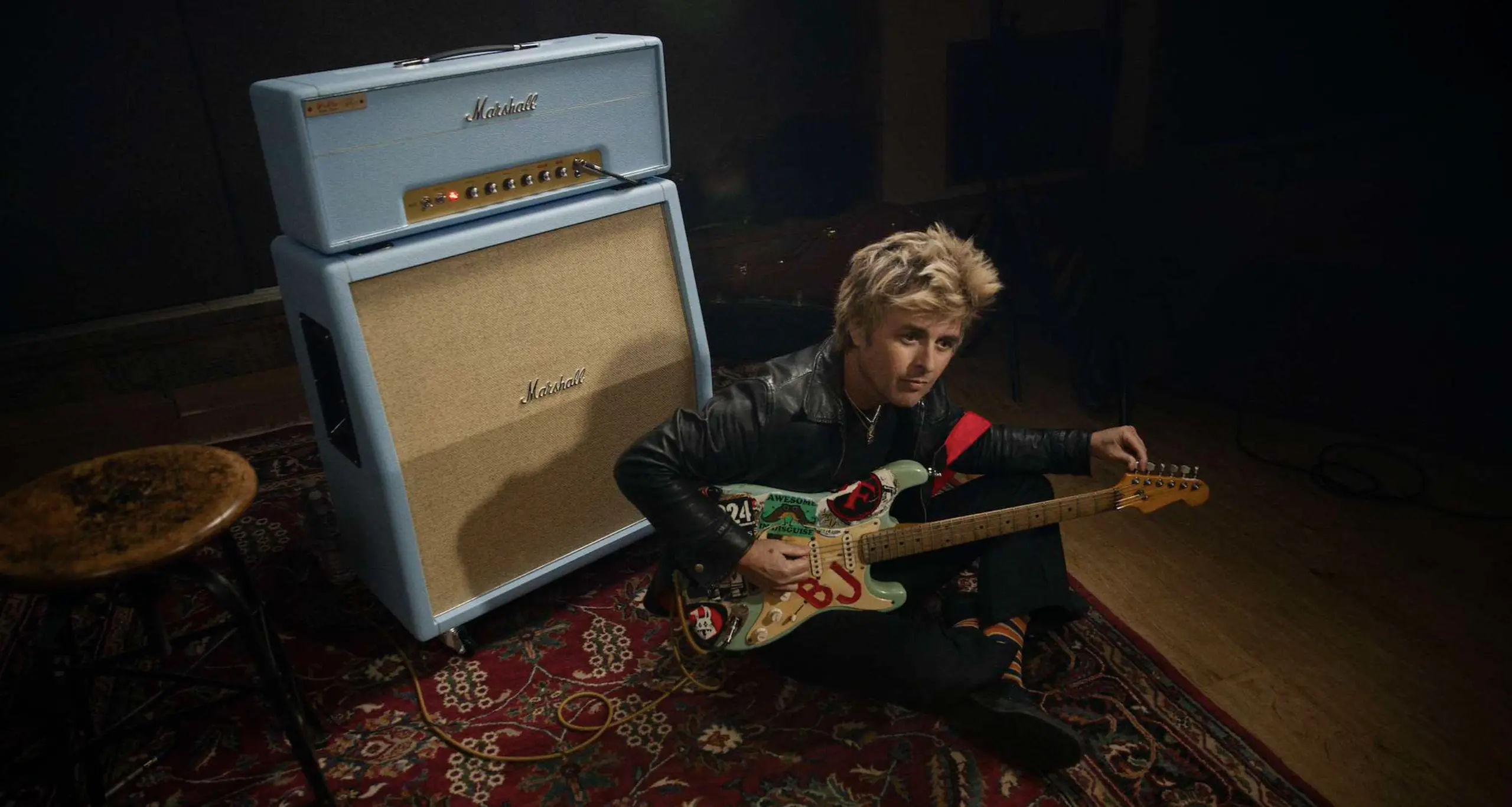
It is one of rock's most enduring ironies: the singer who penned 'The American Dream is killing me' now has a signature guitar amplifier that costs more than many people's rent. Billie Joe Armstrong, the defiant frontman of Green Day, has partnered with Marshall Amplification to release the 'Billie Joe Armstrong JTM45' – a limited-edition head that channels the raw, snarling tone of late-1970s punk while carrying a price tag that screams 2020s capitalism.
The contradiction is not lost on fans. Since Green Day exploded onto the scene with Dookie in 1994, Armstrong has positioned himself as a voice for the disenfranchised, the underpaid, the often-overlooked middle class. Songs like 'Longview' captured the lethargy of dead-end jobs, while 'American Idiot' attacked the jingoistic consumer culture that followed 9/11. Yet here he is, plastered across guitar magazines, holding a piece of equipment that could fund a month's rent in many American cities.
From Berkeley basements to stadium stages
To understand the tension, one must revisit Armstrong's roots. Born in 1972 in Oakland, California, he grew up in a working-class household where music was escape rather than employment. His first guitar was a cheap Hohner acoustic; his first amp was a battered Fender Princeton that he bought from a pawn shop. The DIY ethos of East Bay punk instilled in him a distrust of corporate rock. When Lookout! Records pressed the first print of Kerplunk, Armstrong was still working at a local pizza joint.
The success of Dookie changed everything. Suddenly, the band that sang about boredom and anxiety was a multi-platinum phenomenon. Armstrong has spoken openly about the guilt that fame brought. 'I felt like a sellout for years,' he admitted in a 2004 interview. 'I wrote songs about how much I hated the system, and then I was part of it.' That guilt fueled much of Green Day's subsequent output – the rock opera American Idiot directly attacked the consumerist nationalism of the Bush era, while 21st Century Breakdown took aim at the digital age's hollow promises.
Yet throughout that journey, Armstrong never stopped using Marshall amps. His backline on the American Idiot tour consisted of a wall of Marshall JCM900s. The brand became synonymous with his sound – that thick, overdriven crunch that powers through punk chord progressions. So perhaps it was inevitable that the company would come calling with a signature model.
The amp that says everything
The Billie Joe Armstrong JTM45 is not a cheap replica. It is a hand-wired, point-to-point reissue of the original 1960s JTM45 that inspired so many classic records. Only 500 units are being produced worldwide, each signed and numbered. The retail price hovers around $3,499 – a sum that buys you vintage construction, premium components, and the endorser's implicit promise that this box of capacitors and tubes will help you sound like him.
For the working musician, that price is prohibitive. It reinforces the very class divide Armstrong once railed against. But the amp also sells on its intrinsic quality. Guitarists who have tested it rave about the dynamic range, the way response to picking dynamics, and the creamy overdrive that cleans up when you roll back the volume. It is, by all accounts, a superb piece of engineering.
Armstrong himself seems aware of the paradox. In promotional material for the amp, he is unusually measured. 'I didn't want to make a gimmick,' he says. 'I wanted to make an amp that I would actually use on tour and in the studio. If I can't stand behind it, I'm not going to put my name on it.' That pragmatic approach feels honest, but it doesn't erase the tension between his lyrics and his livelihood.
When rock stars sell amps
Armstrong is hardly the first anti-materialist musician to launch a lucrative gear line. Kurt Cobain’s use of Fender Jaguars made that model a staple; Jack White's partnership with Third Man Hardware produced bizarre, collectible turntables and effects pedals; even Tom Morello of Rage Against the Machine – a band that championed anarchism – has signature strings and amplifiers. The music industry has long had a complicated relationship with commerce: artists denounce corporate greed while selling T-shirts, VIP packages, and now signature amps.
What sets Armstrong apart is the sheer vehemence with which he has attacked consumer culture. 'American Idiot' wasn't just a protest song; it was a manifesto. 'I'm not a part of a redneck agenda,' he declared on the title track, while the album's narrative follows Jesus of Suburbia, a character who escapes his cookie-cutter life only to fall into advertising and consumption. The message was clear: the American Dream was a lie, a machine designed to keep you docile and spending.
Now, to promote a $3,500 amplifier, Armstrong must implicitly endorse the very system he criticized. Does that make him a hypocrite? Perhaps. But it also makes him human. As the writer of 'Wake Me Up When September Ends' – a deeply personal lament about loss and trauma – he has always expressed human contradiction. People contain multitudes. A man can hate the system while also loving his job, which happens to require expensive equipment.
What the amp represents culturally
The JTM45 signature model has become a Rorschach test for Green Day fans. Some see it as a natural evolution: the aging punk who has earned the right to enjoy the fruits of his labor. Others view it with disappointment, a concrete sign that their hero has become what he once hated. 'I used to think Billie was one of us,' wrote one Reddit user on a guitar forum. 'But if you’re selling a $3,500 amp, you’re not one of us anymore.'
Yet the amp also reflects a broader shift in the music industry. In an era of declining album sales and streaming revenue, artists increasingly rely on merchandise and endorsements to sustain their careers. A signature model can provide a steady income stream that allows musicians to keep making the art that originally connected with fans. Armstrong has been open about the financial pressures of the modern music business. 'Labels don't pay for tours anymore,' he noted in a 2022 interview. 'You have to figure out ways to support yourself without just gouging your fans.'
The amp, then, is a practical solution to an economic problem. It is not a betrayal of ideals but a negotiation with reality. Armstrong still writes songs about politics and personal struggle; he still donates to progressive causes and speaks out against authoritarianism. He simply also sells a product. The dissonance is unsettling precisely because it is universal – we all make compromises to survive within capitalism, even those who critique it most loudly.
The sound of silence?
Perhaps the most telling aspect of this story is that Armstrong has not issued any lengthy explanation or defense of the amp. He released a short video demonstrating its sound, gave a few fanzine interviews, and then went back to touring. There is no attempt to reconcile the amp with his earlier lyrics. That silence speaks volumes. It suggests that he does not see a contradiction, or that he has simply moved on from the absolutes of youth.
Green Day's recent album Saviors (2024) continues the band's tradition of social commentary, with songs like 'The American Dream is Killing Me' and 'Strange Days Are Here to Stay.' The latter includes the line 'I bought a house and a car / I live the way they want me to.' On record, Armstrong can still deliver the bitter critique. Offstage, he lives in an expensive home, drives nice cars, and endorses premium amplifiers. The gap between art and life has never been wider – or more honest.
At the end of the day, the Billie Joe Armstrong Marshall amp is just a tool. It allows guitarists to approximate the sound of a rock legend. It does not erase the songs that exposed the hollowness of consumer culture. It does not make Armstrong a bad person or a fake. It simply makes him a participant in the economy he once tried to transcend. And perhaps that, more than any political rant, is the most American Dream story of all: the rebel who finds himself selling out, not because he lost his principles, but because the system makes no room for purity.
The new Marshall amp will be in the hands of collectors and touring professionals soon. Billie Joe Armstrong will continue to play it on stage while screaming about how the American Dream is killing him. The irony will be lost on some, accepted by others, and debated by many. That is the nature of rock and roll – a music born from rebellion that has become the soundtrack of both protest and product placement. In that tension lies the art, and the contradiction we all live with every day.
Source: TechRadar News