

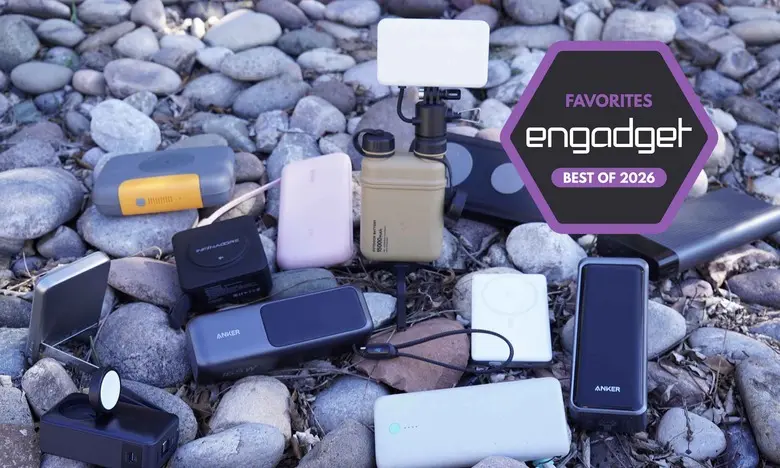
Few things feel worse than watching your phone battery drop to five percent when you are nowhere near an outlet. A good power bank solves that problem, but choosing one is harder than it used to be. The market has grown to include models with built-in cables, wireless charging, digital displays, rugged waterproof cases, and enough wattage to refill a laptop. This guide is based on years of hands-on testing of dozens of portable chargers. Whether you need a small battery for a quick phone top-up or a high-capacity brick that can keep a laptop running all day, there is a pick here for you.
Best power banks for 2026
Best MagSafe power bank
Anker MagGo Power Bank (10K) is the most well-rounded MagSafe battery we have tested. It packs a 10,000mAh capacity, supports 15W wireless charging, and includes one USB-C port for wired charging. The MagGo was one of the first Qi2-certified products on the market, and that new standard makes a big difference. In testing, it brought an iPhone 15 from near-dead to half-full in about 45 minutes. Older MagSafe chargers often took an hour and a half to do the same. After that first refill, the MagGo still had enough power to take the phone to 70 percent on a second charge.
The built-in kickstand props the phone up in portrait or landscape, and the fold-out stand works well for watching video or using StandBy mode. The small LCD display shows the battery percentage remaining in the bank, along with estimated time to full or empty. The magnetic connection is strong enough that you can carry the phone and battery together while charging. The USB-C port also lets you charge non-wireless devices. The main downside is price: it costs more than typical MagSafe power banks from less established brands.
- Pros: Fast Qi2 wireless charging; sturdy kickstand; clear LED display
- Cons: More expensive than other MagSafe packs
Best portable charger for Android
Anker Nano Battery (Foldable USB-C) is small enough to fit in a coin pocket but manages to deliver fast charging. Its 5,000mAh capacity and 22.5W maximum output refilled a Galaxy S23 Ultra to 65 percent in about an hour. The built-in USB-C connector folds away when not in use, so you never have to remember a cable. There is also a USB-C port on the side that can charge the battery or power another device using your own cable. Four indicator lights show the remaining charge.
This battery is a great choice for earbuds, phones, and other small gadgets. The compact size makes it easy to use your phone while charging without feeling awkward. For a little more capacity, Anker also makes a 30W Nano Power Bank with 10,000mAh, a built-in USB-C cord that doubles as a carry handle, and an additional USB-A port.
- Pros: Ultra-portable; affordable; no cable needed
- Cons: Small enough to misplace
Best low-capacity power bank
Anker 10K Fusion solves the two biggest annoyances with portable chargers: remembering a cable and remembering a wall adapter. This 10,000mAh battery has a built-in USB-C cable and foldable wall prongs. Its 30W output delivered a full charge to a Galaxy S23 Ultra in just over an hour, and in 20 minutes it brought a near-dead iPhone 15 to 45 percent. There is an additional USB-C port for other cables, and both inputs can refill the battery. The display shows remaining charge as a percentage, and the textured sides make it comfortable to hold.
This is a faster and more feature-packed pick than the previous low-capacity favorite from BioLite, though that older model remains a durable and respectable option. The Fusion is compact, practical, and easy to keep in a daily bag.
- Pros: Built-in USB-C cable; built-in wall plug; accurate display; low price
- Cons: iPhone charging is slower than other power banks in this range
Best medium capacity power bank
Belkin BoostCharge 20K with Integrated Cable offers a high capacity at a reasonable price. This 20,000mAh bank outputs 30W, charged a Galaxy S24 Ultra from near-dead to full in one hour and 15 minutes, and brought an iPhone 15 from five percent to 87 percent in just over an hour. The built-in USB-C cable is magnetized to the side of the battery, so it stays tidy when not in use. In addition to that cable, there are two other ports: a USB-A port and a USB-C port. That means you can charge three devices at once, though the charging speed drops when multiple devices are connected.
There is no digital display, only four LED indicator lights, but they are accurate and easy to read. The BoostCharge comes in blue, pink, white, or black, and the matte finish resists smudges well. For the price, this battery offers excellent value for people who need multiple full phone charges.
- Pros: Handy built-in cable; four color options; great capacity for the price
- Cons: Charging speed is not the fastest
Best medium-high capacity power bank
Nimble Champ Pro is the fastest mid-size power bank we have tested at its price point. It has a 20,000mAh capacity and 65W maximum output. The Champ Pro took a Galaxy S23 Ultra from five percent to full in under one hour, which is faster than every other battery we tested except the premium pick from Anker, which costs $30 more. It also delivered nearly three full charges to an iPhone and a Galaxy device, and it can refill an iPad more than once. The battery charges from the wall noticeably faster than many competitors, so it is ready to go when you are.
The company makes the shell from 90 percent post-consumer plastic, and the packaging is mostly recycled paper. The build feels solid, and the adjustable lanyard is a welcome touch. Both USB-C ports can deliver power and accept input, so you can charge the battery through either one. The four LED indicator lights were slightly conservative in our early tests, but they became more accurate after a few charge cycles.
- Pros: Super fast charging; recycled materials; compact and durable
- Cons: Indicator lights may underestimate remaining charge at first
Best multi-device power bank
BioLite Charge 100 Max is a compact 25,000mAh power bank with a 120W total output. It features two USB-C ports, one USB-A port, and a MagSafe-compatible wireless charging pad on the side. In testing, it charged an iPhone 15 five times, a Galaxy S23 Ultra four times, and an iPad Air more than twice. It also refilled a MacBook Pro from near-dead to 75 percent in about 57 minutes. The wireless pad tops out at 15W, and the magnetic hold is strong enough for desk use but not for carrying around while charging.
The rounded rubberized body and yellow accents are a nice departure from the typical black battery brick. The ten LED pips on the front are accurate, though the last pip does not flash before the battery dies. BioLite is a climate-neutral certified B-Corp, which helped fund energy access programs around the world.
- Pros: Compact design; charges phones, tablets, and laptops; attractive design
- Cons: Pricier than similar-capacity rivals
Best laptop power bank
Anker Laptop Power Bank with Built-in Cable is the best choice for people who need to charge a computer. This 25,000mAh unit delivers up to 165W and includes two built-in USB-C cables. One cable attaches to the side and acts as a carry handle, while the other retractable cord extends to two feet. Both cables support input and output, so you can recharge the bank or your laptop. The digital display shows the remaining battery percentage and the output wattage going to each port, as well as an estimated time to full when charging. The matte silver exterior feels more durable than earlier Anker models with large glass displays.
In testing, it charged a MacBook Pro from near-dead to 68 percent in about 53 minutes, an iPhone 15 to full almost twice, and a Galaxy S23 Ultra in under an hour. At its price, it costs only $15 more than Anker's popular PowerCore bank, and the built-in cables alone make that difference worth it.
- Pros: Two built-in USB-C cables; durable build; detailed display; fast charging
- Cons: Screen picks up smudges easily
Best premium power bank
Anker Prime Power Bank 26K 300W is the most impressive portable charger we have tested. It has a 26,250mAh capacity and can output up to 300W combined across two USB-C ports and one USB-A port. Each USB-C port can deliver up to 140W, which means two high-powered laptops can be charged at the same time. The battery is more compact than most other 25,000mAh models, with a sleek matte silver body and a shiny black front. The built-in display shows remaining capacity, output wattage, and battery temperature, which is useful for monitoring lithium-ion health.
Testing produced the fastest phone charge times we have seen: an iPhone 15 went from near-dead to 60 percent in 30 minutes, and the battery delivered more charge to a MacBook Pro than any rival. The optional charging base adds $110 to the price, but it makes refilling the battery as simple as setting it down on the base. This is not a budget pick, but for anyone who needs maximum power in a premium package, it is the best option.
- Pros: Super fast charging; premium design; detailed display
- Cons: Expensive, especially with the optional base
Best power bank for outdoors
Nestout 15,000mAh Outdoor Battery Power Bank is one of the few portable chargers that can survive water and rough handling. It has an IP67 rating, meaning it can handle being submerged in about one meter of water for up to 30 minutes. The screw-on caps with silicone gaskets keep water out, and the battery survived our five-minute dunk test with no issues. The company also claims it meets military-standard shock and drop specifications, and our repeated drop tests from chest height onto asphalt caused no damage.
The 15,000mAh capacity and 32W maximum output are not class-leading, but they are enough to charge a phone three times or an iPad in about two and a half hours. The included USB-A to USB-C cable is only seven inches long, so you will likely want your own cord. Optional accessories include a snap-on LED worklight, a small tripod, and a portable solar panel that can refill the battery to 40 percent in under three hours.
- Pros: Waterproof with caps secured; clever accessories; survives drops
- Cons: Faster chargers exist; short included cable
What to look for in a portable battery pack
Battery type
Nearly every rechargeable power bank uses a lithium-ion battery. These cells offer a strong size-to-charge ratio and do not suffer from the memory effect that plagued older nickel-based batteries. Lithium-ion energy density has increased significantly over the past decade, which is why you can now get 25,000mAh capacity in a package that fits in a jacket pocket.
Flying with portable batteries
Because lithium-ion batteries can overheat and catch fire, airlines restrict how power banks can be carried. Current rules allow external batteries rated at 100Wh or less — which includes every pick in this guide — in carry-on luggage only. They cannot be checked in. Some airlines, including Southwest, now require passengers to keep power banks in clear view while using them to charge a device. If the battery is not in use, it can stay inside a carry-on bag in the overhead bin.
Capacity
Capacity is measured in milliamp hours, or mAh. A 5,000mAh battery is a good emergency phone charger, typically refilling a phone to between 50 and 75 percent. A 10,000mAh battery is better for full day trips, while batteries over 20,000mAh can charge tablets and laptops. Remember that a power bank cannot deliver its full rated capacity to a device. Because of heat loss and voltage conversion, the real output is about 60 percent of the labeled capacity. In our testing, a 10,000mAh battery delivered roughly 5,800mAh to a phone, while a 25,000mAh bank delivered around 16,200mAh.
Wireless
Wireless charging is less efficient than wired charging, but it is much more convenient. Qi2-certified power banks support up to 15W wireless output and include magnetic alignment, which is why they have become our top picks for iPhone and newer Android devices. Newer phones like the iPhone 17 and Google Pixel 10 Pro XL support Qi2 25W, and compatible power banks are starting to arrive. The new standard should close more of the gap between wireless and wired charging speed.
Ports
USB-C ports deliver faster charging than USB-A ports, and most modern power banks include at least one USB-C port. Some multi-port banks have different wattage ratings for each port, so check the labels on the bank itself. You also need a cable that can handle the charging speed: a 60W cable will not deliver 100W. A built-in USB-C cable removes the risk of forgetting a cord, which is why several of our favorite power banks now include one.
Design
Power banks used to be black rectangular bricks, but now they come in many colors and shapes. Some include kickstands, built-in wall plugs, lanyards, or digital displays. While performance matters most, design affects how easily you carry and use the battery every day. All of our picks have at least some kind of remaining-charge indicator, and the higher-end models provide much more detailed readouts.
How we test power banks
We start by looking at products from well-known brands and checking customer reviews on major retail sites. Then we buy or borrow the most promising models and test them with a consistent set of devices. For each battery, we charge an iPhone and an Android phone, plus tablets and laptops when the battery has enough power. Devices are drained to between zero and five percent, then charged until full or until the power bank dies. We record charge times, total delivered capacity, port performance, wireless speed, build quality, and any extra features.
We also test with a variety of device batteries, including iPhones ranging from the iPhone 11 to the iPhone 16, Galaxy S22 and S23 Ultra, iPad Air, and a 16-inch MacBook Pro. Battery capacities vary by device, and we use those numbers to calculate how many full charges each power bank can deliver.
Other power banks we tested
Belkin Stage PowerGrip
This unusual accessory is a power bank, camera grip, and Bluetooth shutter in one. It has a 9,300mAh capacity, a wireless charging pad, and a quarter-inch tripod thread. The shutter is handy for phone photography, and the fold-out stand works well. As a charger, it is slow, taking about two hours to fill an iPhone 16 from three to 98 percent, but it can be a smart purchase for dedicated mobile photographers.
Anker MagGo for Apple Watch power bank
This 10,000mAh power bank combines a USB-C cable with a pop-up Apple Watch charger. It is a niche product, but for people who wear an Apple Watch, it is an extremely useful companion. It can refill a phone and an Apple Watch at the same time, and the small size makes it easy to carry while traveling.
HyperJuice 245W
Hyper's 27,000mAh power bank looks great and delivers up to 245W. It filled a Galaxy S24 Ultra in just over an hour and a MacBook Pro to 75 percent. However, it costs the same as our laptop power bank pick while offering only USB-C ports and no built-in cable.
EcoFlow Rapid magnetic power bank
EcoFlow, known for large power stations, entered the compact power bank market with this Qi2-enabled 5,000mAh model. It has a nice design and a sturdy pull-out stand, but it could not match the speed or output of our top MagSafe pick.
Mophie Snap+ Powerstation Mini
This well-built 5,000mAh MagSafe power bank has a premium feel and a stable stand. Its main drawback is capacity: modern phones need more than half a charge to get through a day, and the battery costs only $20 less than our top pick, which has double the capacity.
Power bank FAQs
What is the difference between a power bank and a portable charger?
The terms power bank, portable charger, external battery, and portable battery all refer to the same thing: a self-contained lithium-ion battery that stores energy for recharging phones, tablets, laptops, earbuds, and other USB-powered devices. Power stations, on the other hand, are much larger units that look like car batteries and are usually too heavy to fly with. Pay attention to capacity, size, weight, and output wattage to choose the right balance for your needs.
Does fast charging ruin your battery?
Fast charging generates more heat, and heat is the main enemy of lithium-ion battery longevity. Modern phones use cooling systems and software power management to keep that heat in check. Studies on electric vehicle batteries, which operate on the same lithium-ion principle, show only a slight capacity loss over time when exclusively fast-charged, and ambient heat was a much bigger factor. For most people, fast charging is safe and the convenience outweighs any minor effect.
Can you use one power bank for all your devices?
It depends on the power bank's capacity and wattage. A small 5,000mAh bank cannot charge a laptop, but a 20,000mAh or larger bank can deliver multiple phone charges or a partial laptop fill. Check the ports on both the power bank and your devices. Most gadgets with a USB-C or USB-A port can be charged with the right cable. Devices with DC or AC input, like some printers and speakers, may not work with standard power banks unless the bank includes an AC outlet.
Source: Engadget News