
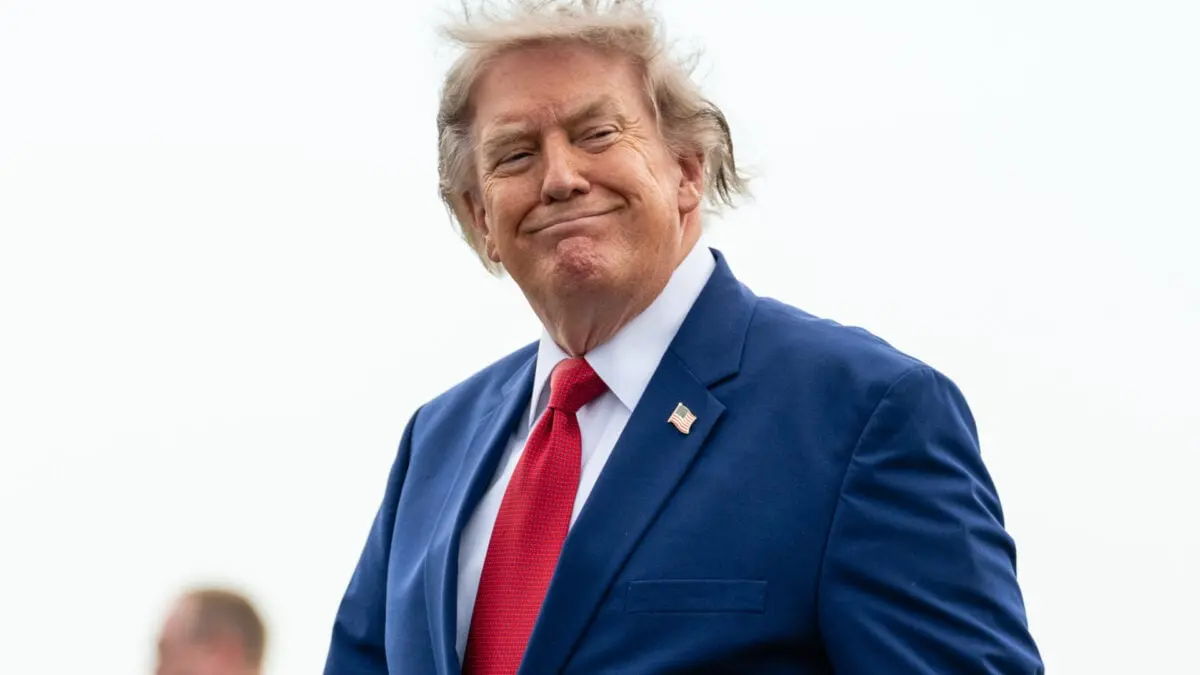
The Trump administration is broadening its secretive artificial intelligence safety framework to include certain open-weight models before they are made public, according to reports. The planned expansion reflects a growing recognition that any AI governance strategy focusing only on closed, proprietary systems could put American open-model developers at a disadvantage and potentially cede ground to foreign competitors.
Key Facts
- The Trump administration is expanding its AI safety framework to include advanced open models before public release.
- The framework currently applies only to closed models from top providers like OpenAI.
- Officials worry that approving only closed models would harm the reputation of open models and disincentivize American companies from releasing them.
- The shift follows the release of Chinese open models such as Moonshot’s Kimi K3, which rivaled leading American closed models.
- Meta, Microsoft, Palantir, and others signed an open letter urging the administration to avoid restricting open models.
- Nvidia CEO Jensen Huang publicly championed open models, and Nvidia helped form the Open Secure AI Alliance.
- OpenAI later co-signed the letter, while Anthropic declined, prompting accusations from pro-open-model critics.
Why the Framework Is Expanding
Government officials have reportedly concluded that an approval system covering only closed models would create an unintended stigma around open models. If Washington’s stamp of approval is reserved for closed systems, the thinking goes, open-model developers could be seen as less trustworthy, even if their technology matches or exceeds the safety and performance of proprietary alternatives.
That concern is not merely theoretical. The American AI ecosystem has seen a surge of interest in open models in recent months, driven in part by competitive pressure from Chinese AI labs. When Chinese lab Moonshot released Kimi K3, an open-source model that matched or outperformed several leading closed models while being significantly cheaper, it set off a wave of anxiety across the U.S. AI industry. The release was widely interpreted as evidence that Chinese open models were closing the gap with the best American closed systems.
For a time, experts speculated that the Trump administration would respond with blanket bans or export restrictions aimed at slowing China’s progress. That approach appeared to be the dominant strategy. But the calculus changed after prominent AI industry leaders united to defend open models as vital to American competitiveness.
Industry Leaders Push Back
In an open letter titled "Open Weights and American AI Leadership," a coalition of technology companies urged the administration to avoid restricting open models. Among the signatories were major players such as Meta, Microsoft, and Palantir. The letter argued that limiting open-weight models would cause the United States to fall behind as China raced ahead. It also pushed back against the notion that closed models are inherently safer, insisting that openness can actually strengthen cybersecurity through broader scrutiny and community oversight.
The letter represented a rare moment of alignment among companies that often compete fiercely with one another. It also underscored a growing divide in the AI industry over how to balance innovation and security. Open-model advocates argue that transparency enables researchers to identify vulnerabilities and improve safety. Critics counter that widely available weights can be weaponized by malicious actors or repurposed for harmful applications.
Nvidia chief executive Jensen Huang, who has long argued that open models are essential to winning the global AI race, went a step further. Huang made his first-ever post on the social platform X to make the case for open models. "Open models strengthen safety and cybersecurity, accelerate innovation and diffusion, and enable sovereignty," he wrote. "The world needs both frontier closed models and frontier open models."
Huang’s involvement added significant weight to the pro-open-model campaign. Nvidia, as the dominant supplier of AI chips, occupies an unusual position in the ecosystem. The company benefits from the proliferation of AI models regardless of whether they are open or closed, but it has consistently emphasized the importance of an open ecosystem. Nvidia later helped form the Open Secure AI Alliance, a coalition designed to promote the safe proliferation of open-weight AI models.
Divisions Within the AI Industry
Not every leading AI company signed the letter. OpenAI, which initially stayed on the sidelines, later added the co-signature of chief executive Sam Altman. The delayed endorsement was notable given OpenAI’s historical focus on closed, proprietary models and its complex relationship with open-source principles.
Anthropic, however, refrained from backing the letter entirely. That decision has caused friction within the pro-open-model camp. Some industry observers accused Anthropic’s CEO, Dario Amodei, of attempting to steer the administration toward a stricter stance that would favor closed models. Anthropic has become a leading producer of closed AI systems, and critics argue that any policy discouraging the proliferation of open models would ultimately benefit its commercial interests.
Amodei rejected the accusation, but the episode exposed the underlying tensions in the industry. The debate is not simply about safety versus innovation; it is also about business models, market positioning, and the future architecture of the AI ecosystem. If open models become subject to government inspection, companies that release open weights may face additional compliance burdens that closed-model providers already shoulder. That could alter the competitive balance in subtle but significant ways.
What the Framework Could Mean
The exact criteria for determining which open models qualify as "advanced enough" remain unclear. The administration has not published technical thresholds or procedural details. What is known is that the framework is designed to assess cyber capabilities, suggesting that the primary concern is the potential for AI systems to facilitate hacking, malware development, or other forms of cyberattacks.
For open-model developers, the prospect of government review introduces new uncertainty. Some may worry that pre-publication inspection could slow the pace of innovation or expose proprietary work. Others may welcome official scrutiny as a way to legitimize open models and reassure enterprise users who have been wary of adopting them.
The expansion also raises questions about international competitiveness. If American open models are subject to government review while Chinese open models are not, U.S. companies could find themselves at a disadvantage in the global market. On the other hand, a credible safety framework may enhance the reputation of American models and make them more attractive to governments and enterprises abroad that prioritize security.
The China Context
The policy debate cannot be separated from the broader geopolitical competition in artificial intelligence. China has invested heavily in AI development, and its open-source models have made rapid strides. The release of Kimi K3 demonstrated that Chinese open models could rival the capabilities of American closed systems at a fraction of the cost. That has forced American policymakers and industry leaders to reassess long-held assumptions about U.S. technological supremacy.
Some analysts believe that open models are a strategic asset in this competition. Because they can be freely downloaded, modified, and deployed by anyone, open models can spread influence and create ecosystems that extend far beyond their country of origin. China’s open-model strategy may be aimed at building global adoption and establishing technical standards. The United States, by contrast, risks ceding that ground if it treats open models with suspicion.
The administration’s decision to include open models in the safety framework could be interpreted as an attempt to have it both ways: maintain a measure of oversight without imposing a blanket ban. By subjecting advanced open models to review, Washington can signal that it takes security seriously while still allowing the open-model ecosystem to flourish.
What Remains Unknown
Significant details about the framework are still unknown. It is unclear whether the review process will be mandatory or voluntary, whether it will apply to models developed by foreign companies, and what consequences might result from a negative assessment. The administration’s penchant for secrecy has made it difficult for outside observers to evaluate the potential impact.
The framework’s extension to open models is also likely to face legal and practical challenges. Defining what constitutes an "advanced" open model is inherently difficult, especially as the technology evolves rapidly. Enforcement could prove even harder, given that open weights can be distributed across borders with minimal friction.
Despite these uncertainties, the direction of travel is clear. The Trump administration is moving toward a more structured approach to AI governance, one that acknowledges the importance of open models rather than trying to suppress them. Whether that approach succeeds in balancing security and innovation will depend on the details, and those details remain closely guarded.
For now, American AI companies are watching closely. The outcome of this debate will shape not only the future of open models but also the broader relationship between government and the technology industry in the years ahead.
Source: Gizmodo News