

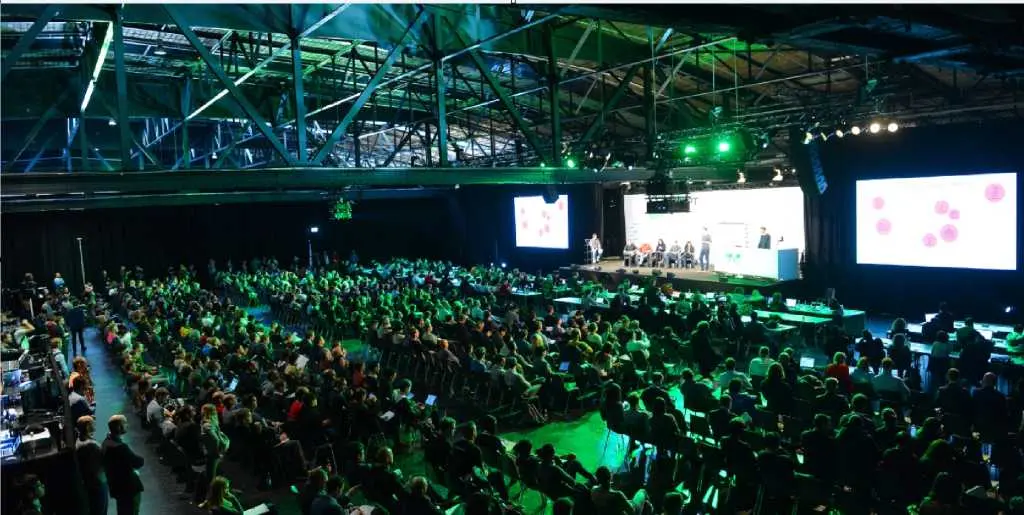
In just two days, a major technology conference will open in San Francisco, bringing together startup founders, investors, AI experts, software engineers, and technology builders from around the world. The central question on the agenda is direct: What comes next for artificial intelligence and software development?
The answer is already visible in engineering teams, developer tooling, and enterprise platforms. Over the past several years, AI has moved from a novelty to a core part of the software lifecycle. It started with code completion, predicting the lines, functions, and boilerplate developers needed based on what they had already typed. Then came code suggestions and code generation, where AI writes new code or improves existing code from a natural language prompt.
Today, coding agents can inspect a codebase, suggest improvements, compile and test the revised code, and iterate on that output to produce something better, faster, and safer. They can plan, write, test, review, and debug code. They can chat with developers about all of the above. In some cases, they can tackle complex development workflows entirely on their own.
From Autocomplete to Autonomous Agents
The shift from autocomplete to autonomous agents is more than a technical milestone. It changes how software teams organize work, how they measure productivity, and how they think about quality and security. A coding agent that can plan a task, write a patch, run tests, review its own changes, and iterate based on failures represents a new kind of teammate. It is not a replacement for human judgment, but it can compress hours of repetitive work into minutes.
That evolution raises important questions. How much autonomy should agents have? How should teams review agent-generated code? What happens when an agent makes a mistake that passes tests but introduces a subtle bug or security flaw? These are not hypothetical concerns. They are the daily reality for early adopters of agentic coding systems.
The upcoming conference will address these questions head-on. Across three days, attendees will hear from technology leaders, founders, and engineers who are building and deploying AI systems at scale. The program includes more than 200 sessions across six stages, led by more than 250 technology leaders. The event takes place October 13–15 at the Moscone West Convention Center in San Francisco.
The Three Waves of AI Coding
The first wave was autocomplete. Early tools learned from the code already in an editor and predicted the next token, line, or block. This reduced keystrokes but did not understand intent. The second wave added natural language prompts. Developers could describe what they wanted, and large language models generated functions, classes, tests, or documentation. That made AI a more active participant, but it still required constant human direction.
The third wave is agentic. Coding agents combine language models with planning, memory, tool use, and execution. They can break a goal into steps, search a repository, edit multiple files, run a build, interpret errors, and try again. This is a qualitative shift. It moves AI from an assistant that suggests code to a system that can carry out work with minimal supervision.
Each wave has brought new benefits and new risks. Autocomplete introduced concerns about plagiarism and license compliance. Code generation raised questions about correctness and maintainability. Agentic coding adds concerns about security, accountability, and the long-term health of codebases. The conference will explore these issues through sessions on developer tools, enterprise software, and information security.
What Attendees Will Learn
The conference will cover the full spectrum of AI and software development. Sessions will examine how AI agents and generative AI are changing software engineering, developer tools, enterprise software, and information security. Attendees will learn how AI is reshaping SaaS and cloud infrastructure, how companies are building and deploying AI systems, and how AI is driving innovation in finance, healthcare, manufacturing, and other industries.
For developers, the most practical sessions may be those focused on agentic workflows. One highlight will be a session by technical staff from Anthropic, the company behind Claude Code. Steve Androulakis and Sachin Malhotra will explain how Anthropic uses fleets of coding agents in its own software engineering work. The session promises practical patterns for delegating agents, reviewing their output, and recovering when they get things wrong.
That kind of operational detail matters because agentic coding is not a plug-and-play solution. It requires new processes, new guardrails, and new skills. Teams need to know when to hand off a task to an agent, how to verify the result, and how to intervene when the agent goes off track. The session will provide a rare look inside a company that has made coding agents a core part of its engineering practice.
Sessions for Every Role
The program is designed for more than just engineers. Founders will find sessions on building AI-native products, raising capital, and competing in a crowded market. Product leaders will learn how to define requirements for AI features and measure their impact. Security professionals will explore how to secure AI systems, audit agent-generated code, and protect sensitive data. Investors will hear from startups that are redefining developer tools, infrastructure, and applications.
Across six stages, speakers will cover model development, data infrastructure, evaluation, governance, and deployment. There will be deep dives into retrieval-augmented generation, fine-tuning, and multi-agent orchestration. Other sessions will look at how AI is transforming customer support, sales, marketing, and operations. The goal is to give attendees a practical map of the AI landscape, not just hype.
A Lineup of Technology Leaders
The speaker lineup reflects the breadth of the AI ecosystem. Technology leaders from Amazon, Anthropic, Atlassian, Databricks, Flock, Glean, Google, NVIDIA, Okta, OpenAI, Replit, Runware, Together AI, and many other companies will take the stage. Their sessions will span model development, infrastructure, developer platforms, security, and applications.
For attendees, the value is not just in the sessions. The conference is designed to foster connections among peers, investors, and potential partners. Startup founders can meet venture capitalists. Engineers can compare notes with teams facing similar challenges. Researchers can discuss the latest breakthroughs with practitioners who are applying them in production.
The event also serves as a showcase for technology startups and innovation. Companies at the cutting edge of AI and software will demonstrate new products, share early results, and debate the road ahead. In a field moving as quickly as AI, that kind of face-to-face exchange can be more valuable than any single announcement.
The Road Ahead for Software Development
Looking beyond the conference, the trajectory is clear. AI will continue to move deeper into the software development lifecycle. We can expect more capable coding agents that understand entire codebases, coordinate with other agents, and operate across multiple repositories. We can expect better observability into what agents are doing, why they made certain choices, and how their output maps to business requirements.
We can also expect new challenges. Security teams will need to audit agent-generated code at scale. Engineering leaders will need to rethink code review, testing, and deployment pipelines. Educators will need to prepare new developers for a world where writing code by hand is only part of the job. The most successful teams will be those that treat AI as a collaborator rather than a magic wand.
Practical Patterns for Agentic Development
Early adopters are already developing patterns for working with coding agents. One pattern is task decomposition: break a large feature into small, verifiable units, then delegate each unit to an agent. Another is test-first delegation: write or generate tests before asking an agent to implement a change. A third is review gates: require human approval before merging agent-generated code into critical branches.
Recovery is another key pattern. Agents will make mistakes. They may hallucinate an API, introduce a regression, or fail to understand a business rule. Teams need clear rollback procedures, automated checks, and human escalation paths. The most mature teams treat agent output as they would a junior developer’s pull request: with respect, but also with scrutiny.
These patterns are still evolving. There is no universal playbook. But conferences like this one provide a rare opportunity to compare notes with peers who are facing the same problems. The sessions on coding agents, developer tools, and enterprise AI will offer a snapshot of where the industry is today and where it is heading next.
For developers, the message is both exciting and demanding. The tools are becoming more powerful, but the need for human oversight, domain expertise, and architectural judgment remains. AI can write code, but it cannot yet take responsibility for the consequences. That responsibility still belongs to the humans who design, review, and deploy the systems.
As the conference gets underway, one thing is certain: the conversation about AI and software development is no longer about whether the technology will change the field. It is about how quickly teams can adapt, what new practices will emerge, and who will lead the next wave of innovation. The answers will be debated in San Francisco over three packed days, and the implications will be felt across the industry for years to come.
Source: InfoWorld News