

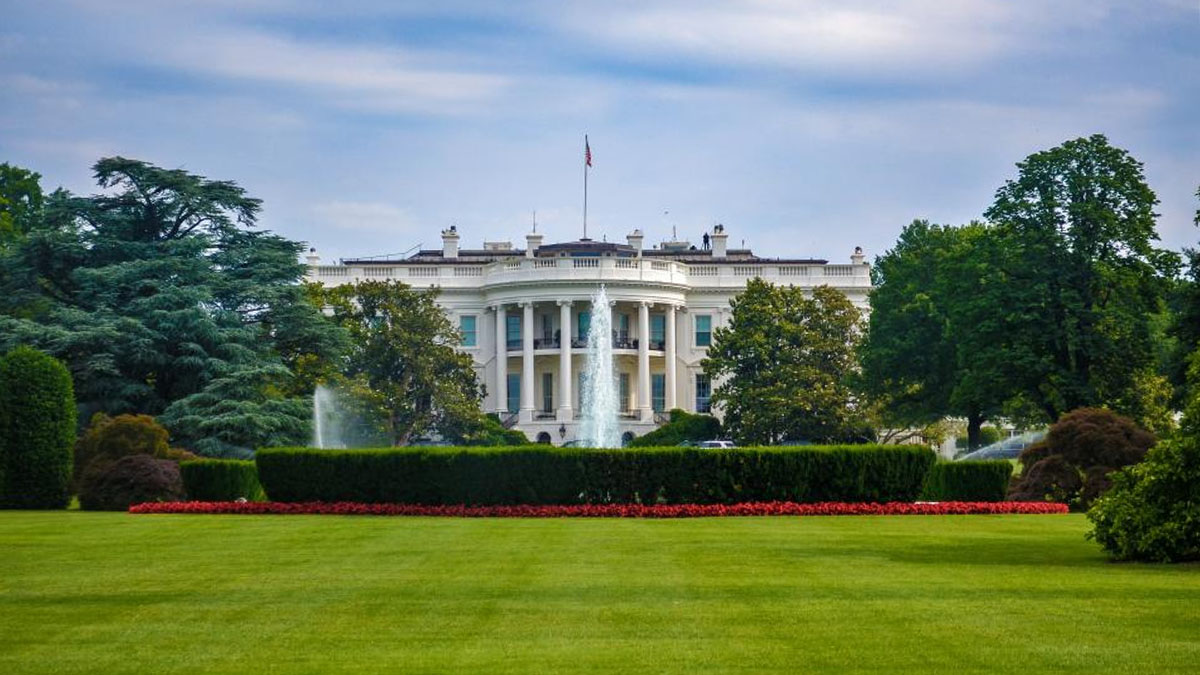
Government Oversight in AI Development
In a landmark move, OpenAI was required to receive sign-off from the U.S. government before it could deploy its latest large language model, GPT-5.6. The approval process, which involved multiple federal agencies, underscores the growing scrutiny of advanced artificial intelligence systems and their potential risks. Sources familiar with the decision indicate that the White House and the Departments of Defense and Homeland Security were among the key stakeholders in the review.
The government’s involvement marks a new chapter in the relationship between AI developers and regulators. Previously, models like GPT-3 and GPT-4 were released without direct federal approval. However, as AI capabilities have expanded, concerns about misuse, national security, and societal impact have prompted more stringent oversight. The Biden administration’s Executive Order on AI, signed in October 2023, laid the groundwork for such reviews, requiring companies to notify the government when training large-scale models.
What Made GPT-5.6 Different?
GPT-5.6 is not just a minor update; it reportedly introduces advanced reasoning, multimodal capabilities, and improved alignment techniques. The model’s ability to generate code, manipulate data, and simulate complex scenarios raised red flags within the intelligence community. OpenAI’s internal safety testing revealed that the model could be used to create sophisticated disinformation campaigns or automate cyberattacks, triggering the need for federal evaluation.
The approval process included a demonstration of the model’s safety guardrails, adversarial testing, and a commitment to share certain outputs with government researchers. In exchange, OpenAI was allowed to ship the model to approved enterprise customers initially, with a broader rollout expected later. This arrangement mirrors similar agreements made with other AI labs, such as Anthropic and Google DeepMind.
Broader Context: AI Security Incidents and Lawsuits
The news of GPT-5.6’s controlled release arrives alongside a flurry of other developments in the AI sector. Security experts recently responded to a breach at Hugging Face, where an unauthorized user gained access to private models and datasets. The incident, which some have dubbed “the AI that hacked its homework,” exposed vulnerabilities in open-source AI hosting platforms and prompted calls for stronger access controls. OpenAI itself has been a victim of intellectual property disputes: Apple filed a trade secrets lawsuit against the company, alleging that an engineer who never logged out took proprietary designs to OpenAI. The case highlights the competitive tensions between Big Tech and AI startups.
Meanwhile, former OpenAI CTO Mira Murati launched a new model called Inkling through her startup Thinking Machines Lab. The model, which focuses on creative reasoning, is seen as a direct competitor to GPT-5.6. Murati’s departure from OpenAI last year was shrouded in mystery, and the release of Inkling suggests a growing fragmentation of talent and technology.
Regulatory Ramifications for the Entire Industry
The U.S. government’s role in approving GPT-5.6 sets a precedent that could reshape how AI models are brought to market. Critics argue that such prior restraint stifles innovation and could slow the United States’ competitive edge against countries like China. Supporters counter that the risks are too great for self-regulation alone. The Biden administration has been pushing for a formal AI licensing system, similar to those used for nuclear technology or pharmaceuticals.
Industry analysts note that the approval process for GPT-5.6 closely mirrors the “model reporting” regime proposed by the National Institute of Standards and Technology (NIST). Under that framework, companies must submit details about training data, compute, and intended use cases before deployment. Failure to comply could result in fines or restrictions. OpenAI’s compliance suggests that other firms may follow suit, especially those working on next-generation models.
At the same time, consumer technology is also evolving. Apple’s upcoming smart glasses promise to integrate AI assistants seamlessly, but privacy advocates worry that the devices could erode user trust. Meanwhile, Meta’s new AI image tool that appropriates public Instagram photos has reignited debates about consent and data ownership. These developments highlight the tension between innovation and regulation across the tech landscape.
Technical and Scientific Advances in the AI Ecosystem
Beyond policy and legal battles, AI research continues to push boundaries. Scientists have developed 3D-printed micro-robots capable of delivering chemotherapy drugs directly to tumors, a breakthrough that could personalize cancer treatment. These tiny robots, described as “micro-robots” in a recent study, navigate through the bloodstream using magnetic fields and release drugs on site. While not directly related to language models, such advances rely on AI to optimize trajectories and dosing schedules.
OpenAI itself is exploring hardware: rumors of a portable AI speaker that could serve as a smart home hub have been circulating. Dubbed “the OpenAI Speaker,” the device would leverage GPT-5.6 to understand natural language commands and control IoT devices. If successful, it could compete with Amazon Alexa and Google Home, but with a focus on AI-first interactions. The project is still in early stages, pending government approval for the underlying model.
Key Players and Shifting Dynamics
The interplay between OpenAI, Hugging Face, Apple, and Meta illustrates a rapidly changing ecosystem. For instance, the Hugging Face incident serves as a cautionary tale about hosting powerful models. As AI systems become more capable, the line between open-source and proprietary becomes blurred. Some argue that models like GPT-5.6 should be open-sourced to democratize access, while others warn that such openness invites abuse. The government’s decision to vet GPT-5.6 may tip the scales toward a more regulated environment.
Apple’s lawsuit against OpenAI adds another layer of complexity. The company claims that a former engineer, who allegedly never logged out of Apple’s systems, stole trade secrets related to neural network architectures. While OpenAI has denied the allegations, the case could expose how talent moves between companies and what protections are adequate. The outcome may influence future hiring practices and legal agreements.
Mira Murati’s Thinking Machines Lab, by contrast, represents a fresh start. Murati, who was instrumental in developing GPT-4, has been secretive about her new venture until now. Inkling’s focus on creative reasoning differs from OpenAI’s broad competence approach. Early benchmarks show that Inkling excels in poetry, storytelling, and abstract problem-solving, but lags in technical coding tasks. This specialization suggests that the AI market may fragment into niche models rather than a single monolithic system.
Privacy, Security, and User Experience
Privacy remains a central concern. Apple’s reputation for privacy is being tested by its smart glasses project, which may require constant recording of the user’s environment. Similarly, Meta’s image tool scrapes public Instagram photos, raising questions about whether users agreed to such use. OpenAI’s GPT-5.6 included provisions for data privacy, such as differential privacy and user opt-outs, but critics argue that these measures are insufficient.
Security experts who responded to the Hugging Face incident emphasized the need for better credential management and anomaly detection. The breach exposed hundreds of models, some of which could generate toxic content or deepfakes. While Hugging Face has since patched the vulnerability, the incident highlights the difficulty of securing vast repositories of machine learning artifacts. OpenAI’s own GPT-5.6 was not part of that breach, but the company has implemented additional encryption and access logs to protect its model.
From a user perspective, the rollout of GPT-5.6 will be gradual. Initially, only verified businesses and researchers will gain access, with usage capped and monitored. OpenAI has promised a public API later, but only after further safety evaluations. This cautious approach contrasts with the rapid deployment of previous models, reflecting the new reality of government oversight.
As the AI industry matures, the balance between innovation and regulation will define the next decade. The U.S. government’s sign-off on GPT-5.6 is a milestone that may become the norm rather than the exception. For now, OpenAI’s model is live, but under watchful eyes—both human and algorithmic.
Source: Techopedia News