

The rising cost of automotive technology is a major concern for manufacturers, and lidar—a key component in self-driving vehicles—has become increasingly affordable thanks in large part to Chinese suppliers. But as American automakers consider adopting these cheaper sensors, a U.S. government laboratory is reportedly investigating whether Chinese-made lidar introduces national security risks.
According to two unnamed sources familiar with the matter, the Idaho National Laboratory, a key facility within the U.S. Department of Energy, is examining Chinese-manufactured lidar sensors for potential cybersecurity vulnerabilities. The review is said to be funded by a company or consortium of companies operating in the electric vehicle and autonomous driving sectors. The identities of the companies backing the effort have not been disclosed, but their interest signals a growing awareness of the security implications of relying on foreign technology for critical vehicle functions.
The investigation is focused on identifying weaknesses that could be exploited by malicious actors. If vulnerabilities are found, the findings could influence not only automaker decisions but also federal policy. Washington has been increasingly wary of Chinese technology in sensitive areas, and lidar—a sensor that helps vehicles "see" the world around them—has become a battleground for those concerns.
What Is Lidar and Why Does It Matter?
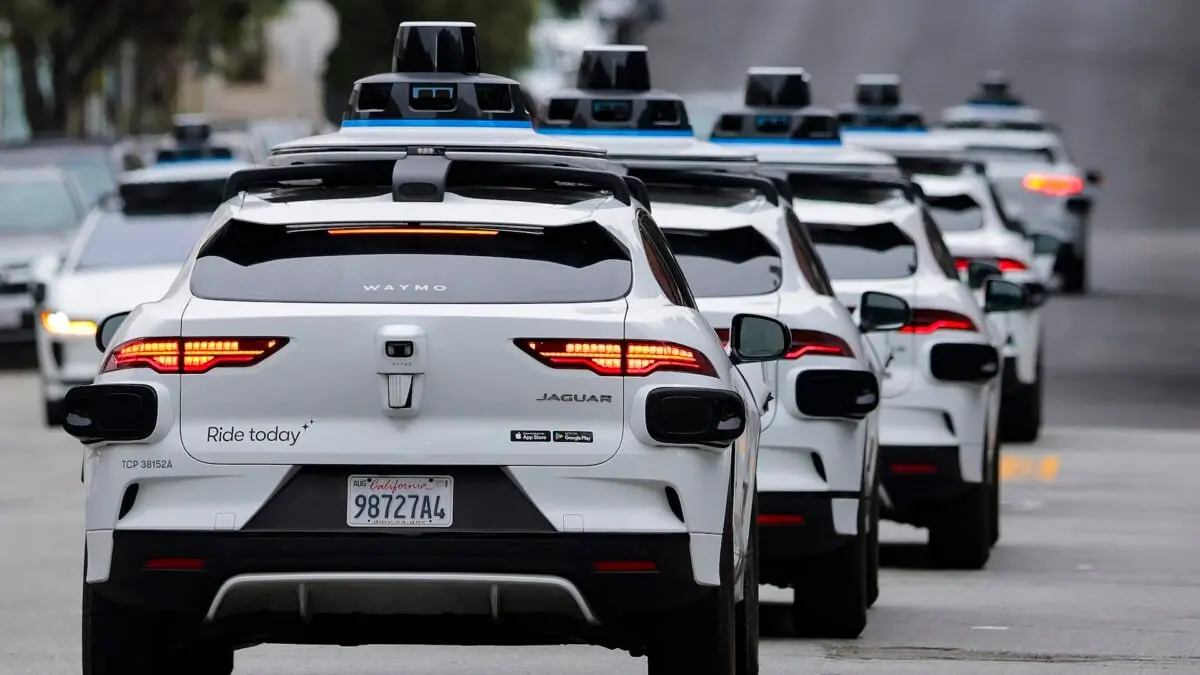
Lidar, which stands for Light Detection and Ranging, uses pulses of laser light to measure distances and generate precise three-dimensional maps of a vehicle's surroundings. By emitting millions of laser pulses per second and calculating the time it takes for the light to bounce back, lidar creates a real-time topographical view that is considered essential for most autonomous driving systems. The technology enables vehicles to identify pedestrians, cyclists, other vehicles, and obstacles with extreme accuracy, even in low-light conditions.
Lidar is widely regarded as a cornerstone of the autonomous vehicle industry. Companies such as Waymo, Cruise, and numerous Chinese robotaxi operators rely heavily on it. However, there is one major exception: Tesla. CEO Elon Musk has long argued that artificial intelligence and cameras alone can achieve autonomous driving without the need for lidar. He has publicly called lidar a "fool's errand" and stated that "anyone relying on LiDAR is doomed." Musk's stance has been controversial, but it has not slowed the broader industry's investment in the technology.
The Cost Revolution in Lidar
Lidar was originally prohibitively expensive. Early units could cost tens of thousands of dollars, making them impractical for mass-market vehicles. Over the past decade, however, the price has plummeted. Chinese manufacturers have been at the forefront of this cost reduction, producing solid-state lidar sensors that can be manufactured for a few hundred dollars. This dramatic price drop has made the technology viable for consumer vehicles, not just premium robotaxis.
The affordability has captured the attention of American automakers searching for cost-effective solutions to enhance driver assistance features and autonomous capabilities. Rivian, an electric truck and SUV maker, has been particularly vocal. CEO RJ Scaringe said publicly earlier this year that the company was exploring the possibility of producing lidar sensors in the United States using Chinese technology, potentially through a joint venture. He noted that when it comes to lidar sensors costing just a few hundred dollars, "all the real choices are coming out of China." Scaringe also said that other automakers were involved in discussions about building production capacity outside China, either together or through a shared alignment.
This interest creates a dilemma. Supply chain economics point toward Chinese expertise, but national security hawks in Washington are urging caution. The tension between cost efficiency and security has become a recurring theme in the United States' broader technological rivalry with China.
Legislative and Regulatory Pushback
Lawmakers have already advanced proposals to restrict Chinese lidar in the U.S. market. Congress has introduced at least two bills that would ban the use of Chinese-made lidar sensors in vehicles. The U.S. Commerce Department has separately placed restrictions on Chinese- and Russian-connected automotive technologies, citing national security concerns. These actions underscore a growing bipartisan consensus that critical automotive components should not depend on adversaries with the ability to collect sensitive data or disrupt operations remotely.
Security officials have raised alarms that lidar sensors could potentially collect detailed geospatial information about American roads, infrastructure, and military installations and transmit that data back to China. Additionally, there is concern that the sensors could be exploited to remotely disable vehicles in the event of a conflict, effectively turning millions of cars into potential weapons or targets. While these scenarios are theoretically possible, no concrete evidence of malicious activity has been publicly presented.
The Broader Tech Security Landscape
The lidar review is part of a larger pattern of U.S. scrutiny of Chinese technology. Similar concerns have been raised over smartphones, semiconductor equipment, drones, and social media platforms. The U.S. government has taken steps to restrict or ban Chinese-made telecom equipment, such as Huawei and ZTE, from American networks, citing espionage risks. More recently, the debate over TikTok has highlighted anxieties about data collection and foreign influence. Lidar sits within this broader concern about the resilience and trustworthiness of the digital supply chain.
The situation is complicated by the fact that the global automotive industry is deeply interconnected. Many so-called American vehicles contain components sourced from multiple countries, including China. Fully isolating the supply chain is impractical, and automakers fear being caught in the crosshairs of geopolitics. The response from industry leaders has been to seek a middle ground, exploring ways to localize production of crucial technologies while still leveraging the engineering advances that have made them affordable.
Potential Outcomes and Industry Reactions
The Idaho National Laboratory's investigation could take some time, and its findings are not guaranteed to be made public. However, if vulnerabilities are identified, they would likely accelerate regulatory action and give automakers a clear rationale to pivot away from Chinese suppliers. On the other hand, if the sensors are found to be secure, the report could provide political cover for automakers to continue using them, while still potentially requiring additional safeguards.
Rivian's exploration of joint ventures is one possible path forward. By licensing Chinese technology or establishing manufacturing in the U.S., companies could gain greater control over the supply chain and mitigate some of the security concerns. However, technology transfer restrictions and intellectual property concerns may complicate such arrangements. Another option is to invest in domestic lidar startups, though that would likely result in higher costs and a longer development timeline.
In the meantime, automakers continue to develop vehicles with whatever sensors are available. The outcome of the Idaho lab's review will be closely watched by both industry stakeholders and policymakers, as it could help define the future of automotive technology in the U.S. The challenge is balancing innovation and cost with the need to protect national security, a task that is proving far from straightforward. As the investigation unfolds, the debate over Chinese lidar underscores the increasingly intricate relationship between commerce and security in the 21st century.
Source: Gizmodo News