

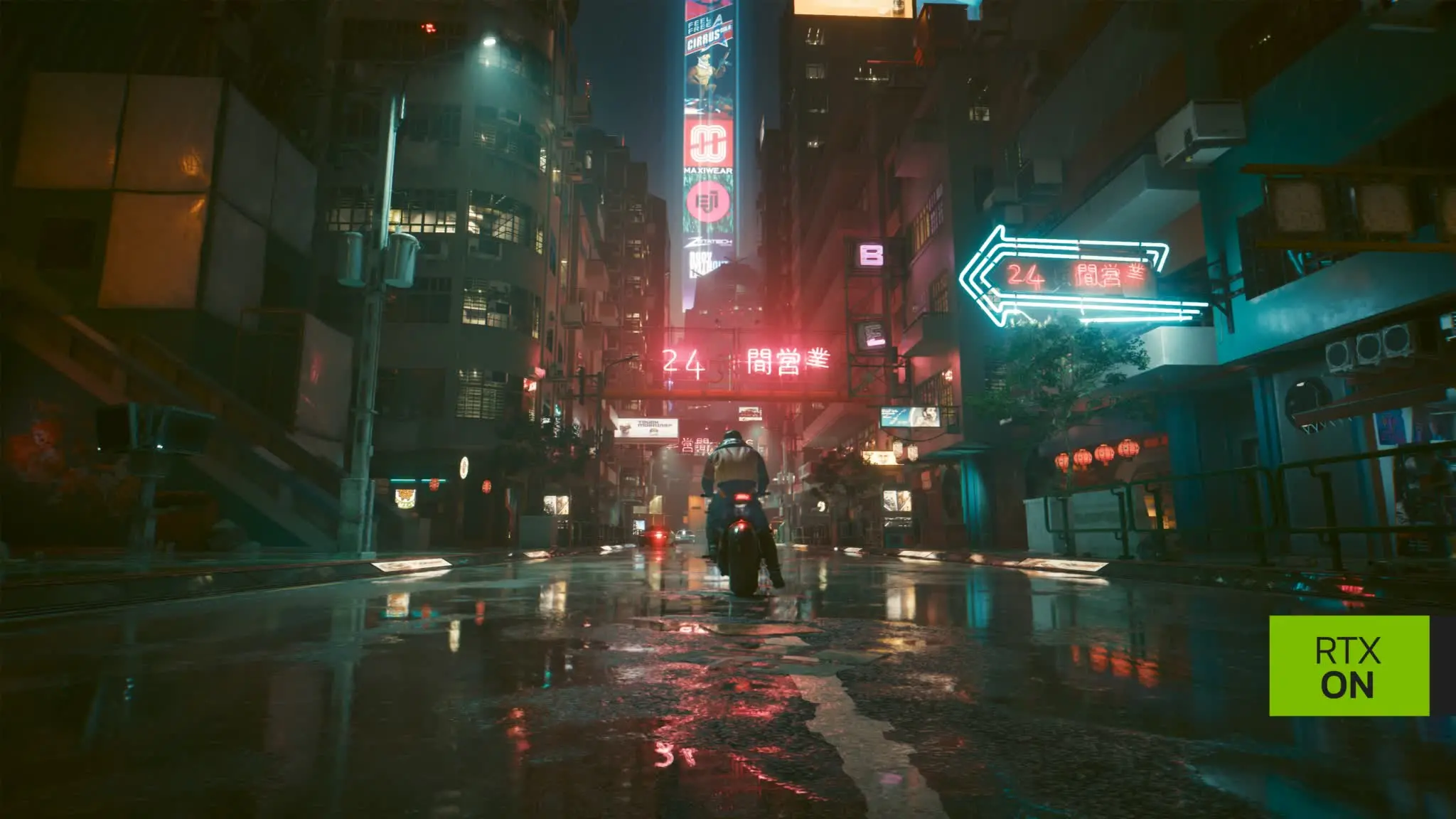
When Nvidia introduced the GeForce RTX 20 series in 2018, the company's CEO Jensen Huang stood on stage and promised that ray tracing would change gaming forever. The pitch was simple: developers would stop faking lighting with shadow maps and reflection probes, and instead use real-time ray tracing based on the laws of physics. The result would be more immersive, realistic visuals that would make rasterized graphics look outdated. Eight years later, it is fair to ask whether ray tracing was actually a scam or just a feature that arrived far too early.
Having tested PC hardware for nearly three decades, I remember reviewing the GeForce 256 SDR and DDR graphics cards. Since then, many graphics technologies have come and gone, but none has been as controversial as hardware-accelerated ray tracing. The RTX 20 series was supposed to be the biggest generational leap in computer graphics, according to Nvidia. The company said the RTX 2070 would start at $499, and that ray tracing would be a must-have experience. But the reality did not match the promise.
The RTX promise versus reality
The GeForce RTX 20 series hardware was simply not powerful enough to deliver real-time ray tracing in a satisfying way. At launch, ray tracing effects were often paired with severe performance penalties. A year after the RTX 20 series debuted, only two games could be considered worthwhile examples of ray tracing: Metro Exodus and Control. Other titles, like Battlefield V, offered ray-traced reflections that were noisy, distracting, and largely pointless.
Even in the best-case titles, performance was disappointing. Most RTX 20 series graphics cards could not maintain 60 frames per second at 1440p with ray tracing enabled. Nvidia suggested that 1080p was fine, citing Steam survey data that showed most gamers still used 1080p monitors. But that felt like an excuse. The RTX 2060 Super, for example, was considered a 1440p graphics card for traditional rasterized gaming. Turning on ray tracing at 1080p in Control pushed the card well below 60 frames per second unless you lowered many other settings.
Nvidia's other answer was to enable DLSS, but DLSS 1.0 was terrible. The modern version of DLSS we know today did not arrive until roughly 18 months after the RTX 20 series launched, and widespread adoption of DLSS 2.0 took even longer. Also, upscaling never fundamentally closed the performance gap. Gamers had to choose between high frame rates or ray tracing, not both. At 1080p, DLSS artifacts were especially noticeable, and most reviewers recommended disabling it.
So, a year after release, Nvidia could only point to two games where RTX 20 series owners should seriously consider turning on ray tracing. And even then, most would need to play at 1080p with medium settings to hit 60 frames per second. That undermined the entire pitch of ray tracing as a premium feature layered on top of maxed-out graphics settings.
Ray tracing never made sense for competitive gaming
It also became clear that ray tracing had almost no value in competitive multiplayer games. Call of Duty: Modern Warfare introduced ray-traced shadows, but they were only useful in the single-player campaign. In multiplayer, players want high frame rates and visibility, not extra lighting effects. Fortnite added ray tracing, but the best way to play Fortnite is to use Performance Mode, which strips down visuals to maximize frame rates and make enemies easier to spot.
A feature that heavily reduces performance while making opponents harder to see is simply not useful for competitive play. Fast-paced shooters like Valorant, Counter-Strike, Apex Legends, and Fortnite are best played with the highest possible frame rate. The majority of competitive gamers target 140 frames per second or higher. Even 100 frames per second is difficult to maintain in many ray-traced games, let alone 140.
Ray tracing may have been marketed as a premium visual feature, but in practice, it remained optional in virtually every major online shooter. That trend has persisted through 2026. No one trying to win matches in Fortnite enables ray tracing, because the performance impact is severe and enemy visibility becomes worse.
Ray tracing is still a niche feature
For single-player games, ray tracing can be impressive, but the list of truly transformative titles is small. Games like Cyberpunk 2077 with path tracing look stunning, but only on extremely high-end hardware such as an RTX 4090 or RTX 5090. Most mid-range GPUs, even current ones, cannot handle path-traced workloads at practical frame rates.
According to a poll conducted two years ago, only 15% of gamers said they enable ray tracing at maximum settings. Another 7% used it with medium or low settings, and 26% said they only used it in certain games. That left 52% of respondents saying they did not use ray tracing at all, either because the visual improvement was too subtle or because the performance hit was too big.
A more recent poll showed almost identical results. About 15% still use maximum ray tracing settings, 7% use lower RT settings, and the majority either use it selectively or not at all. After eight years, nearly 80% of gamers do not consistently enable ray tracing. That is a shocking result for a technology that was supposed to revolutionize the gaming industry.
Gamers wanted better performance, not more ray tracing
Modern games are increasingly difficult to run, and GPU prices have risen dramatically. Many gamers simply want their favorite titles to run well on the hardware they already own. A growing number of players believe that visual quality has plateaued, and that ray tracing often does not provide enough visual improvement to justify the frame rate loss.
There are also concerns about development costs. Nvidia originally claimed ray tracing would make game development easier because lighting would simply work according to the laws of physics. But in reality, development costs have continued to spiral upward, and ray tracing has not eliminated the need for optimization, fallback rendering paths, and compatibility testing.
Early RTX adopters were essentially sold a fantasy. RTX 20 and RTX 30 series GPUs are not powerful enough to handle modern path-traced games. The games available during those graphics cards' lifespan mostly used ray tracing as an optional, unimpressive add-on. Many of those GPUs spent most of their lives rendering traditional rasterized graphics, with ray tracing rarely enabled.
Professional reviewers were also pressured to emphasize ray tracing in their recommendations. But for competitive gamers, ray tracing never made sense. For single-player gamers, ray tracing is only meaningful on high-end hardware. The industry's push toward ray tracing has made many games harder to run, often with no clear gameplay benefit.
The truth is that ray tracing may eventually become a dominant feature that everyone can comfortably use. But after eight years, it remains more about promises for the future than benefits in the present. For the gamers who spent hundreds of dollars on early RTX hardware specifically for ray tracing, the experience has been underwhelming, and the path forward is still unclear.
Source: TechSpot News