

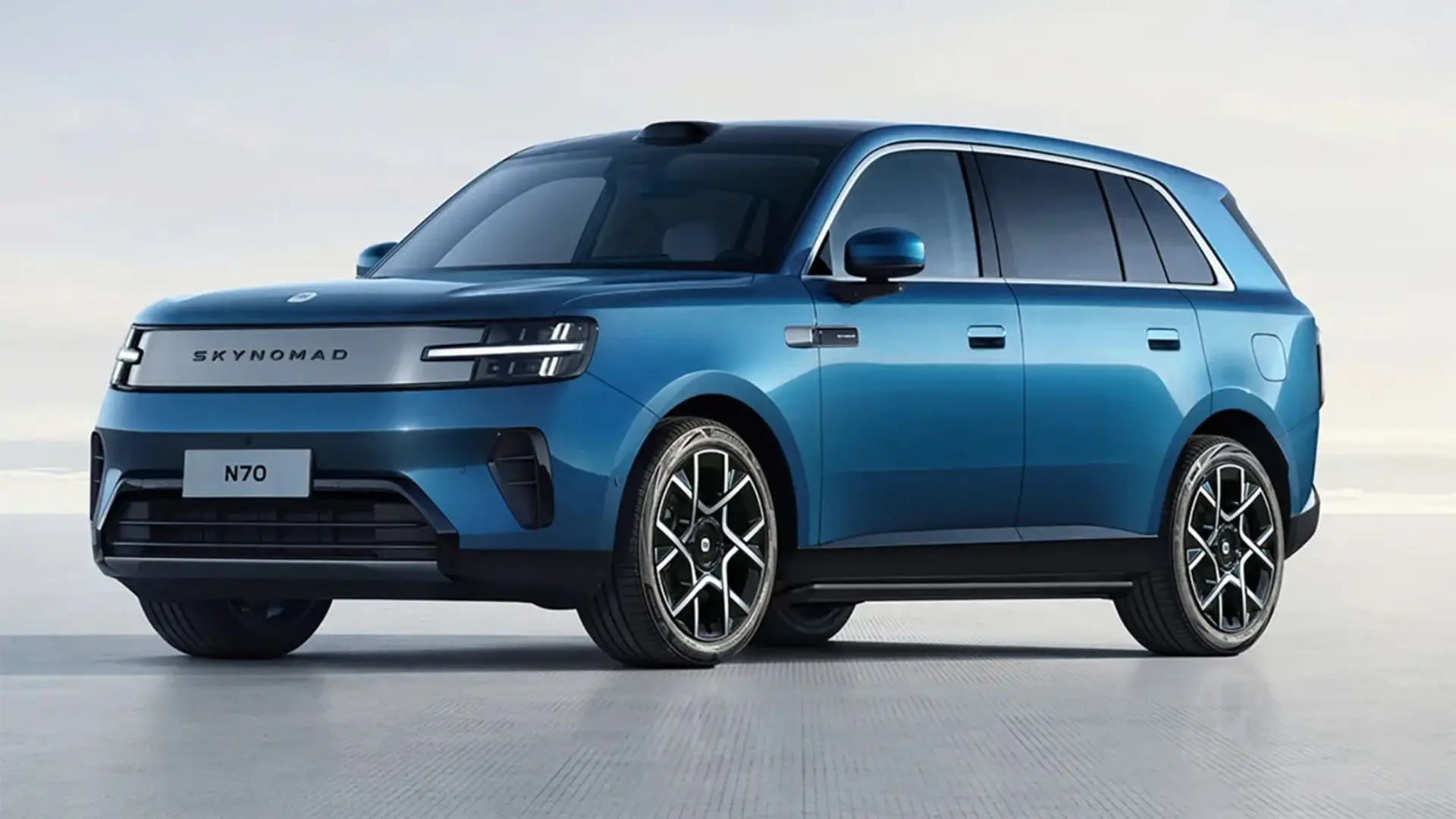
In a bold stride into the automotive world, Xiaomi has revealed its debut full-size hybrid SUV, a vehicle that claims an extraordinary 314 miles of pure electric range before the gasoline engine kicks in. This announcement places Xiaomi among the few automakers that are bridging the gap between battery-electric vehicles (BEVs) and traditional plug-in hybrids (PHEVs) with a package designed for the family-hauling segment. The figure is not merely a marketing number; it suggests a battery pack and powertrain calibration that prioritize daily EV commuting while retaining a gas engine for long-distance flexibility.
A New Frontier for Xiaomi
Xiaomi, best known for its smartphones and a vast ecosystem of consumer electronics, formally entered the electric vehicle market only a few years ago. Its first model, a sporty sedan, made waves with impressive specs and a competitive price. Now, the company is turning its attention to the full-size SUV segment, a category that has exploded in popularity in China and is increasingly important in global markets. The new hybrid SUV is expected to share the brand's design language — clean, tech-forward, and driver-focused — while accommodating the practical needs of families and outdoor enthusiasts.
The decision to launch a hybrid rather than a pure EV in this segment is strategically significant. Full-size SUVs are heavy, aerodynamic challenges, and their battery needs for long-range EV travel can make them prohibitively expensive. By pairing a substantial battery with a gasoline engine, Xiaomi can offer the daily benefit of electric driving — 314 miles, which exceeds many smaller EVs — while eliminating the range anxiety that still concerns many buyers, especially when towing or traveling in remote areas.
Understanding the 314-Mile Electric Range
If the reported range holds true under real-world conditions, it would represent a class-leading achievement for a full-size hybrid SUV. Achieving 314 miles of electric-only operation requires a very large battery pack, likely in the range of 120 to 150 kilowatt-hours, depending on the vehicle's weight and efficiency. For context, many plug-in hybrid SUVs today offer only 30 to 60 miles of electric range. Even the most advanced extended-range electric vehicles (EREVs) sold in China have exceeded 150 miles but not yet 300. Xiaomi's purported figure suggests it is pushing the boundaries of what is possible in a hybrid architecture, almost treating the gasoline engine as a generator rather than a primary motive source.
The engineering behind this feat likely involves a highly energy-dense battery chemistry, possibly a lithium-iron-phosphate (LFP) pack with a new cell-to-body integration, alongside a highly efficient electric drive train. Xiaomi has invested heavily in in-house technology, including its own electric motors, battery management systems, and software stack. The vehicle may also feature advanced thermal management and regenerative braking systems that maximize every kilowatt-hour.
Design and Interior: A Mobile Living Space
Full-size SUVs in China’s premium market are no longer just transportation; they are mobile lounges, offices, and entertainment centers. Xiaomi’s entry is expected to reflect this trend. Renders and leaks suggest a commanding exterior with a smooth, aerodynamic silhouette, flush door handles, and a distinctive LED light bar that echoes Xiaomi’s other vehicles. The cabin is likely to be a showcase of Xiaomi’s strength in smart technology, with a massive central touchscreen, a fully digital instrument cluster, and possibly a head-up display that spans the windshield.
Given Xiaomi’s ecosystem of smartphones, smart home devices, and wearable gadgets, the SUV is expected to integrate seamlessly with a user’s digital life. Expect features like biometric driver recognition, smart phone pairing that automatically adjusts seating and climate, and even compatibility with Xiaomi’s smart home products so that owners can control their garage door, thermostat, or security cameras from the vehicle’s dashboard. The rear seats might offer entertainment screens, and the second-row captain’s chairs could be inspired by first-class airline seating, with heating, ventilation, massage, and recline functions.
Xiaomi’s Automotive Ambitions
Xiaomi’s entry into automobiles was announced in 2021 as a decade-long commitment, and the company has moved with impressive speed. It invested heavily in a dedicated EV factory, obtained the necessary regulatory approvals, and began deliveries of its first model within three years. That car, the SU7, generated significant initial demand and showcased Xiaomi’s ability to compete on both features and value. The company’s founder and CEO, Lei Jun, has said that Xiaomi aims to become one of the world’s top five automakers in the coming years, a goal that hinges on expanding its lineup to cover all major segments — hence the full-size SUV.
The choice to offer a hybrid in this category may also reflect the realities of China’s infrastructure and consumer habits. While charging networks have expanded rapidly, many buyers in the country live in apartments without dedicated charging stations. A large battery provides the convenience of home charging on a weekly basis, while the gasoline engine serves as an unconditional fallback. This approach broadens Xiaomi’s appeal to customers who are not yet ready to go fully electric but wish to reduce their fuel costs and environmental impact compared to traditional internal-combustion vehicles.
Market Positioning and Competition
The full-size premium SUV segment in China is fiercely competitive. Established players like BMW and Mercedes-Benz have long dominated, but domestic brands such as Li Auto, NIO, and AITO have rapidly gained share with models tailored to local tastes. Li Auto, in particular, has achieved remarkable sales with its EREVs, which combine batteries with a small gasoline engine used solely to generate electricity. Xiaomi’s new SUV appears to be positioned directly against such vehicles, but with a larger battery and a promise of far greater electric range. If Xiaomi can deliver its claimed 314 miles, it would leapfrog the competition and redefine what a plug-in hybrid can offer.
Pricing is another critical factor. Xiaomi’s existing sedan is known for its aggressive price-to-performance ratio, and the SUV is likely to follow a similar strategy. Analysts suggest that by integrating battery and powertrain production in-house and leveraging Xiaomi’s supply chain relationships, the company could offer the SUV at a price that undercuts many rivals while offering more advanced technology. That combination has already made Xiaomi a certified threat in the EV sector, and it could significantly distort the full-size SUV market.
Production and Launch Timeline
Although an official launch date has not been confirmed, industry insiders speculate that Xiaomi will begin taking orders within the next year. Production is expected to take place at a newly expanded phase of Xiaomi’s automotive plant in Beijing, which is currently being retooled to handle multiple vehicle architectures. The company has demonstrated a capacity to scale quickly, but it will need to navigate global supply chain constraints, particularly for high-capacity batteries and advanced semiconductors.
The demand outlook is promising. In China, full-size SUVs are favored by businesses and affluent families as flagship vehicles. The ability to travel notable distances on electricity alone could be a major selling point for fleet operators as well, particularly those aiming to reduce their carbon footprint while maintaining the practicality of a gas-powered backup. The vehicle may also be exported to Europe and other markets, where Xiaomi is looking to establish a global presence, though regulatory certification and charging standards will need to be addressed.
Technology as the Differentiator
What truly sets Xiaomi apart from traditional carmakers is its software capability. The company is not simply adding an infotainment system; it is building a vehicle that operates as a fully connected smart device. Over-the-air updates are expected to improve everything from that electric driving efficiency to autonomous driving assistance features. Xiaomi’s development of its own operating system and its experience with smartphones could deliver a user interface that feels as intuitive as a modern mobile phone, a factor that is often overlooked by legacy automakers but highly valued by consumers.
Furthermore, Xiaomi is investing in autonomous driving technology, with a team that has patent filings across sensor fusion, perception algorithms, and decision-making systems. The full-size SUV could feature lidar, multiple radar units, and a suite of cameras to enable Level 3 highway driving assistance. Combined with the vehicle’s large battery capacity, such systems could make long-distance travel not only more efficient but also less fatiguing for drivers.
Environmental and Economic Implications
The arrival of a full-size hybrid SUV with a 314-mile electric range could accelerate the transition away from conventional gasoline vehicles in a segment that is notoriously difficult to decarbonize. Full-size SUVs have been criticized for their fuel consumption and emissions, so a vehicle that can complete most daily commutes and even long regional trips without using a drop of gasoline is a significant step forward. If Xiaomi can make such a vehicle affordable and attractive, it could force competing automakers to push their own hybrid ranges higher, benefiting the environment and consumers alike.
From an economic perspective, Xiaomi’s entry into the SUV market diversifies its revenue streams and reduces its reliance on the highly competitive smartphone industry. With gross margins in the EV business still unproven, the company must carefully manage costs, but its experience in manufacturing consumer electronics at scale provides a potential advantage. The hybrid format also allows Xiaomi to comply with various fuel-consumption regulations while avoiding some of the range limitations that pure electric vehicles still present in cold climates or when towing.
Final Remarks on Xiaomi’s Path Forward
Xiaomi’s debut full-size hybrid SUV, with its remarkable 314-mile electric range, signals that the company is not content to be a niche EV maker. It is positioning itself as a major force across all key vehicle segments, leveraging its dual strengths in hardware manufacturing and software innovation. While the production vehicle will inevitably face road tests and real-world scrutiny, the announced specifications have already raised expectations and put competitors on notice. The next few months will be critical as Xiaomi finalizes the SUV’s pricing, starts the regulatory approval process, and prepares marketing campaigns that will likely emphasize the freedom of driving with minimal gasoline use. If Xiaomi can deliver what it promises, the full-size SUV segment may never be the same.
Source: TechRadar News