

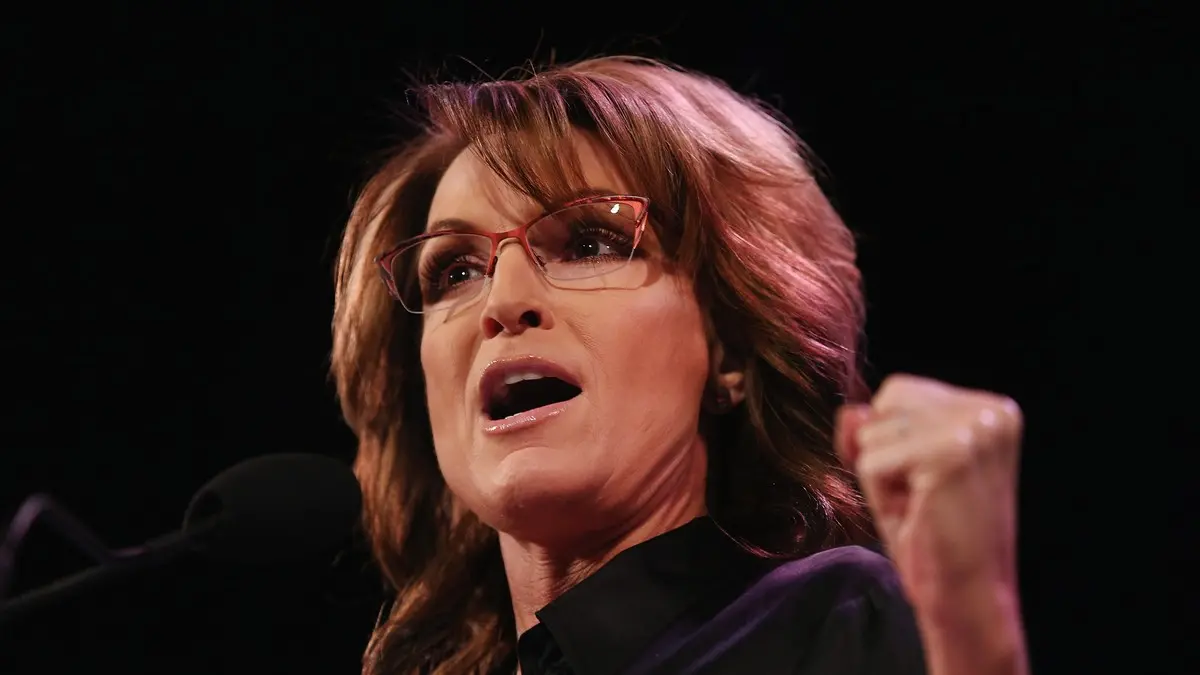
Sarah Palin, the former Alaska governor and Republican vice-presidential candidate, delivered a speech at the Iowa Freedom Summit that has been widely described as bizarre. The event, a gathering of potential 2016 presidential contenders, was meant to be a showcase for conservative grassroots energy. Instead, it became a platform for Palin's peculiar rhetoric, leaving even her most loyal supporters puzzled.
Palin's rise to national prominence in 2008 was meteoric. Selected by Senator John McCain as his running mate, she energized the Republican base with her folksy demeanor and sharp attacks on the media and political establishment. Her lack of experience was touted as authenticity, and her gaffes were seen as refreshing honesty. She became a symbol of the burgeoning Tea Party movement, which capitalized on anti-Obama sentiment and distrust of Washington elites.
However, Palin's political star has dimmed significantly. Her latest performance in Iowa, where she urged the crowd to "stand up" so that "the man" cannot ride them, drew widespread mockery. The conservative National Review titled its critique "Sarah Palin Slips into Self-Parody," while the Washington Examiner questioned her viability as a presidential candidate.
This is a stark contrast to the adoration she once received from the same audience. At the same summit, Senator Ted Cruz, a Tea Party favorite, was greeted with rock-star enthusiasm. Cruz represents the future of the movement, while Palin now seems a relic of the past.
Palin's strategy has always relied on provocation and outrage. She turned criticism into fuel for her base, attacking the "lamestream media" and liberal elites. But this approach has diminishing returns. Each year, she has had to escalate the drama to maintain attention. Her reality TV show "Sarah Palin's Alaska" and her subsequent series "Amazing America" tapped into gun culture and outdoor life, but they lacked political substance.
Her decision to resign as governor of Alaska in 2009, before completing her term, was seen as a strategic move to focus on national ambitions. Yet she never fully committed to a presidential run, instead teasing candidacies while capitalizing on speaking fees and book deals. This has left her perceived as a political entertainer rather than a serious statesperson.
The Republican Party has moved on. The 2016 field includes experienced governors like Jeb Bush and Scott Walker, as well as fresh faces like Cruz and Marco Rubio. Even Donald Trump, who shares Palin's penchant for controversy, has eclipsed her in the media landscape. Palin's endorsement of Trump in 2016 was a boost, but it did not revive her own standing.
Palin's style of communication—rambling, disjointed, and full of non sequiturs—was once seen as a rejection of political correctness. But in an era where voters demand clarity and competence, her antics now seem outdated. Her Iowa speech included references to Reagan, Thatcher, jihadists, illegal immigration, and her daughter's teacher named "America." The lack of coherent policy proposals left many wondering if she had anything substantive to offer.
Her relationship with conservative media has also soured. Fox News, once a friendly platform, has criticized her indirectly by focusing on other candidates. Palin's angry response to such coverage only underscores her fragility. She has gone from being a fresh face to a caricature of herself.
Historically, Palin's appeal was rooted in her ability to articulate the frustrations of working-class conservatives. She spoke of "real America" versus the coastal elites. But as the Tea Party evolved, its followers demanded more than slogans. They wanted results, such as repealing Obamacare or defunding Planned Parenthood. Palin offered neither; her greatest hits were catchphrases like "Drill, baby, drill" and "How's that hopey-changey thing working out?"
The 2012 election cycle saw Palin's influence wane further. She endorsed several candidates who lost primary battles, and her own credibility suffered. By 2014, she was largely absent from the midterms, and her occasional tweets were met with eye-rolls.
Now, in 2015, the Iowa Freedom Summit was supposed to be her comeback. Instead, it revealed a politician out of touch with her own movement. The crowd was polite but not enthusiastic. Many attendees struggled to follow her stream of consciousness. The contrast with Cruz was striking: he delivered a polished, crowd-pleasing attack on Washington, while Palin seemed lost in her own world.
Palin's decline is a cautionary tale about the perishability of political fame. Without a solid foundation of policy achievements or organizational support, celebrity can evaporate. She failed to build a lasting institution, unlike other conservative figures such as Rush Limbaugh or the Koch brothers, who invested in think tanks and donor networks.
Her personal life has also been tumultuous. Her daughter Bristol's struggles with relationships and reality TV have kept the family in the tabloids, further trivializing Palin's brand. The line between public service and entertainment has blurred to the point where Palin is now more known for her appearances on "Dancing with the Stars" and "The Masked Singer" than for any political initiative.
The irony is that Palin helped pave the way for the very forces that now reject her. She normalized the anti-intellectual, anti-establishment tone that Trump would later perfect. But Palin lacks Trump's business acumen or his ability to dominate news cycles with a single tweet. She was a pioneer, but pioneers are often forgotten when the settlers arrive.
As the Republican Party debates its future, the Palin episode serves as a reminder that authenticity alone is not enough. Voters want someone who can govern, not just entertain. Palin's bizarre farewell party in Iowa may well be her last hurrah. The party she once led has moved on, and she is left on the sidelines, shouting into the void.
Source: watson.ch News