

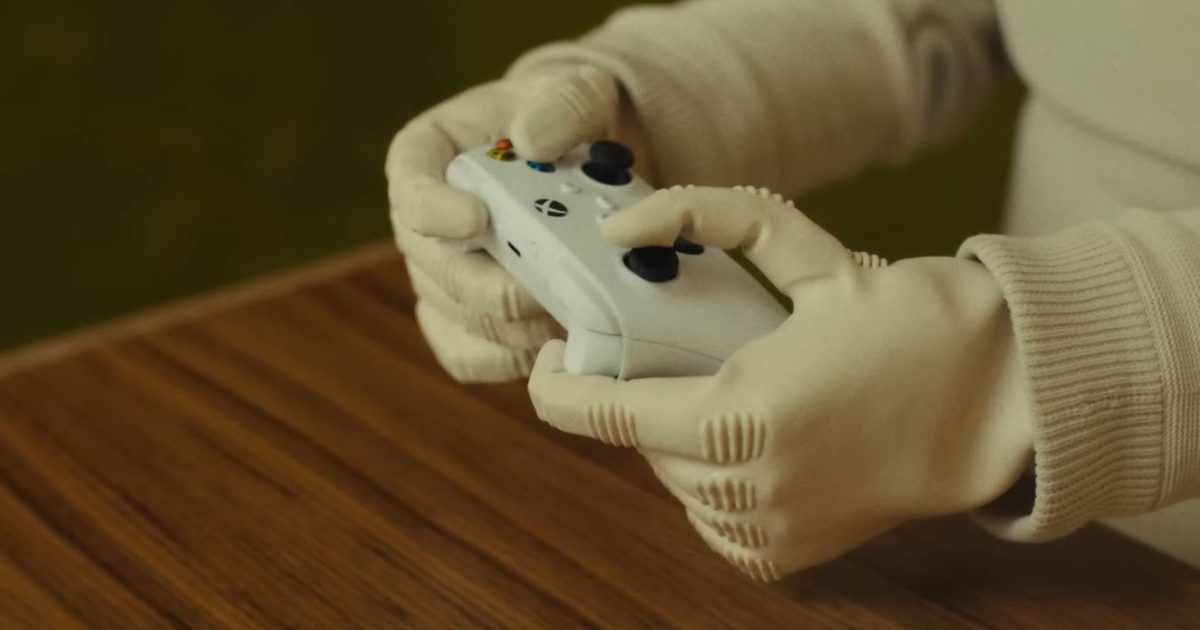
A robot can look convincing while walking across a stage and still be useless in a kitchen. Picking up a wet glass demands precision, quick corrections, and enough restraint to avoid squeezing too hard. 1X Technologies is tackling that problem with new tendon-driven hands for NEO, its humanoid home robot.
1X says each hand has 25 degrees of freedom, with 22 across the fingers and palm and another three in the wrist. Its joints can yield when pushed instead of staying rigid, giving NEO a better chance of handling household objects without treating every collision like a wrestling match.
Why delicate chores expose bad hands
NEO's tactile skin measures pressure and sideways movement across its fingers. That allows the hand to detect when an object begins slipping and adjust its grip before it drops. Force control matters just as much as finger movement. Household objects come in awkward shapes and unpredictable weights, while factory grippers usually work with carefully positioned items. NEO's tendon system is designed to adapt without approaching every task like it's moving the same cardboard box all day.
That control could determine whether a humanoid can handle dishes or clothing without someone hovering nearby. The ability to modulate grip force in real time is a fundamental requirement for any robot that hopes to share living spaces with humans. Traditional industrial arms rely on high-stiffness joints and precise position control, but that approach fails when objects are fragile, slippery, or irregularly shaped. A rigid gripper can easily shatter a wine glass or dent a soda can, because it cannot sense subtle changes in contact force. Human hands, by contrast, have thousands of mechanoreceptors that provide constant feedback. Engineers have spent decades trying to replicate that feedback loop in hardware and software.
Early attempts used simple pressure sensors on the fingertips, but these lacked the resolution or speed to prevent crushing. More recent designs incorporate capacitive tactile arrays, like those found in smartphone touchscreens, but scaled down and wrapped around curved surfaces. 1X's solution appears to combine multiple sensing modalities: both normal pressure and shear force (sideways movement) are measured across the fingers. That is particularly important for grasping wet or slippery objects, because shear force indicates when an object is about to slip out of the grip. By detecting this early, the hand can tighten its hold just enough to maintain stability without overshooting into a crushing force.
Why flexibility beats brute force
NEO's fingers can bend beyond typical human ranges and wrap around irregular objects. Its backdrivable joints also give way during unexpected contact instead of forcing their way through it. Backdrivability is a key design choice. In a conventional geared actuator, if the motor is not energized, the joint locks in place. That is useful for holding heavy loads but dangerous in a home environment. If a robot accidentally bumps into a person or a piece of furniture, a rigid arm can cause injury or damage. A backdrivable joint, on the other hand, can be pushed back by external forces, much like a human arm yields when it hits something. This compliance reduces the risk of harm and allows the robot to recover from collisions gracefully.
1X rates the hands IP68 and says they use food-safe materials. Those are practical details for a machine expected to work near sinks, spilled drinks, and dinner plates. Fast finger movement makes a better demo, but water resistance and controlled force will matter more in an actual home. IP68 means the hands are fully protected against dust and can be submerged in water beyond one meter—essential for withstanding spills, splashes, and even washing cycles. The food-safe materials are equally important: any surface that contacts dishes or utensils must not leach chemicals or harbor bacteria. These specifications signal that 1X is thinking beyond the prototype stage and aiming for a product that can pass safety certifications.
Tendon-driven systems offer another advantage over gear-driven fingers: they allow the actuators to be placed remotely, in the forearm or palm, while thin cables transmit motion to the finger joints. This reduces the inertia of the moving fingers, making them faster and more responsive. It also permits a smaller, more human-like hand profile. However, tendons introduce their own challenges. They can stretch, fray, or break over time. They require precise tensioning, and any slack reduces positional accuracy. 1X has not disclosed the specific materials used for its tendons, but high-strength synthetic fibers like Dyneema or Kevlar are common in robotic hands. Properly engineered, they can last for thousands of cycles, but the long-term durability of a product used daily in a home remains to be proven.
What the demos still can't prove
The hardware looks ready for domestic work. The software still has to prove it can use those hands consistently. Capable hands don't guarantee capable chores. NEO still needs to identify an object, choose the right grip, and repeat the task in a cluttered room without careful preparation. Object recognition in uncontrolled environments is an active area of research. A robot might have been trained on thousands of images of cups, but a real cup might be partially occluded, spotted with food, or sitting on a reflective surface. The perception system must fuse data from cameras, depth sensors, and tactile feedback to build a reliable model of the object.
Once the object is identified, the robot must plan a grasp. This is not a one-shot event: the robot must continuously adjust its grip as it lifts and moves the object. If the glass is wet, its surface friction changes. If it contains liquid, its center of mass shifts. The robot must predict these changes and respond accordingly. Machine learning models, particularly deep reinforcement learning, have shown promise in learning dexterous manipulation skills. But these models often require millions of training episodes in simulation before they can generalize to the real world. Transferring policies from simulation to reality—the so-called sim-to-real gap—remains a major hurdle.
A successful pickup shows what the hardware can do under controlled conditions. Useful home automation requires the robot to repeat that success when objects are moved, wet, or partly hidden. The next worthwhile demonstration should skip the finger drumming. NEO needs to finish an ordinary household chore autonomously, from start to finish, before one polished clip becomes proof of a finished product. For example, a complete task like loading a dishwasher involves opening the door, grasping a dirty plate, inspecting it, positioning it in the rack, and closing the door. Each substep requires robust perception, planning, and control. A failure at any point—misidentifying the plate, missing the slot, dropping it—can cascade into a useless or even dangerous performance.
Beyond grasping, the robot must also learn to apply the correct amount of force for different actions. Picking up a glass uses a precision grip; wiping a counter uses a sweeping motion; turning a door knob uses a torque grasp. A single hand design must support all these types of interactions. The 25 degrees of freedom in NEO's hand theoretically provide the versatility, but the control algorithms must be able to switch between modes fluidly. Researchers have explored task-specific primitives—small building blocks of motion that can be combined—but programming a robot for every possible scenario in a home is infeasible. Instead, the robot must be capable of learning from demonstration or self-supervised exploration.
Another crucial factor is safety. Even with backdrivable joints, a humanoid robot moving at speed can cause harm if it errs. The hands must be able to sense collisions and stop instantly. Torque sensors at each joint can detect unexpected forces, but the reaction time must be fast enough to prevent injury. The IP68 rating ensures the electronics survive getting wet, but the robot must also be able to handle falling objects, splashing liquids, and curious pets. All these scenarios require robust failure detection and graceful recovery.
The broader context of humanoid robot development also matters. Companies like Boston Dynamics, Tesla, Figure, and Agility Robotics are all racing to bring useful bipedal machines to market. Each has taken a different approach to manipulation. Boston Dynamics' Atlas uses hydraulic actuation for high power and dynamic motion, but its hands are relatively simple grippers. Tesla's Optimus has a five-fingered hand but has not yet demonstrated delicate tasks in public. Figure 02 uses tendon-driven hands similar in philosophy to 1X's design. The diversity of approaches reflects the fact that no one has yet solved the manipulation problem for the home.
Economic viability is an additional constraint. A humanoid robot for the home must be affordable enough for consumers but durable enough for daily use. The cost of precision sensors, high-torque actuators, and custom machining can quickly add up. 1X has not announced a price for NEO, but the company has stated its goal is to produce a robot that can assist in homes and workplaces. If the hardware is too expensive, it will remain a research platform rather than a consumer product. The tendon-driven design may help keep costs down by using fewer, lower-torque motors in the hand, but the cable system itself requires careful assembly and maintenance.
Despite these challenges, the progress in tactile sensing and compliant actuation is encouraging. The hands represent a significant step forward from the rigid claws that dominated early robot labs. With continued refinement of perception, planning, and learning algorithms, a humanoid that can handle glassware without breaking it may eventually become a reliable home assistant. But that future requires not just better hands, but smarter software and a deeper understanding of the messy, unpredictable reality of everyday life.
Source: Digital Trends News