

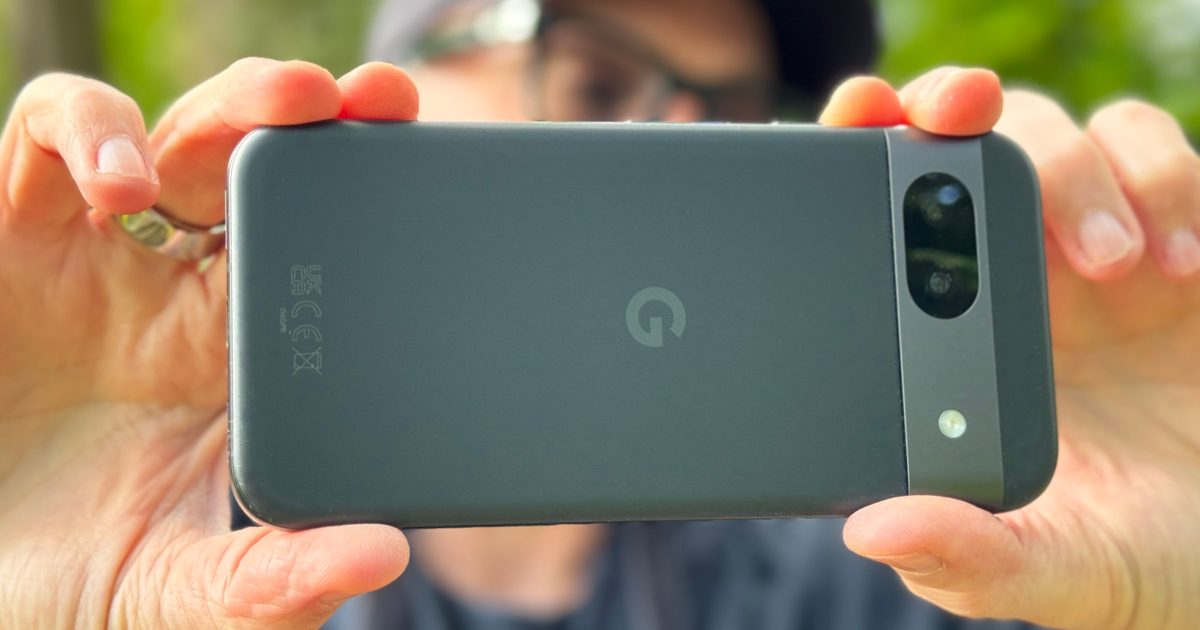
My Pixel 8a launched in 2024 as a $499 midrange phone with seven years of software support. It wasn't the kind of device anyone bought expecting years of special treatment. Now, in 2025, it sits behind the Pixel 9a and Pixel 10a, yet Google continues to add features through regular Pixel Drops. The seven-year update promise has so far meant more than fresh security patches and a polite place on a support page. It means the phone remains functionally relevant, receiving new AI capabilities that were originally limited to flagship models.
Apple's latest AI cutoff makes that promise feel unusually generous. The standard iPhone 17 launched at $799 and remains part of Apple's current lineup, but it cannot run the company's newest on-device AI model. Being new apparently isn't the same as being new enough. This discrepancy raises questions about how smartphone manufacturers define 'support' and whether OS updates alone can keep a device competitive in the AI era.
Apple has started adding fine print to software support
Apple now has several levels of eligibility hiding beneath the same iOS version. An older iPhone can receive iOS 27 without qualifying for Apple Intelligence. An iPhone 15 Pro or anything from the iPhone 16 generation onward can run the broader AI suite, while Apple's largest on-device model narrows the list again. That model needs at least 12GB of RAM, limiting it to the iPhone Air, iPhone 17 Pro, and iPhone 17 Pro Max. It enables more control over Siri's pacing and expressiveness, along with more accurate systemwide dictation. The regular iPhone 17 has 8GB, so a current $799 phone misses features available on the $999 iPhone Air and $1,099 iPhone 17 Pro.
The technical explanation doesn't change the customer experience. Apple has created another premium tier inside the same phone generation. A consumer who buys the latest standard model may discover within months that their device is already excluded from the most advanced AI features. This segmentation could influence purchasing decisions and long-term brand loyalty, especially as AI becomes a central part of the smartphone experience.
Google has been more willing to move the fence
Google has drawn hardware boundaries too. Gemini Nano debuted on the Pixel 8 Pro in December 2023, leaving the regular Pixel 8 and Pixel 8a outside the first rollout. By June 2024, Google had expanded Gemini Nano to both cheaper phones through a developer option. That update also enabled on-device Recorder summaries, giving my Pixel 8a an AI feature that had launched on Google's premium model. The rollout wasn't exactly elegant. Hiding the setting inside developer options made the expansion feel experimental rather than generous. Google still made the feature work on cheaper hardware only six months later. Apple's new RAM cutoff looks less inevitable once another phone maker has already shown that some AI boundaries can move.
Google's approach reflects a philosophy of iterative inclusion. While the company does segment its AI features—some remain exclusive to Pixel 10 or Pixel 11 hardware—it actively works to backport capabilities when hardware permits. The Pixel 8a's 8GB of RAM, for instance, was sufficient for Gemini Nano after optimization. This contrasts with Apple's hard cutoffs based on memory capacity, which may not be as flexible due to the architecture of their on-device models.
Google still has gates of its own
Some of Google's newest tools remain tied to Pixel 10 hardware, while others depend on country, language, subscriptions, or cloud access. Google can also spread features more widely when much of the processing happens on its servers. Apple's larger local models create a different set of hardware demands. But the key difference is that Google's Pixel Drops frequently extend features to older devices, whereas Apple's iOS updates often leave older hardware without meaningful AI additions.
A long update promise starts feeling incomplete when major features stop following the operating system. As AI becomes a larger part of Android and iOS, eligibility will say more about a phone's useful life than the version number buried in its settings menu. Consumers are now evaluating smartphones based on how long they will receive AI features, not just security patches. This shift pressures manufacturers to balance hardware requirements with software longevity.
My Pixel 8a will eventually miss newer Google tricks. Right now, it still feels like a phone the company is developing for rather than one being kept alive until I take the hint. An OS update can refresh an old phone. What actually matters is whether it's still invited to the future—or quietly pushed out of it. The Pixel 8a's continued inclusion in Pixel Drops suggests that Google values midrange devices as part of its ecosystem, investing in optimization rather than forcing upgrades. Apple's tiered approach, meanwhile, risks alienating users who expect newly purchased iPhones to remain at the forefront of AI capabilities.
The broader implication is that smartphone makers must rethink their update policies. In the past, a two-year OS update cycle was acceptable. Now, with seven-year promises from Google and similar commitments from Samsung, the focus is shifting to feature parity. If a phone receives Android 17 but lacks the AI tools that define that version, the update is hollow. The same applies to iOS: receiving the latest iOS version without Apple Intelligence feels like a placeholder rather than an upgrade.
Hardware limitations will always exist—processors, RAM, and neural engines have finite capabilities. But the timing of when those limits are enforced matters. Google has shown that with effor, some boundaries can be pushed back, allowing older devices to participate in new experiences. Apple's stricter guardrails may stem from a desire to ensure smooth performance, but they also create a clear distinction between 'current' and 'legacy' devices much sooner than necessary. As the AI landscape evolves, the companies that successfully extend features to older hardware will likely earn more trust and retain customers longer.
Source: Digital Trends News