

In sleepy Friday afternoon trading, cryptocurrency prices softened without any apparent news catalyst. Bitcoin (BTC) pulled back to $75,800, down 2.4% over the past 24 hours, marking its lowest level in May. Ether (ETH), solana (SOL), and XRP (XRP) suffered slightly larger losses than bitcoin. The decline came as U.S. equities held modest gains, with the Nasdaq up 0.3% and the S&P 500 ahead 0.4% ahead of the three-day weekend.
The price action put bitcoin’s monthly performance in jeopardy. Tom Lee of Fundstrat had earlier noted that if bitcoin could close May in positive territory, it would mark three consecutive months of gains—a classic bull-market signal. Bitcoin began May near $77,000, but Friday’s slide erased some of those gains. With more than a week left in the month, the streak remains uncertain.
Warsh Takes the Helm at the Fed
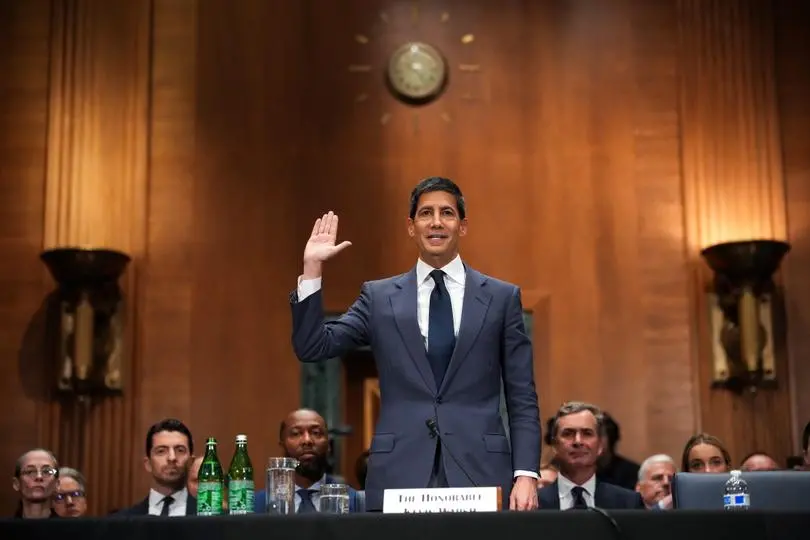
The biggest news of the day was the formal swearing-in of Kevin Warsh as chairman of the U.S. Federal Reserve, replacing Jerome Powell. President Trump appointed Warsh with the expectation that the new chair would push for lower interest rates. However, the economic landscape has shifted dramatically due to the ongoing Iran war, which sent oil prices soaring and reignited inflation that had been cooling.
In his swearing-in ceremony, Warsh declared, “I will lead a reform-oriented Federal Reserve, learning from past successes and mistakes, both escaping static frameworks and models, and upholding clear standards and integrity and performance today marks a return to an institution that I do in fact cherish.” The remarks signaled a potential departure from the Fed’s recent policy stance, though the scope of reforms remains unclear.
Kevin Warsh is no stranger to the Fed. He previously served as a Federal Reserve governor from 2006 to 2011, where he was a key architect of the central bank’s response to the 2008 financial crisis. His appointment this time comes at a moment of high economic uncertainty. The University of Michigan Consumer Sentiment Index for May fell to a record low of 44.8, down from 48.2 and below economist forecasts of 48.2. The Expectations Index also hit a record low of 44.1. Meanwhile, the 1-year consumer inflation expectations index rose to 4.8% from 4.5%, and the 5-year inflation index jumped to 3.9% from 3.4%.
These figures paint a stark stagflationary picture—slowing growth coupled with rising inflation—which presents a difficult challenge for any central bank leader. Rate traders are now pricing in more than a 70% chance of one or more rate hikes by the end of 2026, a stark reversal from the rate-cut expectations that dominated earlier in the year.
Market Reaction and Crypto Context
Throughout the week, bitcoin had traded in a tight range around $77,000. Friday’s economic data and the Warsh swearing-in failed to spark any immediate volatility, but the gradual drift lower suggests mounting pressure. The cryptocurrency market remains sensitive to macroeconomic signals, particularly those related to interest rates and liquidity. Higher rates typically dampen risk appetite and reduce the attractiveness of non-yielding assets like bitcoin.
The broader crypto market also mirrored bitcoin’s subdued performance. The CoinDesk 20 index, a measure of the largest digital assets, experienced modest losses. Among the altcoins, XRP managed to rebound above $1.30 after a volume surge earlier in the week, but analysts noted that bears still control the bigger picture. Other tokens like Solana and Ether traded in the red.
Despite the pullback, institutional interest in crypto continues to evolve. Calamos Investments has bet that protected Bitcoin ETFs can outlast crypto market swings, while crypto trading firm FalconX confidentially filed with the SEC for an IPO, hiring bankers for the process. On the exchange front, OKX Ventures acquired a $53 million stake in South Korea’s Coinone exchange, signaling ongoing consolidation and expansion in the sector.
Technical analysis of bitcoin suggests that the $75,000 level is a critical support zone. A break below could open the door to further declines toward $72,000 or even $70,000, areas that have not been tested since late April. On the upside, resistance remains at $78,000–$80,000. The relative strength index (RSI) on the daily chart has turned neutral after being overbought earlier in the month, indicating that momentum is waning.
Background on Kevin Warsh and the Fed’s Policy Shift
Kevin Warsh’s return to the Fed marks a significant moment in U.S. monetary policy history. During his first tenure as a Fed governor, Warsh was known for his hawkish leanings, often advocating for tighter policy to combat inflation. However, his recent rhetoric suggests a more flexible approach, possibly influenced by the Trump administration’s desire for lower rates to stimulate growth.
The Iran war has fundamentally altered the inflation calculus. Oil prices surged by over 20% since the conflict escalated, feeding into broader price pressures. Core inflation measures, which exclude food and energy, have also crept higher. The Fed’s preferred gauge, the core PCE index, is expected to remain above 3% for the rest of the year. This leaves Warsh in a difficult position: cutting rates could exacerbate inflation, while hiking could choke off growth.
Historical parallels are instructive. The 1970s stagflation required the Fed under Paul Volcker to raise rates dramatically, causing a recession but eventually taming inflation. Modern economists debate whether a similar shock therapy is needed today. Warsh has not signaled any specific rate path, but his promise of reform suggests he may be willing to break from the conventional forward guidance framework that Powell championed.
The crypto market’s reaction to Warsh’s appointment has been muted so far, but long-term implications could be significant. If Warsh delivers on rate cuts, that would likely be bullish for bitcoin as lower interest rates reduce the opportunity cost of holding non-yielding assets. Conversely, if he feels compelled to hike rates to fight inflation, risk assets including crypto could suffer.
Impending Economic Headwinds
Friday’s University of Michigan survey was just one of several disturbing data points. The trade deficit continues to widen, manufacturing activity is contracting, and consumer spending is slowing. The Conference Board’s Leading Economic Index has declined for several consecutive months. All these indicators point to a potential recession on the horizon.
The housing market, a key driver of economic cycles, is also under pressure. Mortgage rates remain elevated, affordability is at historic lows, and homebuilder sentiment has turned negative. A slowdown in housing could ripple through the broader economy, affecting construction employment, retail spending, and banking sector health.
For bitcoin, the macroeconomic backdrop is a double-edged sword. On one hand, a recession could trigger a flight to safe-haven assets, but bitcoin has not yet proven itself as a reliable hedge during downturns. On the other hand, monetary easing in response to a recession would be a powerful tailwind. The relationship between bitcoin and traditional markets has been evolving, with correlations to equities and inflation expectations varying over time.
Investors are also watching the geopolitical front. The Iran war has destabilized energy markets and raised the risk of supply-chain disruptions. Any escalation could further lift inflation and push the Fed toward tighter policy, which would likely weigh on bitcoin. Conversely, a ceasefire or de-escalation could relieve pressure on oil prices and allow the Fed to consider rate cuts.
In the short term, bitcoin’s price action will likely remain range-bound until clearer signals emerge from the Fed or geopolitical events. The next major catalyst could be the release of the Fed’s meeting minutes or a speech by Warsh outlining his policy priorities. Until then, traders are left to digest mixed data and wait for direction.
The crypto market’s own fundamentals also bear watching. On-chain data from CryptoQuant indicates that bitcoin’s record holder supply hides a buyer drought—meaning that while long-term holders are accumulating, new demand is insufficient to push prices higher. This structural imbalance could cap upside potential until catalysts emerge to attract fresh capital.
Meanwhile, the Ethereum Foundation has found itself back at the center of crypto’s culture war, with debates over network upgrades and governance dominating social media. And Sui blockchain suffered another network outage, highlighting the ongoing scalability challenges facing newer platforms.
As Friday’s trading session winds down, the overarching mood is one of caution. Bitcoin’s slide below $76,000 may be a harbinger of further weakness if the economic data deteriorates further. But the crypto community remains resilient, with innovation continuing apace. The coming weeks will reveal whether bull or bear forces prevail.
Source: Coindesk News