

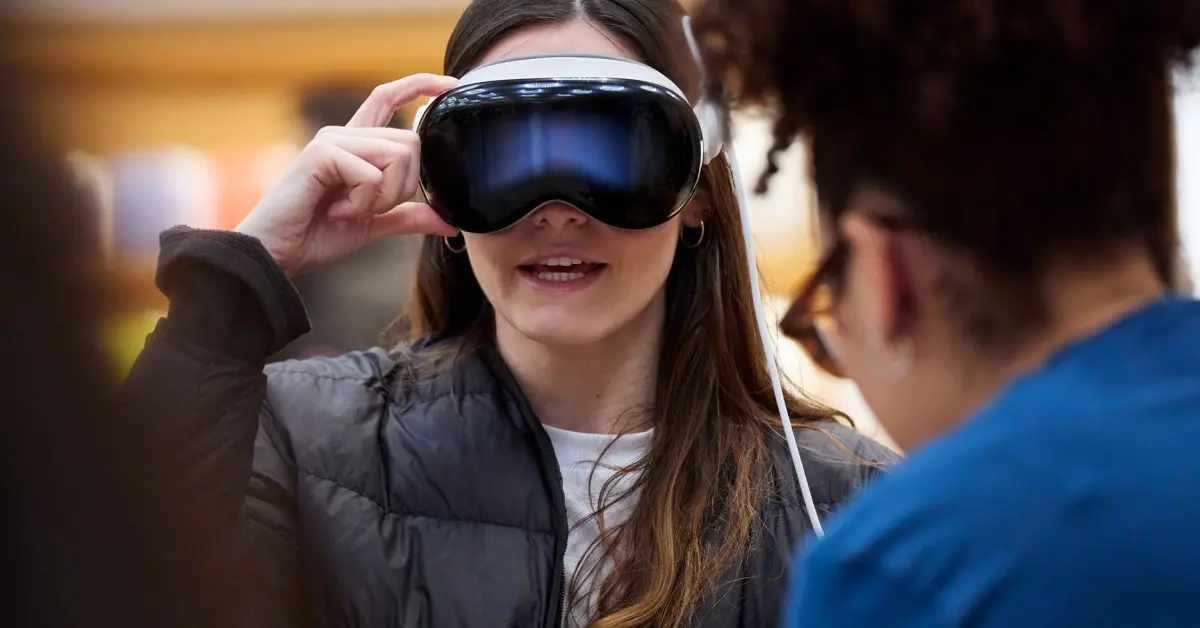
OpenAI has poached Paul Meade, Apple’s top executive responsible for the Vision Pro headset and the company’s smart glasses efforts, according to a report from Bloomberg. Meade, a vice president at Apple, is expected to leave the iPhone maker by next week and will join OpenAI’s hardware unit, where he will work on the development of an upcoming family of AI-powered devices.
OpenAI’s Growing Hardware Ambitions
The hire is the latest in a series of moves by OpenAI to build a world-class hardware team. Last year, the company announced a partnership with legendary designer Jony Ive and several members of his LoveFrom design studio to form io, a subsidiary focused on releasing AI-first consumer hardware. Since then, OpenAI has aggressively recruited current and former Apple employees, including Evans Hankey—who led Apple’s industrial design for three years after Ive’s departure—and Tang Ten, a veteran of Apple’s design team.
Meade’s arrival marks a significant escalation. Unlike earlier hires who were primarily designers or engineers, Meade comes from a leadership role overseeing the entire hardware engineering for one of Apple’s highest-visibility product lines. His experience with both the complex spatial computing headset and the nascent smart glasses initiative gives OpenAI a unique blend of expertise in wearable computing, mass production logistics, and advanced optical systems.
Paul Meade’s Apple Career
Meade joined Apple in the early 2000s and quickly rose through the ranks. He served as a key iPad program manager in 2010, helping launch the original device. In 2012, he became head of iPhone program management, overseeing the development of several flagship models. In 2017, he moved to the Vision Products Group (VPG), the secretive division responsible for Apple’s augmented and virtual reality efforts. He took over all hardware engineering for the group in 2019 and led the team that delivered the Apple Vision Pro, which launched in early 2024.
More recently, Meade was also leading Apple’s project to develop its first smart glasses, a product currently expected to debut in late 2027. The smart glasses effort is believed to be a more lightweight wearable that integrates Apple’s computing and sensor technology into a form factor resembling ordinary eyewear, in contrast to the bulky headset design of the Vision Pro.
Internal Restructuring at Apple
Bloomberg reports that Meade’s departure was triggered by a controversial reshuffling of Apple’s hardware engineering unit following the appointment of John Ternus as the company’s next CEO. Ternus, who succeeded Tim Cook in early 2026, promoted his longtime deputy Johny Srouji to chief hardware officer. Srouji, previously Apple’s chips chief, initiated a shake-up that reorganized reporting structures and demoted several vice presidents.
Under the new structure, Meade and other hardware leaders now report to Tom Marieb, the new vice president of hardware engineering, rather than directly to Srouji. This effectively pushed them a level down in the organizational hierarchy. The change frustrated several senior executives, including Meade, who had led the VPG through years of development. The smart glasses project, once seen as a priority, may now face further delays as leadership changes ripple through the VPG.
With Meade’s exit, his former deputy Fletcher Rothkopf will take over many of his responsibilities. Rothkopf has been in charge of product design for the Vision Pro and smart glasses and is seen as a capable successor, though he lacks Meade’s long tenure in program management and hardware engineering integration.
Implications for OpenAI’s Hardware
OpenAI has not publicly detailed the products it is developing under the io subsidiary, but the company has hinted at a new category of AI-native devices that leverage large language models and advanced interactions without screens or traditional interfaces. Ive has spoken about creating a device that minimizes distraction and maximizes utility, possibly resembling a smart wearable that incorporates computer vision and natural language processing.
Meade’s background in both the high-end spatial computer (Vision Pro) and the more practical smart glasses form factor suggests OpenAI is exploring multiple product avenues. The hiring signals that the company is serious about moving beyond software and into physical hardware that can deeply integrate its AI models. Given the intense competition in the AI assistant space from Google, Amazon, and Meta, owning the hardware platform could give OpenAI a strategic advantage in controlling the user experience and data flow.
Apple’s loss may also be felt in its own smart glasses timeline. Meade had been instrumental in navigating the technical challenges of miniaturizing sensors, batteries, and optics into a glasses form factor. His departure could slow progress, especially as the VPG adjusts to new leadership. For OpenAI, however, the acquisition of such a high-profile executive validates its hardware ambitions and brings invaluable institutional knowledge from Apple’s multi-billion-dollar product development engine.
Broader Trends in AI Hardware
The tech industry is witnessing a talent war for hardware engineers with experience in advanced consumer devices. Meta has hired extensively from Apple for its Reality Labs division. Google’s augmented reality team has also attracted Apple veterans. OpenAI’s aggressive poaching from Apple’s design and engineering ranks suggests that the company believes its future success depends on building a hardware ecosystem that rivals those of its competitors.
The partnership with Jony Ive provides Open AI with design leadership that can shape the look and feel of its devices. Ive’s influence at Apple was legendary, and his attention to detail and material choices could make OpenAI’s products stand out. With Meade at the helm of engineering, the combination of high-end design and production-ready engineering could accelerate the timeline to market. Industry observers now expect the first io products to appear within the next two to three years, potentially at a price point far below the Vision Pro’s $3,499 tag.
Meanwhile, Apple is left to regroup. The loss of Meade comes at a time when the Vision Pro has faced mixed reviews and sluggish sales, partly due to its high price and limited app ecosystem. The smart glasses project, once seen as a flagship for the post-iPhone era, now requires a new champion. Fletcher Rothkopf will have to quickly earn the trust of the VPG team and Srouji’s leadership to keep the project on track.
For consumers, the rivalry is intensifying. OpenAI’s foray into hardware, combined with its AI breakthroughs, promises a new category of intelligent devices that could reshape how we interact with technology. Apple’s commitment to premium hardware and privacy remains strong, but the departure of key talent like Meade raises questions about its ability to retain the innovative edge that defined the company for decades.
Source: 9to5Mac News