

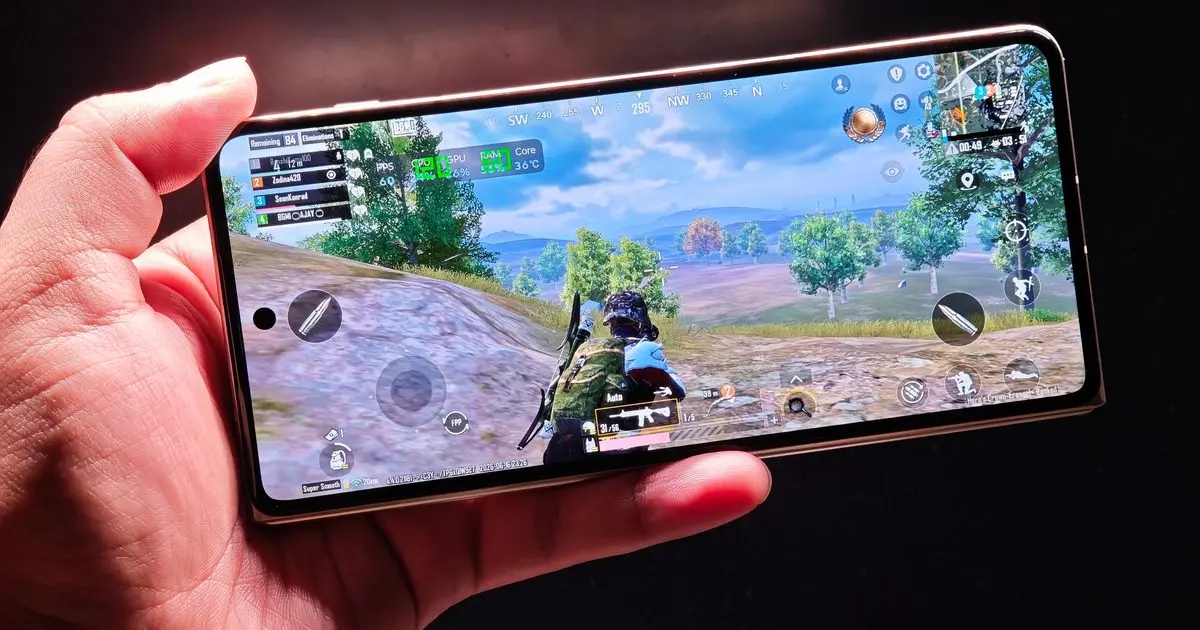
The mobile gaming landscape is undergoing a dramatic transformation, driven by artificial intelligence. According to research from ATTN Economy, 181,000 mobile games were launched in the six months leading up to May 2026—a staggering 118% increase on iOS and 73% on Android compared to the same period the previous year. This explosion in game releases is largely attributed to a phenomenon known as vibe coding, where individuals with little to no programming knowledge use AI tools to create and publish games without writing a single line of code.
What Is Vibe Coding and Why Is It Growing?
Vibe coding refers to the practice of using natural language prompts to instruct AI models—like OpenAI's Codex, Anthropic's Claude, or GitHub Copilot—to generate functional code for an entire game. Users describe the mechanics, visuals, and logic, and the AI produces the necessary scripts and assets. This lowers the barrier to entry to the point where anyone with a concept can potentially release a product on app stores. The trend gained traction in late 2024 and exploded in 2025, fueled by the release of increasingly capable large language models and user-friendly game engine integrations.
Platforms such as Roblox and Unity have also introduced AI-assisted development tools, allowing creators to generate 3D models, animations, and even voice acting automatically. The result is a deluge of content that overwhelms storefronts and challenges the traditional quality-control mechanisms of the mobile gaming industry.
Productivity Gains: Real but Modest
Despite the promise of drastic time savings, the actual productivity gains from AI in game development are more modest than enthusiasts claim. A former executive at French mobile gaming studio Voodoo told the Financial Times that AI reduced development time from around 14 days to 10 days—a noticeable improvement but hardly the revolution many anticipated. The core tasks of game design, monetization strategy, user acquisition, and playtesting remain labor-intensive and require human intuition.
Moreover, AI-generated code often requires debugging and optimization. Many vibe-coded games suffer from performance issues, repetitive assets, and lack of polish. While AI can produce a functional prototype quickly, turning that prototype into a polished, engaging experience still demands significant human effort.
The Economics of the AI Gaming Boom
One might assume that lowering development barriers would empower independent creators and small studios. However, the data tells a different story. In 2025, the top 1% of game publishers controlled a staggering $75.6 billion in revenue, while the remaining 99% of publishers shared just $6.1 billion. That top tier also accounted for nearly 80% of all worldwide downloads. These figures illustrate a fundamental imbalance: the massive increase in game supply has not translated into a redistribution of wealth or success.
Large gaming companies possess enormous advantages: decades of player data, established marketing channels, deep talent pools, and the financial resources to acquire emerging technologies. They can deploy AI at scale to enhance their existing franchises, optimize live service operations, and automate aspects of production that smaller teams cannot match. In contrast, most indie developers releasing AI-assisted games face fierce competition for user attention. App store algorithms tend to favor established titles with high engagement metrics, making it nearly impossible for new entries to break through without substantial paid advertising.
The oversupply of games further dilutes discoverability. With hundreds of new games appearing daily on the App Store and Google Play, even a well-designed vibe-coded game may vanish into the noise. The result is a paradox: more games than ever, but the major winners remain the same corporate players.
Layoffs and Eroding Trust
While the number of games rises, the human cost within the industry is stark. According to a GDC Festival of Gaming report, one in four gaming employees has been laid off in the past two years. These layoffs affect not only large studios but also mid-tier and small teams that cannot compete with AI-driven efficiency at scale. Many of those jobs are being replaced by automation or outsourced to AI systems.
Simultaneously, sentiment among gaming professionals toward generative AI has soured dramatically. In 2024, only 18% of game developers viewed generative AI as harmful to the industry. By 2025, that percentage had jumped to 52%. This shift reflects growing concerns about job displacement, intellectual property theft, and the homogenization of game content. Developers worry that generative AI, as currently deployed, prioritizes speed and volume over creativity and artistic vision.
Players, too, are feeling the impact. App store reviews increasingly flag games that appear to be generated entirely by AI, with players complaining about generic gameplay, recycled art, and lack of soul. Trust in the authenticity of mobile games is declining, which could have long-term consequences for the market's reputation.
Is AI Replacing Human Instinct?
At the heart of the debate lies a simple truth: AI excels at pattern recognition and execution but struggles with the elusive qualities that make a game feel special. Player engagement, emotional storytelling, humor, surprise, and thoughtful level design all draw on human experiences and intuition. Vibe coding may allow a developer to recreate a clone of an existing successful game, but it rarely produces something genuinely novel or emotionally resonant.
Consider the history of mobile gaming. The early hits—Angry Birds, Fruit Ninja, Candy Crush—were built on simple mechanics but executed with a polish and charm that resonated widely. They were crafted by teams that iterated obsessively on feel, feedback, and pacing. Today’s AI-generated games often skip that iteration cycle, resulting in experiences that feel derivative and shallow.
Furthermore, generative AI models are trained on existing game code and assets, which introduces a bias toward replicating established patterns rather than breaking new ground. This risks a cultural stagnation where mobile games become a monotonous echo of past successes.
The Future: Regulation and Adaptation
As the flood of AI-generated games continues, regulators and platform holders face difficult decisions. Apple and Google have begun updating their app review guidelines to address issues like misleading metadata, asset flipping, and low-effort clones. Some developers advocate for labeling requirements that distinguish AI-assisted games from human-crafted ones. However, enforcement remains challenging given the sheer volume of submissions.
For indie developers, adapting to the new landscape means learning to use AI as a collaborator rather than a crutch. The most successful small teams are those that leverage AI for repetitive tasks—code scaffolding, asset generation, localization—while retaining creative control over design and storytelling. Human oversight ensures that the final product has a distinct voice and purpose.
On the other hand, established publishers are investing heavily in proprietary AI pipelines that enhance their existing workflows without diluting brand identity. Companies like Tencent, NetEase, and Activision Blizzard are developing internal models trained on their own game data, allowing them to accelerate production while maintaining quality standards. This further widens the gap between the haves and have-nots.
The broader societal implication is clear: AI amplifies existing inequalities unless intentionally designed to democratize opportunity. The tools themselves are neutral, but their deployment reflects the priorities of the organizations that wield them. In an industry where the top 1% already controls 92% of revenue, the marginal barrier-lowering effect of vibe coding does little to shift the power balance.
What players ultimately want is not more games, but better games—games that challenge, delight, and surprise them. Quantity without quality leads to fatigue and abandonment. The app store economy may soon hit a saturation point where consumers become blind to the endless listings, and only the most standout titles will capture attention.
In this environment, the role of human judgment becomes even more critical. AI can help generate ideas and accelerate production, but it cannot answer the fundamental questions: Is this game fun? Does it have personality? Will people remember it tomorrow? Those answers still require the human instincts that no algorithm can replicate.
Source: Digital Trends News