

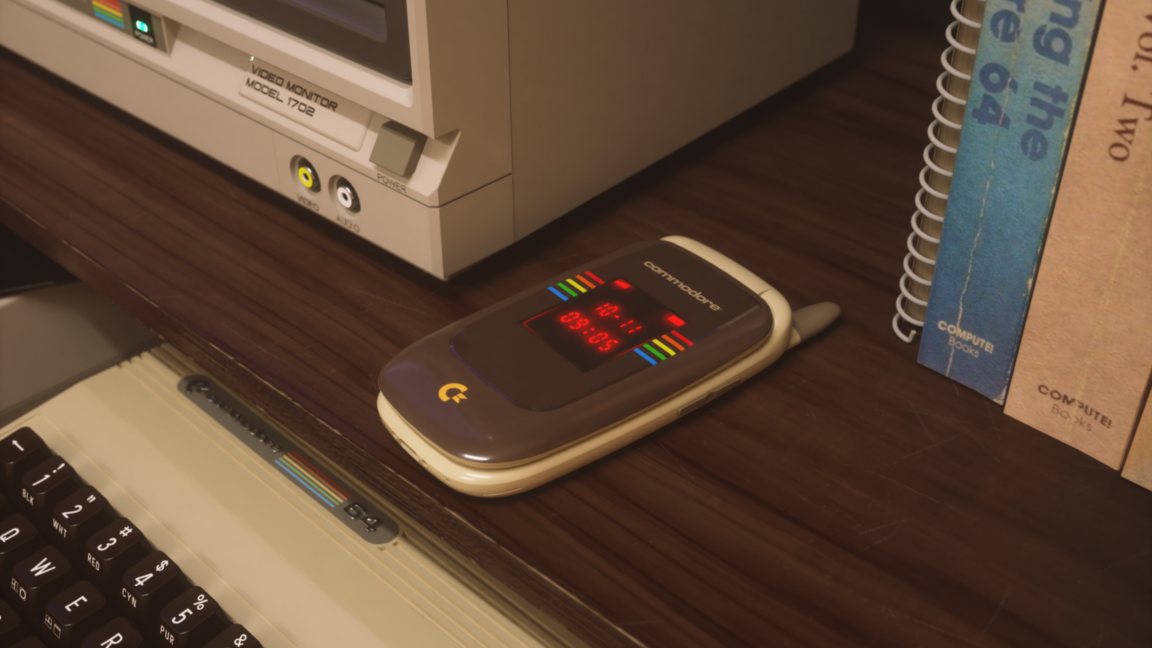
Commodore, the iconic brand that once dominated the home computer market with the bestselling Commodore 64, is making a bold return to hardware with a device that deliberately shuns the very features that define modern smartphones. The new Commodore Callback 8020 is a flip phone that blocks social media and web browsers at the system level, aiming to offer a digital experience that prioritizes focus and privacy over endless scrolling.
Christian "Peri Fractic" Simpson, the YouTuber behind the Retro Recipes channel (now Retro Recipes x Commodore), acquired the Commodore Corporation and all its original trademarks in July 2025 for a price he described as "in the low seven figures." Since then, the brand has released the Commodore 64 Ultimate and the Commodore 64X PC, a mini PC housed in a retro-styled chassis. Now, with the Callback 8020, Commodore is entering the burgeoning market of minimalist or "dumb" phones.
The device’s name pays homage to the Commodore 64’s BASIC programming language, with "8020" echoing the 8-bit era. The phone’s design mimics classic flip phones of the early 2000s, complete with a numerical keypad and a small external screen styled after 1970s Commodore calculators, featuring a distinctive red tint. But under the hood, it runs Sailfish OS, a Linux-based operating system developed by Jolla, a company founded by former Nokia employees in 2012.
What truly sets the Callback 8020 apart is its aggressive stance against addictive apps. Commodore’s announcement states that the phone uses "patent pending technology" to block web browsers and social media platforms at the system level. Fractic confirmed to Ars Technica that the Commostore app store operates on a whitelist principle, and "social media and browsers will never get that whitelisting." He added that the company has developed technology to prevent these apps from being sideloaded, and even if a user somehow installs them, they are blocked at the DNS level.
This means TikTok, Instagram, Twitter (X), Facebook, and popular browsers like Chrome and Safari cannot operate on the device. However, the phone does support other internet-based features such as maps, QR codes, and messaging apps like WhatsApp and Signal. It also includes an 8-bit SID music player, a nod to the classic Commodore 64 sound chip, and comes with a selection of Commodore 64-era games pre-installed.
To reduce notification distractions, the phone uses a dome-shaped LED light that illuminates when a message arrives. Commodore argues this is less intrusive than pop-up alerts, though critics might point out that any lit indicator can draw attention. The device also allows users to swap covers and attach charm strings, reviving nostalgia for early Nokia phones like the 3360 or 3595.
The Callback 8020 runs on Sailfish OS, which provides an Android runtime compatibility layer, enabling "over 99 percent of Android apps" to function. This includes essential apps like Spotify, Signal, and WhatsApp, while keeping social media and browsers out. Fractic explained that old-school bulletin board systems are permitted, but Reddit is not, as they consult with the community to define the boundaries.
Commodore positions the phone as a return to technology’s original promise: tools that serve users, not the other way around. The announcement claims the device does not collect personal data without consent, monetize user data, track cookies, or monitor activities. This stands in contrast to most modern smartphones, which rely on data collection for advertising revenue.
Pricing starts at $500 for basic colorways, with a Founders Edition in "BASIC Beige" featuring a 24K gold-plated "C=" button for $640. This places it between the Light Phone II ($299) and Light Phone III ($699), and well below the latest Motorola Razr flip phone (around $800). Commodore hopes to attract parents concerned about their children's screen time, professionals seeking focus, and anyone nostalgic for a simpler mobile era.
The Callback 8020 is expected to ship in Q4 2025. While the brand’s revival has generated excitement among retro enthusiasts, the phone’s success will depend on whether consumers are willing to pay a premium for a device that deliberately limits internet functionality. The growth of the "dumb phone" market suggests there is demand, but competitors like the Light Phone, Punkt MP02, and Boring Phone already offer similar benefits. Commodore’s unique selling point is its iconic brand heritage and the hard block on social media—a feature that could resonate deeply with users tired of digital addiction.
Beyond the phone itself, Commodore plans to support the device with a curated app store (Commostore) and community engagement. Fractic emphasized that they are "determined to approach this in a way that’s fair and safe for everyone," and will consult with the Callback community over the next few months to fine-tune the whitelist policy. This collaborative approach could help the brand avoid alienating power users who want more control.
The phone’s hardware includes a high-end DAC, integrated FM radio, 3.5mm headphone jack, and in-ear monitors in the box. The external display, which mimics a vintage Commodore calculator, shows basic notifications and time. The main internal display is a 2.8-inch (or similar) touch-enabled screen, though navigation is primarily through the keypad and physical buttons.
Commodore’s move is part of a broader trend. As smartphones become more powerful and intrusive, a segment of the market is actively seeking devices that reduce screen time and data collection. The Light Phone, for example, stripped away everything except calls, texts, and a few tools. The Callback 8020 goes further by blocking specific categories of apps while still allowing functional tools like maps and messaging. This middle ground could appeal to users who need connectivity but want to escape the addictive pull of social media algorithms.
The phone also supports standard cellular connectivity, including 4G LTE (and possibly 5G depending on the region), and uses a nano-SIM card. It is not a true "dumb phone" in the sense of having no internet—it has data, but it is filtered. This approach mirrors the ideas of designers like former Google design ethicist Tristan Harris, who advocates for technology that respects human attention.
Commodore’s brand revival is still in its early stages. The acquisition of the trademarks by a YouTuber might raise eyebrows, but Simpson has demonstrated a genuine passion for retro computing and a business-minded approach. The Commodore 64X PC was a success among collectors, and the Callback 8020 is a logical next step: a device that combines retro aesthetics with a modern ethos of digital well-being.
Whether the phone will sell in significant numbers remains to be seen. The price point is higher than budget smartphones, yet lower than flagship foldables. For those who value their time and mental health over endless scrolling, the Callback 8020 could be a worthwhile investment. Commodore is betting that nostalgia, combined with a principled stance against addiction, will create a new niche in the mobile market.
Source: Ars Technica News