

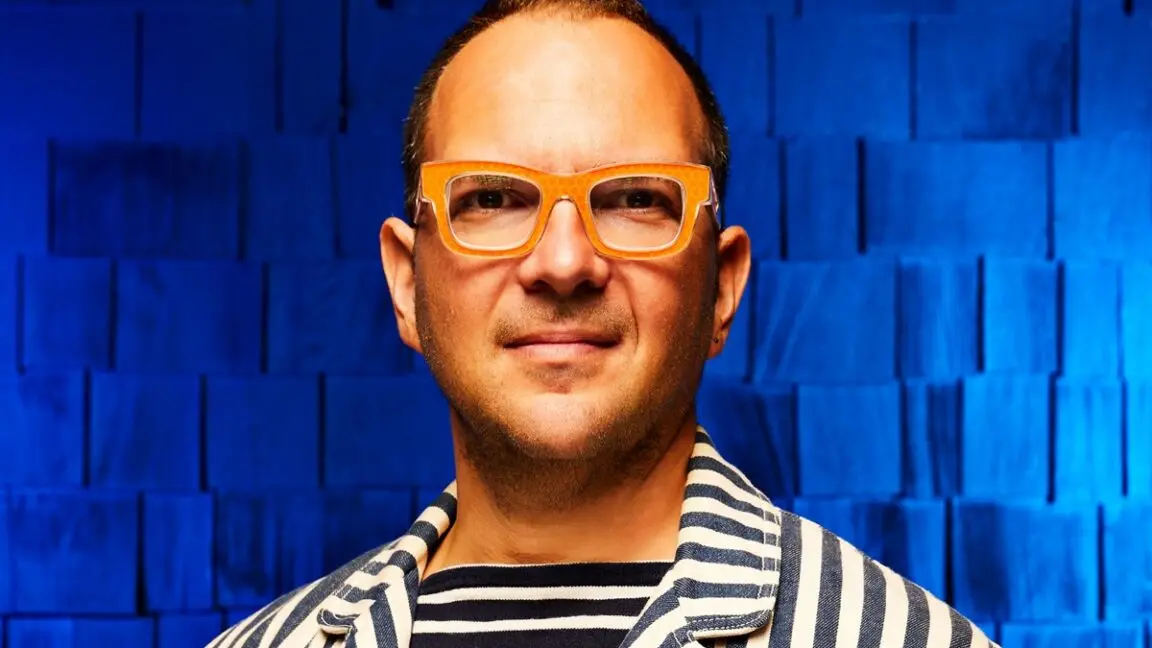
Cory Doctorow, the prolific tech journalist and science fiction author, returns with a provocative new book, The Reverse Centaur’s Guide to Life After AI, which serves as a follow-up to his earlier work on enshittification. In a recent interview, Doctorow dissects the artificial intelligence industry's unsustainable economics and the ideological fantasies that drive it, offering a sharp critique of the hype surrounding large language models and generative AI.
Doctorow defines a "centaur" in automation theory as a human augmented by technology—like a driver using GPS or a radiologist assisted by AI. A "reverse centaur," on the other hand, is a person serving as a mere appendage to a machine. He cites Amazon delivery drivers surrounded by AI cameras that monitor their every move, making them peripheral to the van itself. The AI industry, he argues, seems intent on creating more reverse centaurs by replacing human judgment with automated systems that offload accountability onto the remaining workers.
The Economics of the AI Bubble
Doctorow explains that the current AI mania is driven by a material need for tech giants to maintain growth stock valuations. When firms like Meta saturate their core markets, they must invent imaginary markets—metaverse, crypto, Web3—to justify continued investment. AI is the largest of these illusions, with global capital expenditure reaching $1.4 trillion while the sector generates only $50 billion annually. Each new generation of AI loses more money than the last, making it "the money-losingest thing our species has ever done."
Unlike the dot-com bubble, where every new user made the web less unprofitable, AI's unit economics worsen with scale. Every customer and every use case loses money for the companies. Yet the hype persists because CEOs are drawn to a fantasy of a world without people—where other people's stubborn independence can be replaced by obedient algorithms. This ideological appeal, combined with the financial pressure to keep inventing growth narratives, has produced an unprecedented bubble.
Workers Resist, But Some Embrace
Doctorow highlights a striking contrast between earlier technological revolutions and AI. In the late 1990s, workers smuggled the web into workplaces and demanded its adoption. Today, employers must spy on workers to force them to use AI. Many employees feel the technology is being shoved down their throats, degrading quality and well-being while making them "accountability sinks" who take the blame for AI errors.
However, Doctorow acknowledges that some workers genuinely benefit. He calls these "centaurs"—professionals who decide how to use AI as a tool on their own terms. For instance, doctors using AI to spot tumors remain in control, whereas a hospital that fires nine out of ten radiologists and leaves the last to check the AI's work creates a reverse centaur. The difference lies in who holds the power: the worker or the machine–manager.
Why Not Simply Ban AI?
Despite his harsh criticisms, Doctorow is not fundamentally anti-AI. He warns against calls to ban web scraping or restrict training data, arguing that such measures would harm socially beneficial activities like digital archiving and academic research. Instead, he advocates for labor law reform—specifically, extending sectoral bargaining (which allowed Hollywood writers and actors to win protections against AI) to all workers. This, he says, would give employees the collective power to negotiate how AI is deployed, rather than relying on copyright laws that bosses can easily bypass in contracts.
Productive Residue of a Burst Bubble
When the AI bubble bursts—which Doctorow calls inevitable—he predicts a messy collapse, but not a worthless one. Drawing parallels to the dot-com crash, he notes that bubbles sometimes leave productive residues: cheap hardware, skilled programmers, and open-source models that can be repurposed. After the dot-com bust, San Francisco rents fell, servers became affordable, and a generation of coders built Web 2.0. Similarly, after AI's downfall, we may see a glut of GPUs and applied statisticians who can build genuinely useful AI applications without the bloat of foundation models.
Doctorow points to DeepSeek, a spin-off from a Chinese hedge fund, which used $6 million to optimize open-source models on commodity hardware. When its model launched, it triggered a $600 billion market sell-off in 24 hours—the largest single-day decapitalization in history. Such examples show that AI's core technology is genuinely useful, but its current incarnation is distorted by hype and overinvestment.
Practical Uses for Local AI
Doctorow himself uses small, local AI models for practical tasks: transcription, typo-checking, and indexing personal media archives. He emphasizes that such tools don't need to be perfect or power-hungry. A local Whisper transcription model on a laptop is far less wasteful than a massive cloud-based GPT query. He also describes a friend at the Human Rights Data Analysis Group who uses AI to identify patterns in arrest reports that can exonerate wrongfully convicted people—a clear example of centaur-style, human-directed AI that serves justice without replacing expertise.
Ultimately, Doctorow urges a shift in focus from apocalyptic AI warnings to the real economic and political forces at play. The bubble will burst, but what matters is what we build from the rubble: better labor laws, open tools, and a society where people control technology rather than the reverse.
Source: Ars Technica News