

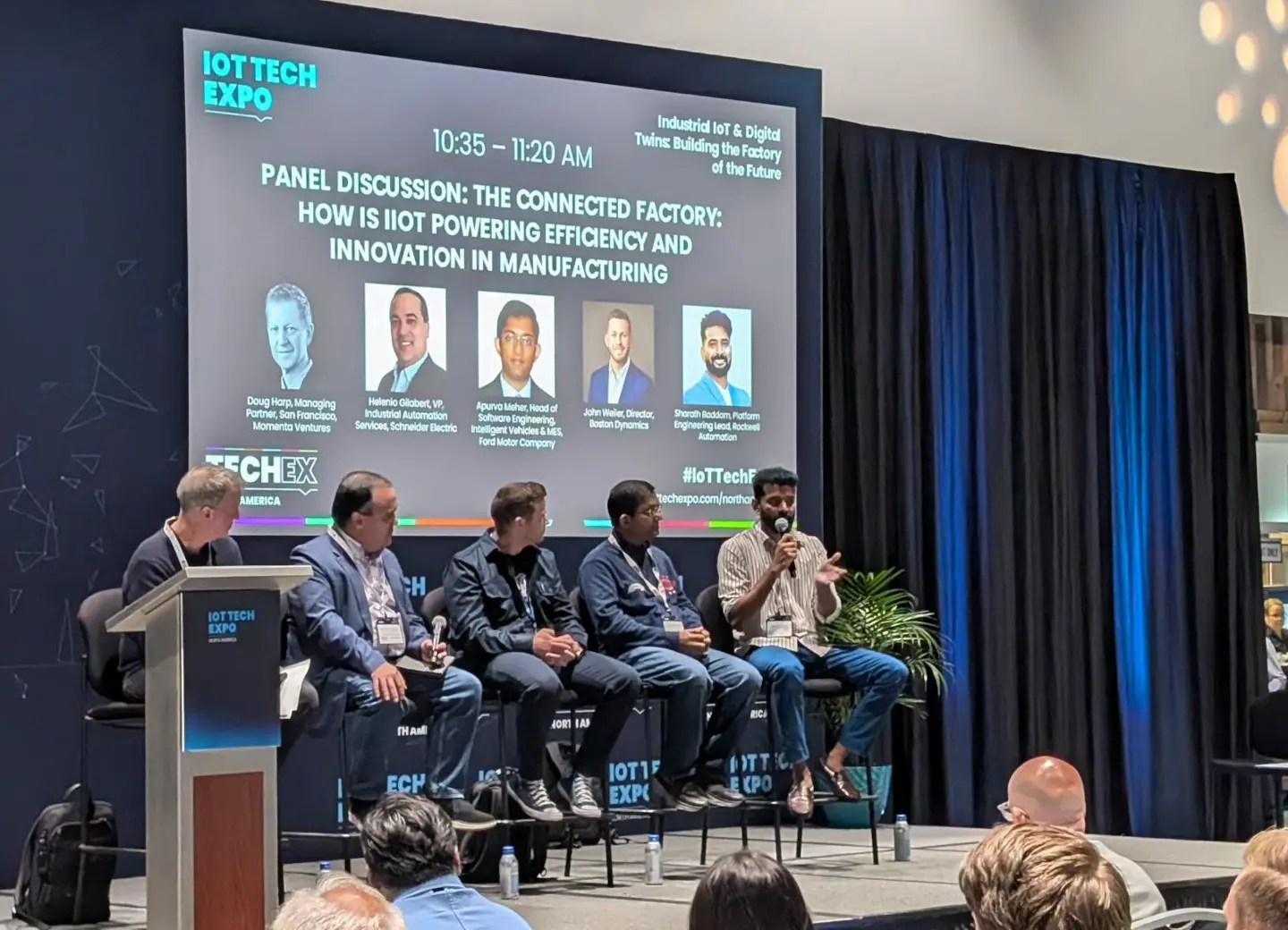
At TechEx North America, a prominent technology conference held in Santa Clara, industry leaders and experts convened to discuss the critical underpinnings of artificial intelligence. The consensus was clear: AI is not just about algorithms and data; it is fundamentally a matter of power, infrastructure, and security. This pivotal event brought together stakeholders from energy, data center operations, cybersecurity, and enterprise AI to chart a path forward.
The Power Challenge: Fueling AI’s Hungry Engines
Artificial intelligence, particularly large language models and deep learning systems, requires enormous amounts of electrical energy. Training a single state-of-the-art model can consume as much electricity as hundreds of households in a year. At TechEx, speakers highlighted that the rapid adoption of AI is straining existing power grids. Data centers, which host AI workloads, already account for about 1-2% of global electricity use, and that share is projected to rise sharply. To meet this demand, companies are exploring renewable energy sources, nuclear power, and advanced battery storage. The conference featured case studies from hyperscale cloud providers who are investing in dedicated solar and wind farms to power their AI clusters. However, experts warned that without significant upgrades to transmission infrastructure, many regions could face power shortages. The key takeaway was that energy efficiency must be a design principle from the chip level up to the data center layout.
Infrastructure: The Backbone of AI Scale
Beyond power, AI relies on robust infrastructure including high-performance computing hardware, high-bandwidth networking, and massive storage systems. At TechEx, panelists discussed the shift from traditional CPUs to specialized accelerators like GPUs, TPUs, and custom ASICs. This hardware evolution is driving a new generation of data centers designed for liquid cooling and dense rack configurations. The conference also emphasized the importance of edge computing for AI inference, as real-time applications like autonomous vehicles and industrial IoT require low-latency processing close to the data source. Speakers from leading telecom companies outlined plans to integrate AI capabilities into 5G networks, creating a distributed computing fabric. Additionally, the role of software infrastructure was underscored: containerization, orchestration platforms like Kubernetes, and AI-specific middleware are essential for managing complex ML pipelines. The message was that infrastructure investment must be long-term and scalable, anticipating the exponential growth in model complexity and user demand.
Security: Protecting AI Systems and Data
As AI becomes more pervasive, security risks multiply. TechEx devoted multiple sessions to the dual nature of AI security: protecting AI systems from attacks and using AI to enhance cybersecurity. Experts highlighted threats such as adversarial examples that can fool models, data poisoning during training, and model theft through reverse engineering. The conference showcased new frameworks for secure enclaves (trusted execution environments) that protect sensitive data during inference. There was also discussion around the security of the supply chain, as many organizations rely on third-party models and data. The concept of “AI red teaming” was promoted as a best practice, where ethical hackers simulate attacks to uncover vulnerabilities. On the positive side, AI-powered security tools are being deployed to detect anomalies, automate incident response, and predict threats. However, speakers cautioned that attackers also have access to AI, leading to an arms race. The consensus was that security must be integrated into every layer of the AI stack, from hardware to application, and that collaboration between industry, academia, and government is essential.
Historical Context and Industry Evolution
To understand the current moment, it is useful to revisit the history of AI and its relationship with infrastructure. In the 1950s and 1960s, early AI research was limited by the computational power of mainframes. The field experienced several “AI winters” partly due to overhyped expectations and insufficient hardware. The resurgence in the 2010s, driven by deep learning and GPU computing, demonstrated that advances in infrastructure could unlock new capabilities. TechEx echoed this trajectory, noting that we are now in a phase where infrastructure is again a bottleneck, but this time for massive-scale AI. The conference also drew parallels to the early days of the internet, when building out network infrastructure was a prerequisite for the digital economy. Similarly, AI requires a coordinated effort to build out power grids, data centers, and secure connectivity. The historical perspective helped attendees appreciate that these challenges are not new but require unprecedented levels of investment and cooperation.
Key Takeaways and Industry Insights
Throughout TechEx North America, several recurring themes emerged. First, there is no one-size-fits-all solution; each organization must tailor its power, infrastructure, and security strategies to its specific AI use case. Second, sustainability is not an afterthought but a core requirement, as regulatory pressures and corporate social responsibility drive the adoption of green technologies. Third, talent shortages in all three domains are a major concern, with calls for educational programs and cross-training. Fourth, open standards and interoperability are critical to avoid vendor lock-in and to foster innovation. Finally, the event highlighted that the three pillars are deeply interconnected: a security breach can disrupt infrastructure and increase power consumption (e.g., during recovery), while power constraints can force suboptimal security configurations. The conference served as a call to action for C-suite leaders to elevate these issues to strategic priorities.
As the exhibition floor buzzed with demonstrations of the latest AI hardware cooling systems, cyber threat intelligence platforms, and energy management software, it was clear that the industry is moving rapidly. TechEx North America provided a vital forum for sharing best practices and forging partnerships that will shape the next decade of AI deployment. Attendees left with a renewed understanding that AI’s promise can only be realized when we address the foundational elements of power, infrastructure, and security in a holistic and forward-looking manner.
Source: AI News News