

Amazon has drawn overwhelming investor interest for its latest bond sale, with reports indicating peak demand of approximately $126 billion (£94 billion) on Tuesday. This ranks among the largest ever for a corporate bond offering, showcasing continued robust appetite for debt from major technology companies amid broader economic turbulence. The company plans to offer as many as 11 tranches on the US high-grade debt market, ranging from two to 50 years, and is also marketing an eight-part euro-denominated bond sale this week.
This debt issuance is part of a broader trend where tech giants are turning to bond markets to finance their massive artificial intelligence (AI) infrastructure ambitions. Oracle, for instance, drew $129 billion in orders for a bond sale in February, while Meta attracted $125 billion for its bond sale last October. Similarly, Google parent Alphabet raised more than $30 billion in issuance across dollar, sterling, and Swiss franc denominated debt last month. Amazon itself raised $15 billion last November in its first US bond sale in three years.
Understanding the Debt Strategy
Corporate debt markets offer companies like Amazon a cost-effective way to raise capital. For investment-grade firms, interest rates on bonds are often lower than equity financing and can provide tax advantages, as interest payments are tax-deductible. By issuing debt, Amazon preserves cash for operations and avoids diluting existing shareholders, a particularly attractive option when capital expenditure needs are soaring.
The demand for Amazon's bonds—nearly eight times oversubscribed—reflects investor confidence in the company's cash flow and creditworthiness. Amazon holds the highest credit ratings from Moody's (A1) and S&P (AA-), allowing it to borrow at near-record low yields relative to risk-free Treasury bonds. The strong demand also indicates that institutional investors, such as pension funds and insurance companies, see tech debt as a safe haven in an uncertain economic environment.
Amazon's $200 Billion Capex Plan
The bond sale comes on the heels of Amazon's announcement in February that it plans to spend $200 billion on capital expenditures over the course of the year. This staggering figure, which exceeds the combined capex of competitors Google and Microsoft, is heavily weighted toward AI infrastructure.
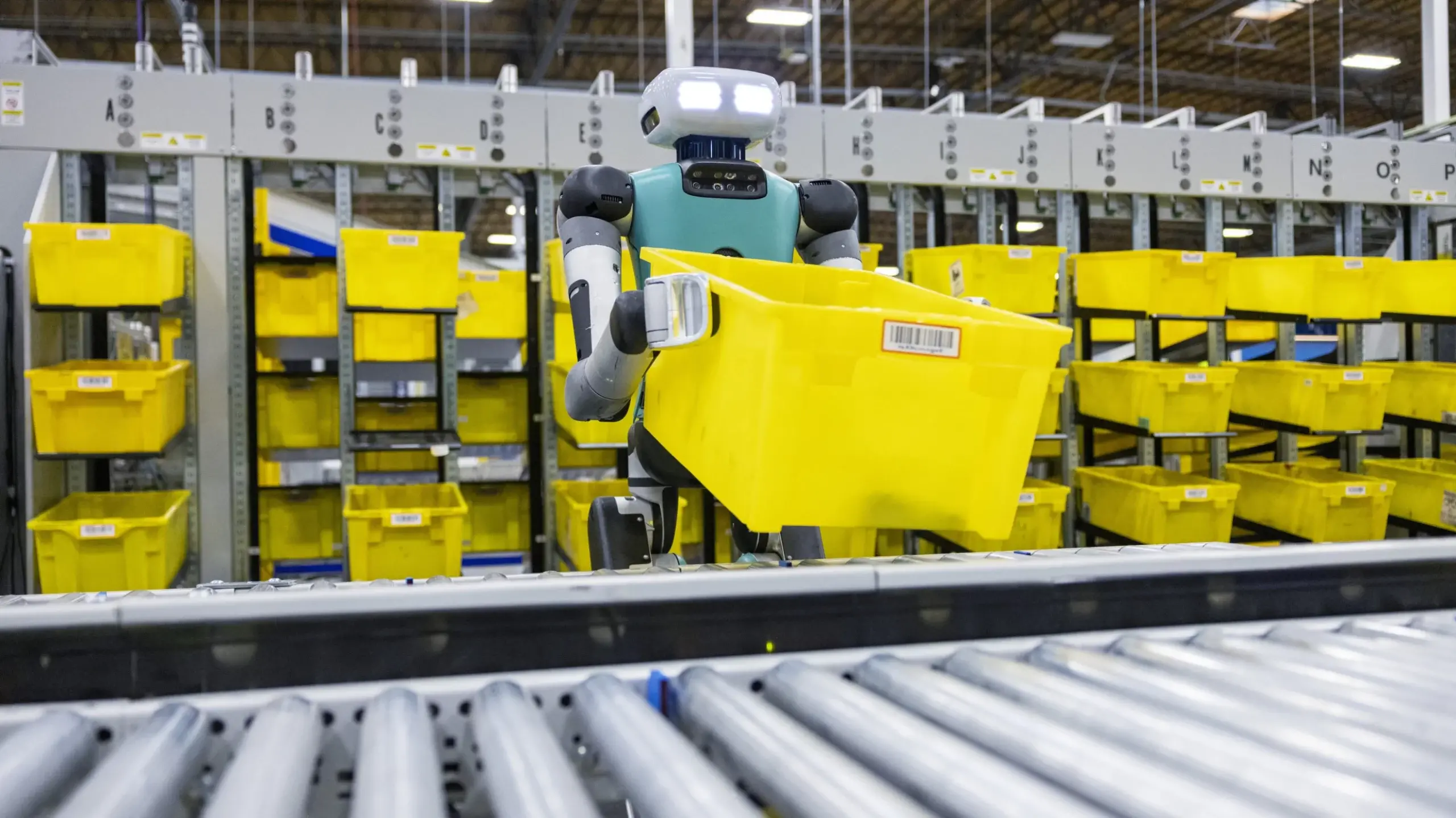
Amazon’s spending targets several key areas: custom AI chips (Trainium and Inferentia), robotics for fulfillment centers, and low Earth orbit satellites through its Project Kuiper initiative. The company is also building out data centers at an unprecedented pace to support the growing demand for AWS cloud services, which now includes AI-powered tools like Amazon Bedrock and SageMaker.
Market Reaction and Investor Sentiment
News of the $200 billion capex plan initially caused Amazon's shares to fall in February, as investors worried about returns on these massive, yet unprofitable, AI investments. The tech sector has seen a shift in sentiment this year: while AI spending remains high, shareholders demand clearer pathways to profitability. Amazon's cloud division, AWS, remains a major profit driver, but the company's overall net income for 2023 was $30.4 billion, leaving room for investors to question whether the AI bet will pay off.
During a company call with investors, Amazon CEO Andy Jassy defended the strategy: “We're going to invest to be the leader in this space.” He highlighted investments in custom AI chips, robotics, and low Earth orbit satellites as critical to maintaining Amazon's competitive edge. Jassy emphasized that the company learned from earlier cycles, such as the cloud computing buildout, where early spending led to long-term dominance.
Broader Context: The AI Infrastructure Race
The bond sale is not isolated to Amazon. Across the tech industry, companies are borrowing heavily to fund AI data centers and hardware. According to industry analysts, global spending on AI data centers could reach $1 trillion over the next five years. This arms race is driven by the exponential growth in training large language models, such as GPT-4 and Amazon's own Titan models, as well as inference workloads for generative AI applications.
Cloud providers like Amazon, Microsoft, and Google are in a fierce competition to secure Nvidia's H100 and upcoming B200 GPUs, often signing multi-year contracts worth billions. Amazon's custom chips aim to reduce dependency on Nvidia and lower costs, but the initial investment in design and manufacturing is enormous.
Historical Perspective on Tech Debt
Corporate bond sales by tech firms have soared since the pandemic, when interest rates were near zero. However, even as rates have risen in the last two years, demand remains strong. Amazon's bond sale follows a pattern seen in other sectors: utilities and energy companies also borrow heavily for long-term infrastructure projects. What sets tech apart is the scale and speed—Meta, Oracle, and Alphabet have all raised tens of billions in recent months.
The average yield on investment-grade corporate bonds has hovered around 5-6% in 2024, making them attractive relative to risk-free Treasuries paying around 4-4.5%. For Amazon, a 10-year bond might yield around 4.8% to 5.2%, offering investors a modest premium over sovereign debt with minimal default risk.
Implications for Retail and Cloud Customers
Amazon's infrastructure investments have downstream effects. For AWS customers, the expansion means faster, more powerful AI services and potentially lower prices as economies of scale kick in. For retail customers, automation through robotics could improve delivery speeds and reduce operational costs. Amazon's Project Kuiper aims to provide broadband internet, competing with SpaceX's Starlink, requiring a constellation of over 3,000 satellites—a multi-billion-dollar endeavor.
The bond sale also frees up cash flow for share buybacks and dividends. In 2023, Amazon spent $16 billion on share repurchases, and the new debt could support continued capital returns to shareholders while maintaining high investment levels.
Key Takeaways from the Bond Sale Details
The 11-tranche offering includes maturities from 2 to 50 years, giving Amazon flexibility to manage its debt maturity profile. The euro-denominated tranche allows the company to tap European investors and hedge currency exposure. Underwriters for the deal include major banks like JPMorgan, Goldman Sachs, and Morgan Stanley.
Total proceeds are expected to be in the range of $15-20 billion, based on the November 2023 bond sale and typical deal sizes. The strong demand—$126 billion—suggests Amazon could have upsized the offering if desired, but the company chose to keep it within a manageable size to avoid saturating the market.
Amazon's net debt remains low relative to its equity, given its ability to generate cash. As of Q1 2024, the company had $60 billion in cash and equivalents against $80 billion in total debt, giving it a net debt position of $20 billion. The new issuance will increase that slightly, but still within comfortable range for a company with $574 billion in annual revenue.
Competing Tech Giants' Approaches
While Amazon, Google, and Meta all borrow, their strategies differ. Alphabet raised $30 billion across multiple currencies, reflecting a more diversified funding approach. Microsoft, despite being Amazon's main cloud rival, has not issued massive debt recently, likely because it has ample cash from its traditional software business. However, Microsoft's capital expenditures also surged, reaching $50 billion in fiscal 2024, funded largely from operations and debt issuances in earlier years.
Oracle's $129 billion demand was fueled by its aggressive push into cloud computing and AI, and its February bond sale was a landmark due to its record order book. Amazon's $126 billion demand is slightly lower but still historic, demonstrating that the market considers these companies as safe bets despite the broader economic uncertainties.
Economic Turbulence and Investor Appetite
The broader macroeconomic environment includes lingering inflation concerns, potential interest rate cuts by the Fed, and geopolitical risks. Yet, investors have shown a clear preference for high-quality corporate debt, especially from companies with strong balance sheets and growth prospects. Tech debt offers a rare combination of yield and safety in a market where risk-free rates are still elevated but falling.
The success of Amazon's bond sale also signals that the AI investment story continues to resonate with fixed-income investors, even as equity investors grow cautious. This divergence highlights that while stock prices may fluctuate, the long-term capital requirements for AI are seen as necessary and likely to yield returns.
In summary, Amazon's debt raise is a tactical move to secure low-cost funding for its ambitious AI expansion, drawing on a market that remains eager to lend to the biggest and most reliable tech names. The resulting infrastructure will shape the next decade of cloud computing, e-commerce, and space-based internet services.
Source: Silicon UK News