

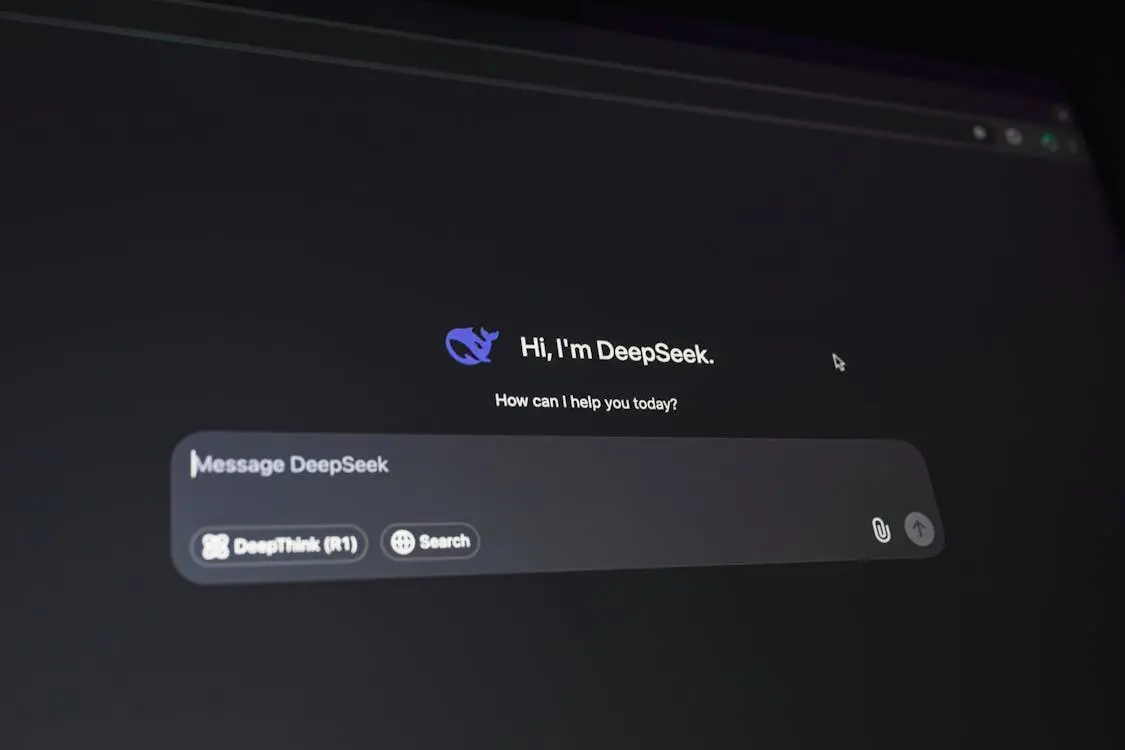
Chinese artificial intelligence start-up DeepSeek is finalising its first external funding round of more than 50 billion yuan ($7.4bn, £5.5bn) at a valuation of just under $60bn, according to a report from the South China Morning Post. The new valuation marks a more than six-fold jump from the company's $10bn valuation just two months ago, reflecting the intense investor appetite for cutting-edge AI companies emerging from China.
The funding round brings together an impressive array of strategic and financial investors. Tencent Holdings is expected to invest 10 billion yuan, while NetEase and JD.com are each expected to contribute about 3 billion yuan. CATL, the world's largest electric vehicle battery manufacturer, is expected to put in around 5 billion yuan, according to unnamed sources familiar with the matter. Venture capital firms including IDG Capital, Monolith, Loyal Valley Capital and Shixiang Tech are also reportedly expected to participate.
Surging valuation
DeepSeek's founder and chief executive Liang Wenfeng is also expected to contribute about 20 billion yuan of his own capital, underscoring his confidence in the company's trajectory. State-backed funds are also expected to take part in the round, though final terms, including which specific investment vehicles will provide the capital, have reportedly not yet been settled.
DeepSeek, which is backed by Liang's highly profitable quantitative fund High-Flyer Quant, previously resisted bringing in external capital. According to local media reports, the company recently decided to open itself to outside investors in order to secure a well-defined market value that will help it retain top talent. In the competitive AI industry, talent retention has become a critical challenge for startups, and offering employees liquid equity or performance-based incentives often requires a formal valuation from external investors.
The company's surging valuation also reflects the broader AI boom that has gripped global markets since late 2022. DeepSeek, however, has stood out from the crowd by focusing on efficiency and cost-effectiveness rather than simply scaling up computational power. The startup disrupted the AI world last year with the release of powerful models that matched or exceeded the capabilities of leading US systems at a fraction of the training cost.
Disrupting the AI landscape
DeepSeek's rise to prominence began in late 2024 and accelerated in January 2025 with the release of its R1 model. The model demonstrated reasoning capabilities comparable to OpenAI's top offerings, but was trained at a substantially lower cost, sending shockwaves through global equity markets and prompting a re-evaluation of AI infrastructure spending. The release raised fundamental questions about whether the massive capital expenditures being undertaken by US tech giants were truly necessary to achieve frontier-level AI performance.
The company has continued in the same vein with recent releases. In April of this year, DeepSeek unveiled its V4 model, which further improved efficiency and performance. The company said at the time that prices would “drop significantly” in the second half of this year when Huawei's Ascend 950PR supernodes are expected to ship at scale. This suggests that DeepSeek is not merely optimising its models for existing hardware, but is actively aligning its software roadmap with the next generation of Chinese-made AI chips.
Price efficiency and Chinese supply chain
DeepSeek's emphasis on price efficiency has made it a favourite among developers and enterprises looking to deploy AI without incurring prohibitive costs. The company's API pricing is significantly lower than many competitors, and its open-weight models allow organisations to run the systems on their own infrastructure. This approach has helped DeepSeek build a loyal user base across China and internationally, despite US restrictions on advanced chip exports to China.
The latest funding round is also likely to strengthen DeepSeek's position within China's broader push for technological self-reliance. Chinese chipmakers, including Huawei, Cambricon and MetaX, have said they are optimising their AI processing chips for DeepSeek's V4 model, as part of China's drive to boost its locally developed AI supply chain. This collaboration is critical in the face of US sanctions that have limited China's access to advanced semiconductors from NVIDIA and other Western suppliers.
DeepSeek's ability to achieve high performance with lower computational requirements is particularly important in this context. By developing algorithms that are less dependent on massive clusters of top-end GPUs, the company can effectively operate within the constraints of China's domestic chip ecosystem. The partnership with chipmakers is expected to accelerate the development of a full-stack Chinese AI infrastructure, from hardware to software to applications.
Investor confidence and strategic significance
The participation of Tencent, NetEase and JD.com is highly strategic. Each of these companies runs large-scale internet platforms that can benefit from advanced AI integration. Tencent, in particular, has been investing heavily in AI across its social media, gaming and cloud businesses. NetEase and JD.com have also been integrating AI into their products and logistics networks respectively. Their involvement in DeepSeek's funding round suggests that they see DeepSeek as a key partner in building next-generation AI services for the Chinese market.
CATL's inclusion is notable as well. While primarily known as a battery manufacturer, CATL has been expanding into energy storage and smart manufacturing, both of which rely heavily on AI for optimisation. The company's interest in DeepSeek underscores the growing convergence between AI and industrial sectors, as well as the perceived importance of having a domestic AI champion.
The funding round also signals a maturing of China's AI investment landscape. In the early days of AI startups, most funding came from venture capital and tech giants. Now, with state-backed funds and industrial players like CATL joining the cap table, DeepSeek is positioned as a national strategic asset. The involvement of state funds is particularly noteworthy, as it grants DeepSeek access to long-term capital and government connections that could help it navigate regulatory and export-control challenges.
Looking ahead
DeepSeek's first external funding round is expected to close in the coming weeks, though some terms remain subject to change. Once finalised, the round will give the company substantial financial firepower to invest in research and development, expand its computing infrastructure, and potentially pursue new products and services. The valuation of nearly $60bn places DeepSeek among the most valuable AI companies in the world, trailing only a few US giants like OpenAI and Anthropic.
For Liang Wenfeng, the funding round represents a shift from his previous stance of self-reliance. In earlier interviews, he described DeepSeek's research as being driven by curiosity rather than commercial pressures, and he cautioned that external funding could distract from the company's core mission. However, the need to retain top researchers amid intense competition appears to have changed his perspective. By accepting external capital, DeepSeek can offer competitive compensation packages and also demonstrate to the market that it has a clear path to long-term value creation.
The rapid appreciation in DeepSeek's valuation also reflects the broader re-rating of AI companies worldwide. After a period of scepticism following the initial hype, investors have begun to focus on actual deployment and revenue generation. DeepSeek's cost-efficient models have generated substantial interest from enterprise customers, and the company is reportedly exploring ways to monetise its technology beyond API access, including through proprietary applications and custom model development.
As the AI industry evolves, DeepSeek is likely to remain a central player. Its unique combination of research excellence, engineering efficiency and strategic alignment with China's domestic technology ecosystem gives it a distinctive competitive advantage. The company has proven that frontier AI can be developed with significantly fewer resources than previously assumed, and its continued success could reshape the global AI landscape. With the new funding round providing both capital and credibility, DeepSeek is well positioned to accelerate its research ambitions and cement its role as a leading innovator in the field.
Chinese chipmakers including Huawei, Cambricon and MetaX are also optimising their AI processing chips for DeepSeek's V4 model, which will likely be a critical enabler of the company's next phase of growth. As those chips come to market and prices for AI compute continue to fall, DeepSeek is expected to push its cost-efficiency advantage even further. The company has repeatedly stated that its mission is to make AI accessible to as many people as possible, and the latest funding round will help ensure that it has the resources to pursue that mission in the years ahead.
Source: Silicon UK News