

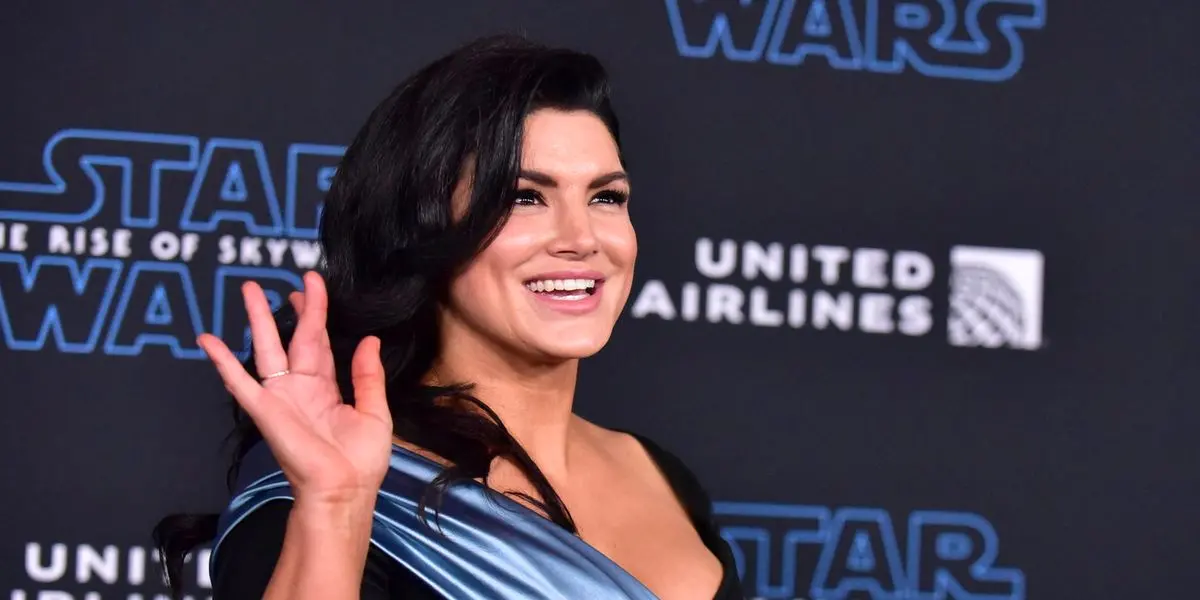
Gina Carano, the actress best known for playing the fierce Rebel warrior Cara Dune in the Disney+ series The Mandalorian, has taken legal action against Walt Disney Company and its subsidiary Lucasfilm. On Tuesday, she filed a wrongful termination lawsuit in a California federal court, alleging that she was unlawfully dismissed from the hit Star Wars series in 2021 due to her political and social media statements. The lawsuit is notable not only for its claims but also for the high-profile backing Carano has received: Elon Musk, the owner of X (formerly Twitter), has publicly pledged to fund her legal fees, turning the case into a flashpoint in the ongoing debate over free speech, cancel culture, and corporate control over artistic employment.
The Controversial Posts That Led to Her Firing
Carano, a former mixed martial artist who transitioned into acting, became a fan favorite as Cara Dune, a former Rebel shock trooper turned mercenary. However, her time in the Star Wars universe ended abruptly after she posted a series of controversial messages on X. In one post from 2020, she compared the treatment of conservatives in the United States to the persecution of Jews under Nazi Germany. “Jews were beaten in the streets, not by Nazi soldiers but by their neighbors,… even by children,” she wrote. “Most people don’t know that the government turned their own neighbors against them, just for being Jewish, to the point where Nazi soldiers could easily round up thousands of Jews. How is that any different from hating someone for their political views?”
The post drew immediate condemnation. Critics accused Carano of trivializing the Holocaust and using antisemitic analogies to advance a political grievance. Lucasfilm moved swiftly: the studio announced that Carano was no longer employed and had no future plans for her character. In a statement to Variety, the company called her social media posts “abhorrent and unacceptable” for “denigrating people based on their cultural and religious identity.” The decision effectively ended Carano’s involvement in the Star Wars franchise and derailed her acting career.
Carano had previously attracted criticism for mocking mask mandates during the COVID-19 pandemic and for amplifying baseless claims of election fraud during the 2020 U.S. presidential election. But it was the Holocaust comparison that proved to be the final straw for Disney.
The Lawsuit: Allegations of Wrongful Termination and Defamation
In the complaint, Carano’s legal team argues that her firing was unlawful because it violated California labor laws that protect employees from discrimination based on political activity. The suit claims that Lucasfilm and Disney created a “hostile work environment” for employees with conservative views and that Carano was singled out for expressing opinions that deviated from the corporate orthodoxy. The complaint employs a playful but pointed parody of Star Wars language, stating: “A long time ago, in a galaxy not so far away, the Defendants made clear that only one orthodoxy in thought, speech, or action would be tolerated in their empire. Those who dared to question it or fail to fully comply were not tolerated. Carano was removed from her role as swiftly as the peaceful home planet of her character, Alderaan, was destroyed by the Death Star.”
Carano is seeking a minimum of $75,000 in compensatory damages, along with additional punitive damages. She argues that Lucasfilm’s public statements about her firing were “maliciously false” and have damaged her ability to find future acting work. The lawsuit also demands that the court compel Disney to reinstate her into the cast of The Mandalorian.
Legal experts note that while California law does provide broad protections for political speech outside the workplace, private employers are generally allowed to terminate employees for speech that harms their business reputation or violates company policies. The outcome may hinge on whether Carano’s statements are considered protected political speech or harmful hate speech.
Elon Musk and X Corp Step In
Perhaps the most sensational aspect of the lawsuit is the involvement of Elon Musk. Shortly after Carano announced her legal action on X, Musk reposted her message and added: “Please let us know if you would like to join the lawsuit against Disney.” Joe Benarroch, an executive at X Corp, confirmed that the company is financially backing Carano. “As a demonstration of X Corp’s commitment to freedom of speech, we are proud to provide financial support for Gina Carano’s lawsuit,” Benarroch said. “We want to empower her to seek vindication for her right to express her opinion and to be able to work again without being bullied, harassed, or discriminated against.”
Musk’s involvement is not entirely altruistic. The tech billionaire has a long-running dispute with Disney. In November 2023, Disney, along with other major advertisers, pulled its ad spending from X after Musk endorsed an antisemitic post that claimed Jewish communities were “pushing hatred against whites.” Musk responded, “You have spoken the actual truth,” sparking a firestorm. Though he later visited Israel and toured the Auschwitz concentration camp in an attempt to mend relations, the rift with Disney persists. By funding Carano’s lawsuit, Musk may be seeking both to champion free speech and to retaliate against a corporate adversary that severed its financial ties with his platform.
Career Highlights and the Fallout
Gina Carano was born in 1982 in Dallas County, Texas. She initially gained fame as a pioneering female fighter in elite mixed martial arts organizations such as Strikeforce, where she became a top contender. Her striking skills and on-screen presence led to roles in films like Deadpool (where she played Angel Dust) and Fast & Furious 6. Her casting in The Mandalorian in 2019 was a major breakthrough, placing her at the center of the most popular Star Wars television series. Her character, Cara Dune, was a fan favorite for her tough demeanor and loyalty to the Mandalorian.
Since her dismissal, Carano has struggled to find significant acting roles. She has appeared in a few independent projects and continues to be active on social media, where she often discusses political issues and free speech. The lawsuit represents her most aggressive move yet to restore her career and reputation.
Broader Implications
The case has drawn attention from across the political spectrum. Conservative commentators have rallied around Carano, framing her firing as an example of cancel culture run amok. Some free speech advocates argue that studios should not be allowed to blacklist actors for their political opinions, especially when those opinions are expressed on personal social media accounts. On the other hand, critics contend that Disney has a right to maintain its brand values and that comparing a political viewpoint to the Holocaust crosses a line into hate speech that no employer should tolerate.
The involvement of a deep-pocketed backer like Musk also raises questions about the power of billionaires to influence legal battles. If Carano prevails, it could embolden other conservative figures to challenge their firings or de-platforming. If Disney wins, it may reinforce the ability of corporations to enforce speech codes on employees.
As the legal process unfolds, both sides have prepared for a lengthy fight. Disney has not yet formally responded to the lawsuit, but the company has historically defended its decisions regarding employee conduct. The case could take months or years to resolve, and its outcome may have lasting effects on the entertainment industry&rsquos approach to political speech.
Meanwhile, Musk continues to use X as a platform for his free speech crusade, often targeting advertisers and media companies he believes have tried to muzzle conservative voices. By linking his platform’s financial fate to Carano’s legal battle, he has turned a single actress’s grievance into a high-stakes duel between two corporate giants.
Source: Spiegel News