

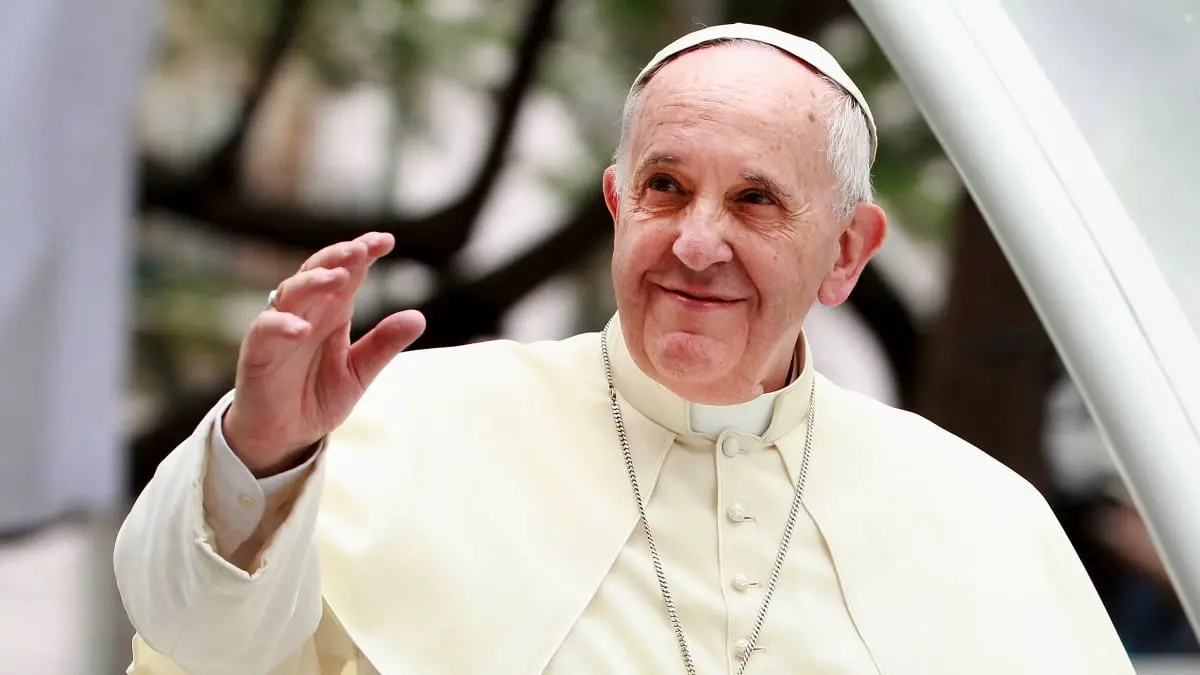
In the weeks before his death on Easter Monday 2025, Pope Francis issued a prescient warning that has since resonated deeply across the globe. The 88-year-old pontiff, the first Latin American pope and a transformative figure in the Catholic Church, devoted his final monthly prayer intention to the responsible use of new technologies. His message, delivered in a video address from his native Spanish, called on people to look less at screens and more into each other's eyes.
Pope Francis's passing at the age of 88 marked the end of a papacy defined by progressive ideals within a traditionally conservative institution. From advocating for economic and social justice to championing environmental stewardship, he consistently pushed the boundaries of conventional Catholic teaching. His final public focus on technology, however, highlighted a concern that many consider his most forward-thinking legacy.
The April Prayer Intention
The monthly prayer intention for April 2025 was the last of Pope Francis's life, a position he used to invite millions worldwide to reflect on a specific topic each month. Through the Pope's Worldwide Prayer Network, the April intention specifically targeted the impact of artificial intelligence, video calls, smartphones, and screen time on human relationships. The accompanying reflections warned that while technology is a gift from God, it must be wielded with care.
In his video message, translated from Spanish, the Pope said: "How I would like for us to look less at screens and look each other in the eyes more! Something's wrong if we spend more time on our cell phones than with people." This direct appeal came just three weeks before his death, giving it an almost prophetic urgency.
Key Quotes and Their Significance
The Pope's remarks extended beyond simple screen time warnings. He emphasized that technology, as a fruit of human intelligence given by God, should benefit everyone, not just a privileged few. "It can't benefit only a few while excluding others," he stated, linking his message to his long-standing advocacy for the poor and marginalized. He called on people to use technology to help the sick, persons with disabilities, and the vulnerable, and to care for "our common home" – a phrase he often used to refer to the environment.
Probably his most piercing observation came when he noted the tendency of screens to dehumanize: "The screen makes us forget that there are real people behind it who breathe, laugh, and cry." He prayed that technology would not replace person-to-person contact, that the virtual would not replace the real, and that social networks would not replace social settings. His concluding prayer was for the use of new technologies to respect human dignity and help face the crises of our times.
Background: Pope Francis and Technology
Throughout his papacy, Pope Francis maintained a nuanced relationship with technology. He was an early adopter of social media, amassing millions of followers on Twitter (now X), Facebook, and Instagram. Yet he frequently warned against its addictive nature and its potential to isolate individuals from genuine community. In his 2015 encyclical Laudato Si', he criticized the technocratic paradigm that prioritizes efficiency over human connection. His 2020 encyclical Fratelli Tutti similarly called for an authentic dialogue that cannot be replaced by digital interactions.
The April 2025 intention was a natural extension of these teachings. In a world increasingly shaped by generative AI, deepfakes, and virtual reality, the Pope's warnings appear remarkably timely. He saw technology not as an enemy, but as a tool that must be subordinated to the common good and human dignity.
Global Reaction and Unintended Ironies
Ironically, social media erupted with memes and discussions immediately after the Pope's death, underlining his point about how technology can distract from real human emotions. Many users referenced the 2024 film Conclave, which dramatizes the secretive election of a new pope. Others noted the unexpected visit of U.S. Vice President JD Vance to the Pope on Easter Sunday, just hours before the pontiff's passing. These viral moments showed how quickly digital platforms transform a sacred event into entertainment.
However, the Pope's message also inspired a more reflective response. Many Catholic and secular organizations launched campaigns encouraging people to take digital fasts, have more in-person conversations, and use technology to connect with the lonely or isolated. The Pope's own prayer network shared resources on how to align tech use with values of compassion and solidarity.
The Deeper Meaning: Technology as a Test of Humanity
Pope Francis's final warning goes beyond parental admonitions about screen time. It challenges the very direction of technological progress. In his view, innovation should never come at the cost of human relationships. He saw the growing power of algorithms and AI as a moral test: Will we use these tools to bring people together or to drive them apart? Will we allow the virtual to overwrite the real, or will we insist on authentic encounters?
His concern for the poor and the excluded also highlights a digital divide that persists globally. While some enjoy cutting-edge technology, billions lack even basic internet access. The Pope called for technology to bridge these gaps, not widen them. He wanted AI to be used for healthcare, education, and environmental protection, not merely for profit or surveillance.
Historical Context in the Catholic Church
The Catholic Church has historically approached new technologies with caution. The printing press, radio, television, and the internet were all initially met with skepticism before being embraced as tools for evangelization. Pope Francis's approach was similar: He used social media extensively but constantly reminded users of its risks. His final intention may influence future papal teaching on digital ethics. Already, theologians and ethicists are discussing how to develop a "digital humanism" that respects the person while harnessing technological advances.
Within the Vatican, Pope Francis established the Dicastery for Communication to coordinate the Church's media presence, but he also insisted on face-to-face dialogue at synods and meetings. His emphasis on personal encounter was central to his pastoral style. The April 2025 prayer intention thus encapsulates the tension he saw between the potential of technology and the necessity of embodied community.
As the Church prepares to elect a successor, Pope Francis's last major public teaching looms large. Cardinals and Catholics alike will have to consider how to integrate his warnings into a rapidly digitizing world. The question is not whether to use technology, but how to use it in a way that honors God and respects every human being.
Pope Francis's message on new technology was not a technophobic rant but a nuanced call for balance. He wanted people to be present to one another, to notice the needs of the poor and the planet, and to ensure that our digital tools serve love, not loneliness. In his final weeks, the Pope gave the world a gift: a simple but profound reminder that behind every screen is a soul that deserves to be seen, heard, and touched.
Source: Mashable News