

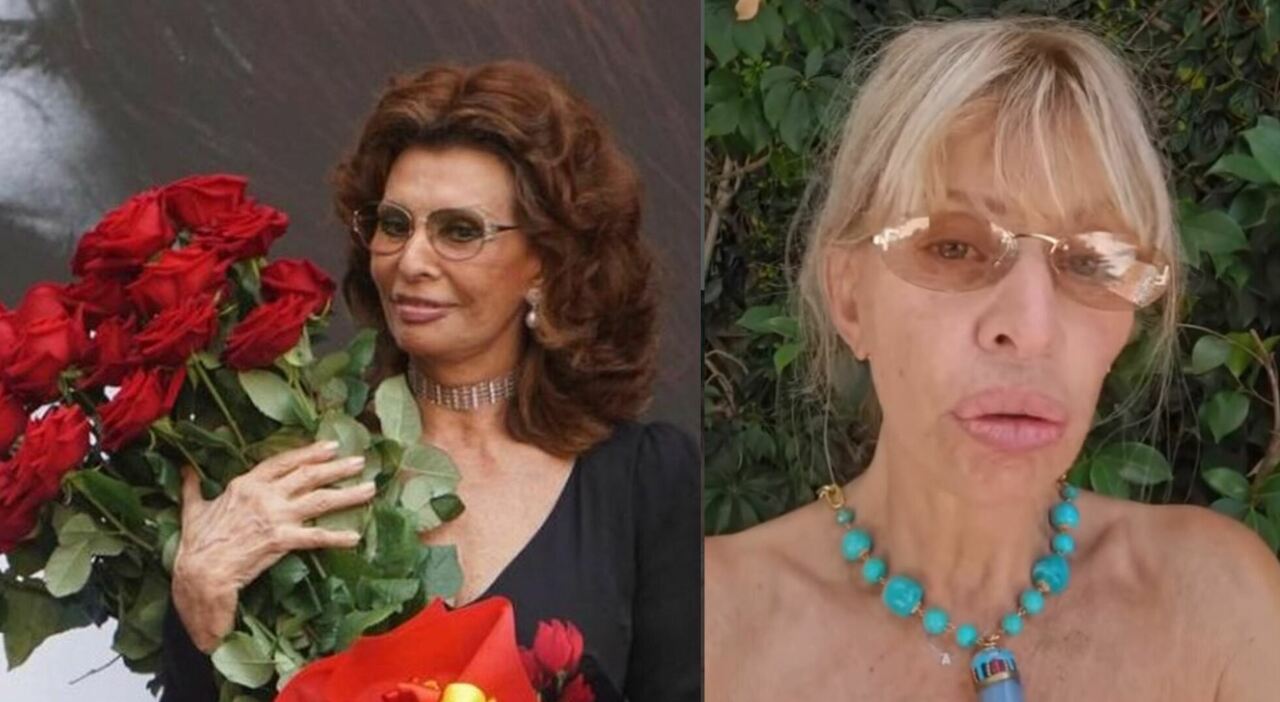
In recent days, unverified rumors about the health of 91-year-old cinema icon Sophia Loren began circulating, prompting her niece, Alessandra Mussolini, to address the public directly. In a heartfelt Instagram post, Mussolini stated: "In these hours, many news items are circulating about my aunt Sophia Loren, and I feel the need to personally reassure you. My aunt is fine. She is not in the hospital, and the rumors that are circulating do not correspond to the truth. She is calm and strong with that extraordinary energy that has always accompanied her and that you all know. She asked me to tell you something very simple but very important to her: Thank you! Thank you for the affection, for the messages, for the closeness, and for the love that you have never stopped showing her throughout her entire career. Your affection is a precious gift and moves her anew every day. In her name, I warmly embrace you." This statement puts to rest any speculation about her health, reaffirming that Loren remains in good spirits and deeply grateful for the unwavering support of her fans worldwide.
Born Sofia Villani Scicolone on September 20, 1934, in Rome, Italy, Sophia Loren grew up under challenging economic conditions in the post-war city of Pozzuoli, near Naples. Her childhood was marked by poverty and the absence of her father, Riccardo Scicolone, who was largely uninterested in supporting the family. Raised by her mother, Romilda Villani, a piano teacher and aspiring actress, and her grandmother, Loren learned resilience and determination from an early age. Despite the hardships, her mother instilled in her a passion for cinema, entering her in beauty pageants as a way to break into the film industry. The turning point came in the early 1950s when she participated in the Miss Italia pageant. Although she did not win the title, she caught the attention of producer Carlo Ponti, who would become not only her lifelong partner and mentor but also her husband. Ponti saw in her a raw, natural talent and a striking beauty that he believed could conquer the silver screen.
Under Ponti’s guidance, Loren changed her professional name from Sofia Scicolone to Sophia Loren and began landing significant roles. She honed her craft through a series of films, initially in comedies and melodramas, before finding her true artistic voice under the direction of Vittorio De Sica. Together with actor Marcello Mastroianni, Loren and De Sica formed a triumvirate that defined the golden age of Italian cinema. Their collaborations produced unforgettable masterpieces such as "Yesterday, Today and Tomorrow" (1963) and "Marriage Italian Style" (1964), both of which showcased Loren’s remarkable range—from comedic timing to profound dramatic depth. The chemistry between Loren and Mastroianni on screen became legendary, and their films remain classics of world cinema.
The apex of Loren’s career arrived in 1960 with "Two Women" (original Italian title: "La Ciociara"), again directed by De Sica. In a role that demanded immense emotional vulnerability and strength, she portrayed Cesira, a mother desperately trying to protect her young daughter from the horrors of World War II. The performance was raw, heartbreaking, and universally acclaimed. In 1962, Loren made history by winning the Academy Award for Best Actress for her role in "Two Women" — the first time the Oscar had ever been awarded to a performer in a non-English-language film. That milestone shattered barriers and established Loren as a global superstar. She became a symbol of Italian elegance and talent, and her victory remains one of the most celebrated moments in Oscar history.
International acclaim brought Loren to Hollywood, where she worked alongside some of the greatest stars of the era: Cary Grant, Clark Gable, Charlton Heston, and Marlon Brando. She demonstrated extraordinary versatility, seamlessly transitioning between dramas, comedies, and even musicals. Films like "El Cid" (1961), with Heston, and "The Fall of the Roman Empire" (1964) showcased her epic presence, while comedies such as "The Millionairess" (1960) beside Peter Sellers highlighted her comedic genius. She also starred in the iconic spaghetti western "The Pride and the Passion" (1957) with Grant and Frank Sinatra. Loren’s ability to inhabit characters from different cultures and eras made her a truly international star.
In 1991, the Academy of Motion Picture Arts and Sciences honored her again with an Honorary Oscar, describing her as "one of the true treasures of world cinema." Throughout her career, she has also won five Golden Globe Awards (including one for Best Actress in a Motion Picture – Drama for "Two Women"), a Golden Lion for lifetime achievement at the Venice Film Festival, a special award at the Cannes Film Festival, and numerous David di Donatello awards—the Italian equivalent of the Oscars. Her influence extends beyond film; she is a fashion icon, known for her distinctive style and timeless beauty, often cited as one of the most beautiful women in the world.
Even in her later years, Loren never ceased to captivate audiences. In 2020, she returned to the screen as the lead in "The Life Ahead" (Italian: "La vita davanti a sé"), directed by her son Edoardo Ponti. The film, based on the novel by Romain Gary, tells the story of a Holocaust survivor and a young immigrant boy she cares for. Loren’s performance was lauded for its deeply emotional depth and remarkable vitality, proving that her artistry remains undiminished. The film received a nomination for Best Original Song at the Academy Awards and was nominated for a Golden Globe for Best Foreign Language Film.
Sophia Loren’s enduring legacy is not only defined by her filmography but by the resilience and grace with which she has navigated both triumph and adversity. From the poverty of her youth to the heights of international stardom, she has remained a symbol of Italian culture and a source of inspiration for generations. The recent rumors of her hospitalization have been firmly denied, and her niece’s message underscores the love and admiration that the world holds for her. As she receives this wave of affection, Loren’s star power continues to shine brightly, reminding us why she is a true legend of cinema.
Source: Ilmessaggero News