

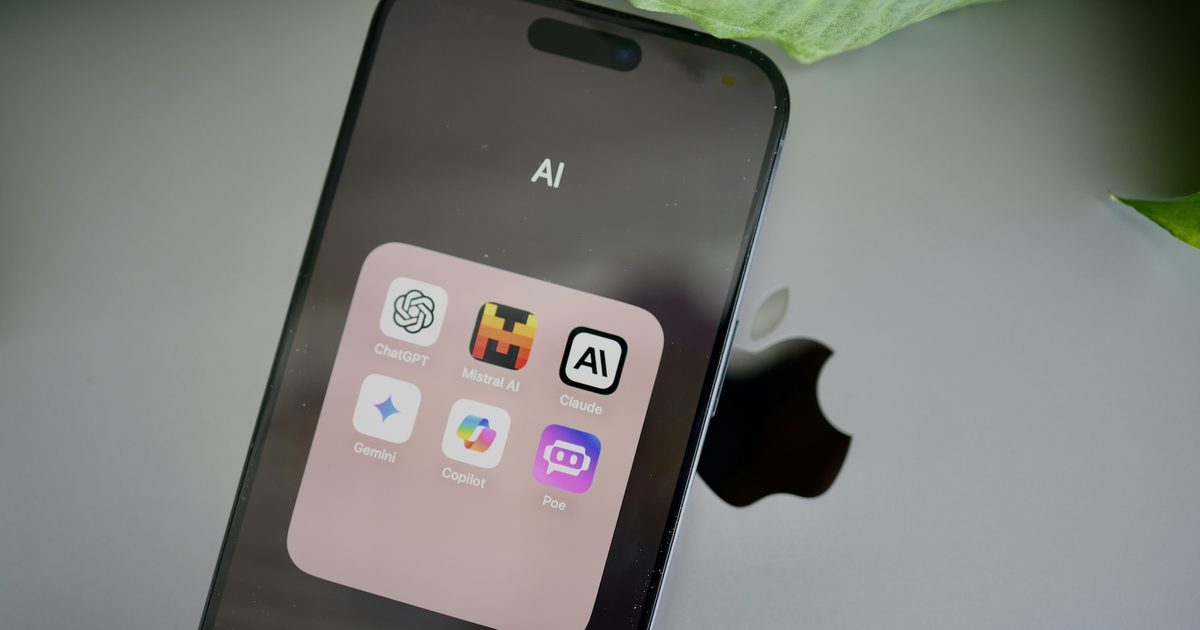
South Korea is taking a bold step toward making artificial intelligence a public utility. Under the new AI for Everyone project, every citizen will receive free, unlimited access to an AI chatbot—no subscription fees, no usage caps. The initiative, announced on July 13 by the Ministry of Science and ICT, marks a shift from treating AI as a premium service to recognizing it as essential infrastructure, much like roads or electricity.
The plan is not just about giving people a chatbot to generate emails or write poems. Instead, it has a practical focus: helping citizens navigate the often complex web of government services. A dedicated AI agent will identify relevant programs, assist with applications, and answer administrative questions. This could significantly reduce the time people spend dealing with bureaucracy, making public services more accessible to everyone, including the elderly and those less comfortable with technology.
What the free chatbot will offer
The core of the project is a general-purpose chatbot that anyone in South Korea can use without paying a cent. By eliminating financial barriers, the government hopes to accelerate AI adoption across the entire population, not just tech enthusiasts or corporate users. Complementing the chatbot will be a public-service agent, a separate AI system focused on government interactions. It will guide users through applications for social welfare, housing subsidies, tax benefits, and other administrative tasks.
Two or three private operators will be selected through a competitive bidding process to develop and run these services. A beta version is expected by the end of September 2025, with an official launch scheduled before the end of 2026. To support the infrastructure, the government will supply up to 512 Nvidia B200 GPUs—powerful chips designed for AI training and inference. However, the selected companies must also invest their own capital, ensuring shared responsibility and commitment.
Why the AI must stay local
A key requirement is that at least half of the AI capabilities must be powered by South Korean foundation models that meet the ministry’s standards. Developers who use their own models must source more than 30% of the system from other domestic AI companies. Foreign alternatives can fill limited technical gaps, but the government will not subsidize them. This policy keeps public funding inside South Korea's technology industry and reduces reliance on overseas platforms.
The reasoning is strategic. A national service is not dependable if a foreign provider can suddenly tighten limits, change pricing, or cut off access due to geopolitical tensions. By fostering homegrown AI, South Korea enhances its digital sovereignty and builds a resilient ecosystem. The country already has strong players in AI research, including Naver, Kakao, and startups like Upstage, and this project could give them a massive user base to train and refine their models.
South Korea's move also reflects broader global trends. Governments from the European Union to Japan are pushing for indigenous AI development to reduce dependence on US and Chinese tech giants. For a nation that leads in semiconductor manufacturing but lags behind in software services, this project is an opportunity to close the gap.
Can free AI remain free?
Government financial support for the AI for Everyone project is guaranteed through the end of 2030. However, the scale of funding from 2027 onward will depend on annual evaluations and budget discussions. This means the long-term definition of “free” is not entirely settled. If the service proves expensive to maintain, future administrations might introduce tiers or usage limits. But for now, the commitment is clear: every South Korean citizen will have access to AI assistance without direct cost.
Applicants for the operator contracts have until August 11 to submit proposals. The selection process will likely favor companies with proven expertise in large language models and public service integration. Analysts expect fierce competition among major Korean tech firms, as winning the contract would give them a flagship project with national visibility.
The broader context is South Korea's ambitious AI strategy. In recent years, the government has invested heavily in AI research, semiconductor development, and digital infrastructure. The country launched the K-Cloud project to build a national AI data center, and it introduced tax incentives for AI adoption in small businesses. The AI for Everyone project takes this a step further by making AI a universal right rather than a privilege for those who can afford it.
Challenges ahead for domestic models
The hardest question is whether South Korea's domestic AI models are good enough to pull users away from established commercial platforms like ChatGPT, Gemini, or Claude. While Korean firms have made impressive strides—Naver's HyperCLOVA X rivals top global models in Korean language performance—they still lag behind in general knowledge and reasoning. The gap is narrowing, but user expectations are high.
Free access could compensate for quality shortcomings. If the chatbot is reliable, fast, and deeply integrated with local services, many citizens might prefer it over foreign alternatives. Privacy is another factor: a government-backed chatbot, bound by Korean data protection laws, might appeal to users concerned about how their data is handled by overseas companies.
There are also technical and operational challenges. Scaling AI to serve 50 million users with low latency requires massive computing resources, even with 512 GPUs. Operators will need to optimize models for efficiency, possibly using quantization, distillation, or mixture-of-experts architectures. The government's requirement to use domestic hardware and software could limit options, but it also encourages innovation in the local AI chip and software stack.
Social adoption is another unknown. While younger South Koreans are early adopters of technology, older generations may be hesitant. The public-service agent component aims to bridge this gap by making the AI helpful in everyday tasks, not just novelty conversations. Successful implementation could dramatically improve digital inclusion.
The project also carries risks. If the chatbot gives incorrect information about government programs, it could lead to legal disputes or eroded trust. Operators must implement robust safeguards, human-in-the-loop reviews, and clear disclaimers. Transparency about the AI's capabilities and limitations will be critical.
South Korea is moving beyond research grants and limited trials by funding AI access for an entire population. The September beta will provide the first real test of whether domestic models can deliver a satisfying user experience. If successful, this model could become a blueprint for other nations seeking to democratize AI while strengthening their own technology ecosystems.
Source: Digital Trends News