

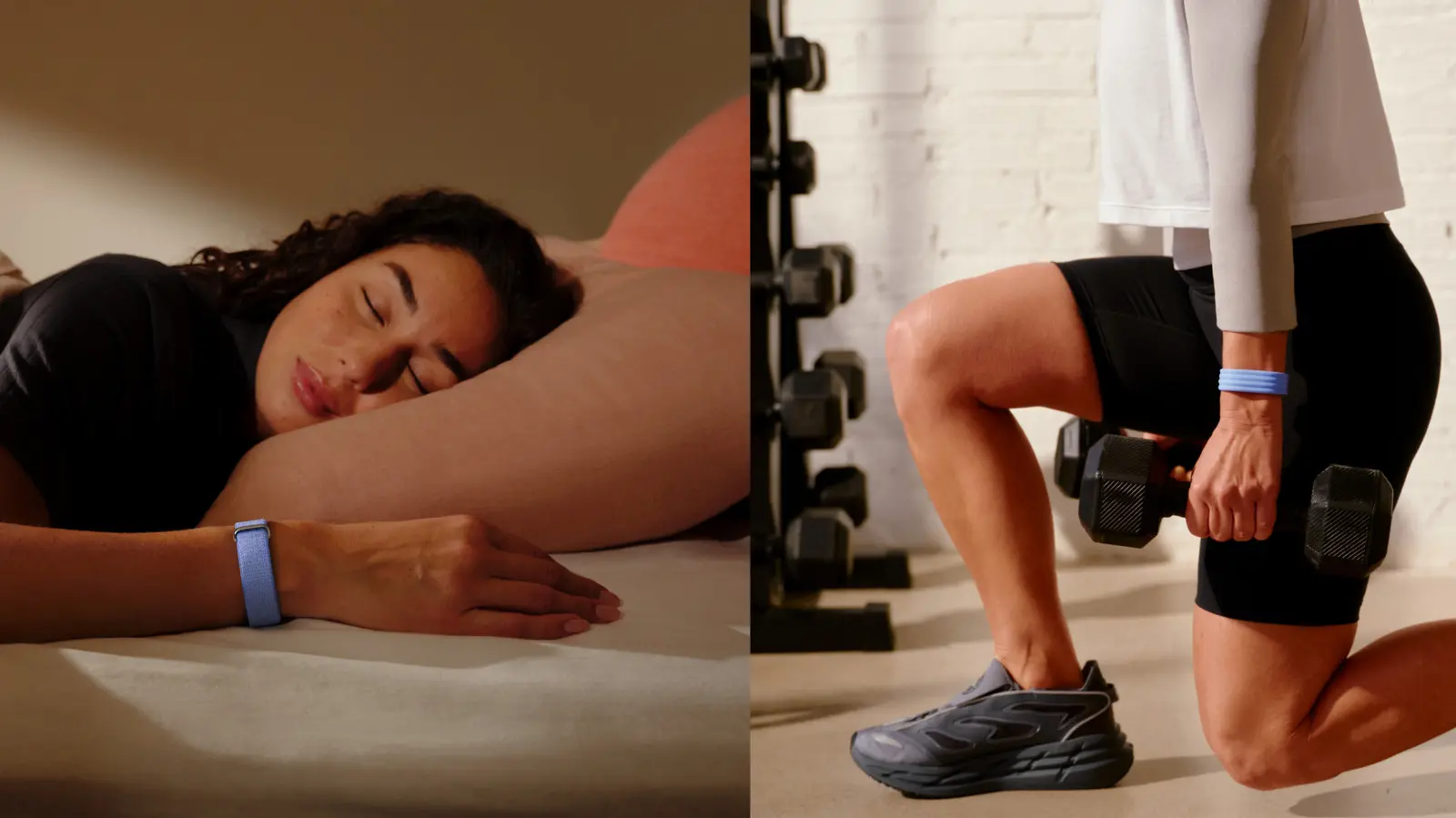
Google has officially taken the wraps off its most experimental wearable yet: the Fitbit Air. First teased in March, the device is a screenless, band-free tracker that can be worn on the wrist, chest, or virtually anywhere thanks to a modular accessory system. With a starting price of $100 and a focus on AI-driven health coaching, the Fitbit Air represents Google's boldest move yet into the territory dominated by Whoop and other recovery-focused wearables.
A New Design Philosophy
The Fitbit Air is, at its core, a small sensor module that weighs just 5.2 grams without a band and 12 grams with one. That makes it 25 percent smaller than the Fitbit Luxe and 50 percent smaller than the Inspire 3, according to Google. The company says the device was rated as more comfortable than leading competitors in an independent consumer study conducted last year, though specific competitors were not named. The Air's design is deliberately minimal: no buttons, no screen, just a small pod that clips into various bands. Google is launching three band options at launch: a micro-adjustable Performance Loop band, an Active silicone band designed for workouts, and an Elevated Modern Band that turns the Air into a bracelet. A chest strap or other body-worn accessory is not yet available, though Google's general manager for Health, Rishi Chandra, hinted that more accessories are in development.
Health Tracking Without Distraction
Without a screen, the Fitbit Air is a passive device that focuses entirely on data collection. It monitors heart rate continuously, using Google's established algorithms to track sleep stages, assign a nightly Sleep Score, and detect signs of atrial fibrillation through irregular heart rhythm notifications. The device also provides heart rate variability (HRV) data and offers insights into recovery and readiness. The Air can automatically detect a range of activities, including biking, running, walking, rowing, elliptical, and other high-heart-rate sports. For more niche workouts, users can manually start sessions for about 40 activities through the app, and log over 140 additional activity types including archery, badminton, and even household chores.
Google claims the Air is powered by advanced machine learning models that are 15 percent more accurate than previous algorithms, with an improved Sleep Score that better reflects recovery. The device also includes a vibration motor for silent alarms and Google's Smart Wake feature, which aims to wake users at the optimal point in their sleep cycle.
AI at the Core
The name "Air" is not just about lightness; it also hints at the device's reliance on artificial intelligence. The Fitbit Air is deeply integrated with the Google Health Coach, a Gemini-powered conversational interface that was introduced in public preview last October. The Health Coach can create dynamic fitness plans that adapt to real-time performance data and changing schedules, and it can work with health data including menstrual cycle tracking and vital medical information. Google emphasizes that user data remains private and secure, though the company has not provided additional details beyond its standard privacy assurances.
This AI-centric approach is part of a broader trend across Google's product lineup in 2026, with AI features being embedded into everything from the Pixel phone to Google Workspace. The Fitbit Air is essentially a hardware platform for Google's health AI ambitions, and the device's screenless form factor reinforces the idea that users should rely on the cloud-based coach rather than on-device displays.
Battery Life and Charging
Despite its small size, the Fitbit Air offers up to seven days of battery life, matching previous Fitbit models. Charging is fast: five minutes on the magnetic bi-directional charger provides enough power for a full day of use, and a full charge takes about 90 minutes. The charger design mirrors that of the Pixel Watch 4, with a simple magnetic connection that doesn't require precise orientation.
Pricing and Availability
The Fitbit Air is available for pre-order today at $100, with a special edition designed in collaboration with basketball star Stephen Curry priced at $130. The Curry edition features a raised interior print for increased airflow and an extra water-resistant coating. Both versions come with three months of Google Health Premium. Shipping is scheduled to begin on May 26.
The device's launch marks a significant shift for the Fitbit brand, which has traditionally focused on screen-based activity trackers and smartwatches. With the Air, Google is betting that users want a less intrusive wearable that still provides deep health insights, all powered by a conversational AI that can offer personalized coaching. It remains to be seen whether consumers will embrace a screenless device that relies heavily on smartphone apps for interaction, but the connection with Whoop and other similar trackers indicates that there is a growing market for no-distraction health monitoring.
Google's decision to position the Fitbit Air primarily as a health coach rather than a fitness tracker underscores the company's long-term vision for wearable technology. By stripping away the screen and the potential for notification overload, Google hopes to create a device that users wear continuously, even while sleeping, without the usual friction of a smartwatch. The success of this approach will depend on the effectiveness of the AI coaching features and the comfort of the hardware, both of which Google claims exceed competitors. As the first major screenless wearable from a mainstream tech giant, the Fitbit Air could redefine what a fitness tracker can be.
Source: Engadget News