

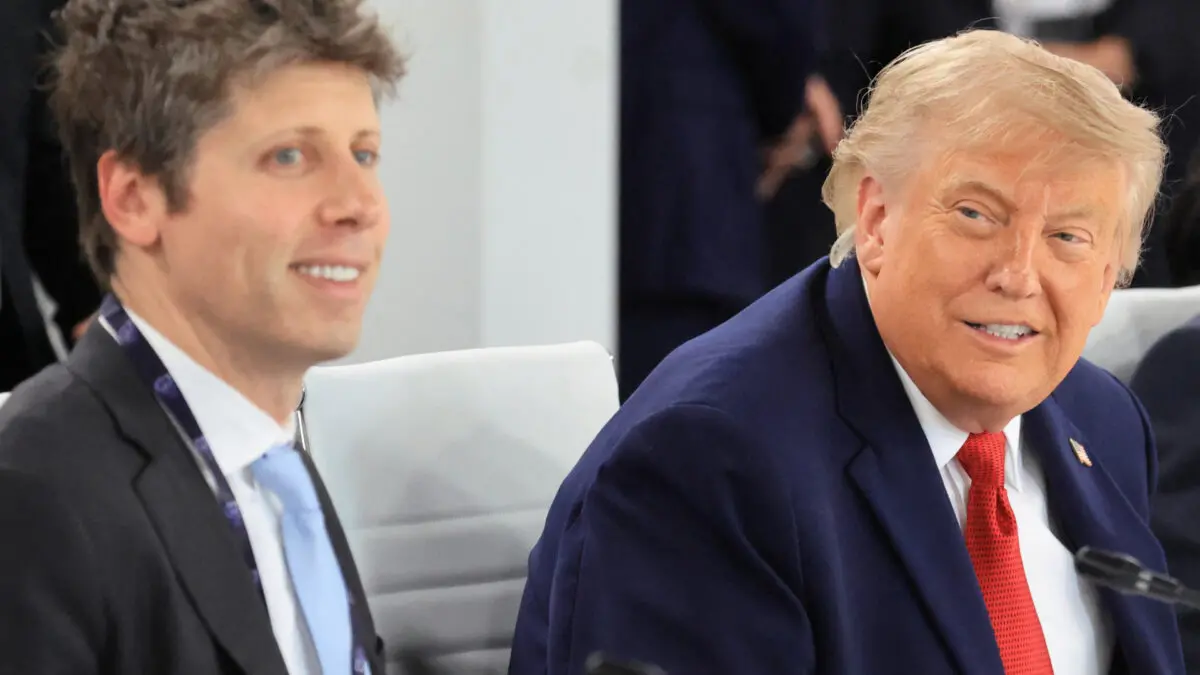
Economic chiefs from some of the world’s largest economies are meeting this week in North Carolina, with sessions kicking off ahead of the U.S.-hosted G20 summit in December. The focus, unsurprisingly, is artificial intelligence. But while many foreign leaders are arriving with calls for increased global collaboration on AI regulation, the Trump administration is reportedly arriving with a very different message: back off.
According to a Tuesday report from Reuters, the United States’ goal for the upcoming G20 meeting between commerce ministers is to convince the countries in attendance to take a “hands-off” approach to AI regulation. The U.S. delegation is not asking merely for patience or light-touch oversight. It is pressing governments to sign a pact called the “Carolina Principles,” a set of commitments designed to keep the AI industry largely free from new regulatory constraints.
Currently, finance ministers and central bank governors are in Asheville, North Carolina. Today and tomorrow, trade and commerce ministers are meeting in Raleigh-Durham for the “Innovation Ministerial,” co-hosted by Commerce Secretary Howard Lutnick and Trump’s tech adviser Michael Kratsios. According to a White House official quoted by Reuters, the American delegation will use this ministerial to urge leaders in attendance to refrain from subjecting the AI industry to additional regulatory scrutiny.
The Carolina Principles explained
Led by Kratsios, the Carolina Principles will have signatory countries promise to invest in “foundational research to accelerate discovery,” strengthen commercial AI opportunities, and to “reserve new regulation for novel considerations” when regulating AI, Reuters reports. In plainer language, that means the government wants the biggest economies in the world to avoid creating AI-specific regulation except in extraordinary circumstances. It also asks them to remove barriers that stand in the way of companies poised to make billions of dollars from these new advancements.
“Policymakers do not need to approach each innovation in isolation and should not treat every emerging technology as a first-of-a-kind policy problem,” Kratsios will say in his prepared remarks, according to Reuters.
The Trump administration has championed this hands-off approach for years. Officials argue that heavy regulation would slow innovation and undermine the pace needed for the United States to outcompete China in AI advancements. In their view, the AI industry is best left to develop with minimal government interference, letting market forces determine both the pace and direction of technological change. Administration allies say this approach keeps the U.S. at the cutting edge and prevents foreign competitors from seizing the lead in a strategically vital sector.
Critics, however, claim the underregulated approach simply makes AI companies richer while treating the technology’s economic, environmental, health, and social risks as collateral damage. Consumer advocates and academic researchers have argued that without robust safeguards, AI systems can perpetuate bias, amplify disinformation, and destabilize labor markets. Environmental groups also point to the enormous energy consumption of AI data centers and its contributions to carbon emissions.
Differing global perspectives
The United States is not the only country arriving in North Carolina with its own vision for AI governance. Canadian officials attending the ministerial told Reuters that their delegation would advocate for a balance between innovation and “public trust and safety.” This puts Canada in a middle ground, acknowledging the economic potential of AI while insisting on mechanisms to protect citizens and maintain confidence in the technology.
European Union officials, though not explicitly mentioned in the same context, have already moved forward with the EU AI Act, a comprehensive regulatory framework that categorizes AI applications by risk and applies stringent obligations to high-risk systems. This has created ongoing tension with American tech giants, including OpenAI, whose ChatGPT is facing tougher regulation in the EU. The Trump administration’s Carolina Principles would stand in direct contrast to the EU’s regulatory approach, making transatlantic divisions over AI governance one of the key undercurrents of the G20 meetings.
International organizations have also been vocal in their calls for more oversight. United Nations Secretary-General Antonio Guterres recently warned that AI development was outpacing rules and regulations, compounding the technology’s risks. “A technology that can reshape economies, transform the world of work, sway elections and tilt the balance of security is being deployed faster than anyone, including the people building it, can keep up,” Guterres said at an AI dialogue in July. “Innovation needs guardrails.”
Financial regulators share some of those concerns. Andrew Bailey, chair of the G20’s Financial Stability Board and governor of the Bank of England, sent attendees a letter ahead of the finance ministerial warning that advances in frontier AI pose unique financial and cyber risks that can easily spread beyond borders. This letter adds a note of caution from the financial world, suggesting that AI risks are not merely a matter of civil liberties or ethics but also of systemic stability.
Tech leaders in attendance
The Innovation Ministerial’s agenda is heavily focused on the commercial potential of AI, and the guest list reflects that. U.S. Commerce Secretary Howard Lutnick will host fireside chats with both OpenAI CEO Sam Altman and Nvidia CEO Jensen Huang at the two-day meeting, Axios reported last week. Altman is expected to preview new advances in AI and discuss their economic implications. Nvidia, as the dominant producer of AI chips, holds a central position in the global AI supply chain, and Huang’s presence underscores the administration’s interest in keeping AI hardware and software development within American-friendly markets.
Kratsios also said in a post on X that Elon Musk, Google DeepMind co-founder Demis Hassabis, and former White House AI adviser and venture capitalist David Sacks will address attendees. Reuters separately reported that Meta CEO Mark Zuckerberg is expected to be in the lineup as well. This gathering of top tech executives from across the industry signals that the U.S. delegation is presenting AI innovation as fundamentally a private-sector enterprise, with government’s role limited to funding research and removing obstacles.
Historical context of U.S. AI policy
The Trump administration’s stance is not entirely new. In 2019, during Trump’s first term, the White House signed an executive order aimed at promoting American leadership in AI, directing federal agencies to prioritize AI research and development. The administration then issued regulatory guidance that urged agencies to avoid imposing unnecessarily burdensome AI rules. In 2021, under the Biden administration, the U.S. took a somewhat more cautious tack, issuing its own blueprint for an AI Bill of Rights and overseeing voluntary commitments from major AI companies. But with Trump back in the White House in 2026, the policy pendulum has swung decisively back toward deregulation.
The international arena has also seen previous attempts to forge common AI governance. The OECD, the Council of Europe, and various United Nations bodies have developed AI principles over the past several years. Most focus on human rights, transparency, and accountability. The Carolina Principles, by contrast, emphasize commercial growth and limits on regulation. If adopted, they could reshape the international consensus on AI policy, creating a competing framework that emphasizes market freedom over precautionary regulation.
Observers note that the push comes at a critical moment. AI systems are being deployed in healthcare, finance, hiring, criminal justice, education, and national security. The potential for economic gain is enormous, but so is the potential for harm. The G20 meetings in North Carolina represent a key arena where these competing visions are being tested.
The United States is hosting the G20 summit in December, giving it considerable agenda-setting power. This could make the Carolina Principles a foundation for broader G20 declarations later in the year. If enough major economies sign on to the principles, it could effectively slow the momentum toward the kind of strict regulation being debated in Europe and elsewhere.
Yet it remains uncertain that the rest of the world will follow Washington’s lead. The European Union has invested heavily in its regulatory approach and views AI rules as a way to build public trust and create a stable, predictable digital market. Canada has indicated it wants a balanced path. Many countries in the Global South have expressed concerns that a fully hands-off approach will allow a handful of American tech monopolies to dominate the AI landscape worldwide, leaving others without leverage to shape how AI affects their citizens.
Civil society organizations monitoring the G20 meetings have also raised alarms. Groups focused on digital rights, racial justice, and climate change released statements urging ministers to reject no-governance models. They point to cases where AI missteps have already produced discriminatory lending outcomes, wrongful arrests, and unsafe automated decision-making in public-service contexts.
In the coming months, the world will see whether the Carolina Principles remain a U.S.-centric initiative or evolve into a global standard. For now, the Trump administration is making its priorities clear: let AI companies move fast, avoid broad new legal constraints, and trust market participants to handle the consequences.
At the Innovation Ministerial, Altman and Huang’s fireside chats will likely highlight the benefits of generative AI and accelerated computing. However, the broader G20 conversations will also feature voices like Guterres and Bailey, who argue that the same technologies could destabilize democracies and financial systems. The divide between these two perspectives will shape not just the text of official communiqués, but the actual legal and economic environments that AI companies navigate around the world.
Meanwhile, domestic pressure in the United States cuts both ways. Several state legislatures are considering AI-related bills, and courts are beginning to grapple with lawsuits involving AI copyright issues, misinformation liability, and algorithmic discrimination. A federal hands-off policy does not erase these state and judicial actions. But it does set the tone for federal agencies, which could decline to investigate AI risks or block mergers and partnerships within the AI industry.
Statements from the White House in recent weeks have repeatedly emphasized the necessity of beating China in AI. Trump officials have argued that excessive regulation would amount to unilateral disarmament in a global race against an authoritarian competitor. They have also claimed that the U.S., not any multilateral institution, is best equipped to ensure AI evolves in ways consistent with democratic values.
Skeptics respond that the administration’s actions undercut its stated values. They note that forgoing safety testing, weakening transparency obligations, and promoting self-regulation by profit-driven companies could create serious harms that end up affecting people across the world. The phrase “move fast and break things” is back in vogue, critics say, but the things being broken may not be just cultural and business models—they could be core institutions of democracy and public trust.
For now, the G20 ministerial events in North Carolina are focused on innovation and regulatory philosophy. But the agreements forged here will likely have consequences that extend well beyond trade and commerce. As billions of people increasingly rely on AI-powered tools for jobs, health information, and news, the stakes of these diplomatic discussions have never been higher.
Source: Gizmodo News